
The hug was a symbol, honoring the memories of 144 enslaved people buried in Rock Hill
It was the hug.
An act of human sensitivity and kindness. Yet, in that setting one could sense deeper meaning Saturday when Mary Sanders Lazenby walked over and hugged Anne Lowry Jordan.
The occasion was a fundraiser by the Nation Ford Land Trust. People had come to hear about 144 graves of people who had been enslaved. The site now belongs to Andrew and Mary Sanders Lazenby. The crowd learned how, instead of opting for commercial development, the couple turned this into a formal cemetery.
Jordan was a descendant of one of the people buried there. She thanked the couple for protecting the graves.
“I thank you,” Jordan said. “It speaks to your heart. You could have just never said anything.”
She mentioned her uncle Frederick Guy Lowry who had relatives buried there.
Then came the hug.
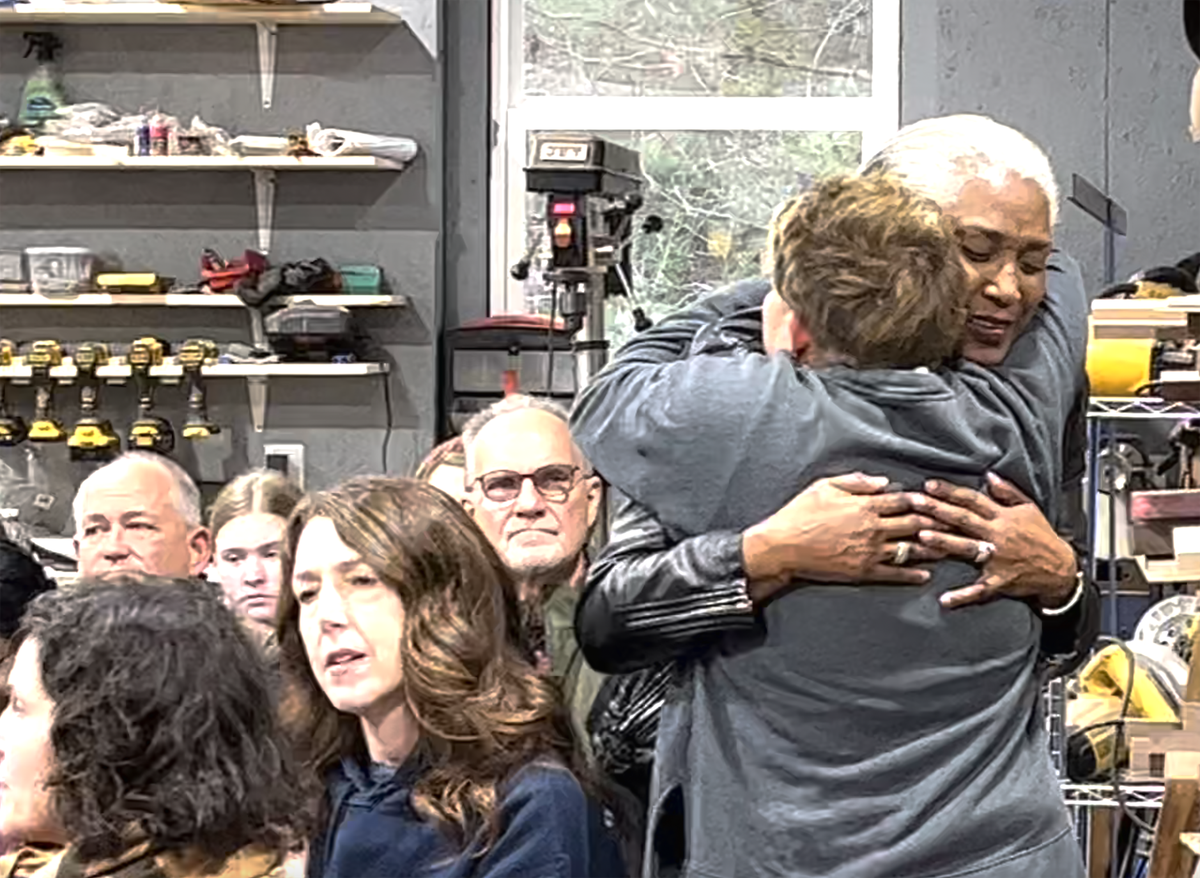
There was reverent silence and some in the room wiped tears. More than 100 people had gathered — Black people, white people, parents, teenagers, senior citizens, politicians, voters, varied walks of life.
Jordan is Black; Lezanby is white.
The hug cut through the differences. In that moment, everyone was simply human.
There also was a speaker, a panel discussion, and then a walk to the grave site.
The graves had been long-ignored and barely recognizable before Andrew found them. Now the site is neatly marked and cordoned-off in a roughly 2-acre area.
A time to reflect
People walked to the cemetery along a path into the woods neatly mulched by the Lazenbys so those present could navigate through mud, leaves and marshes. Some stood silently alone. Others gathered in small groups. Adults talked in serious, hushed tones to teenagers.
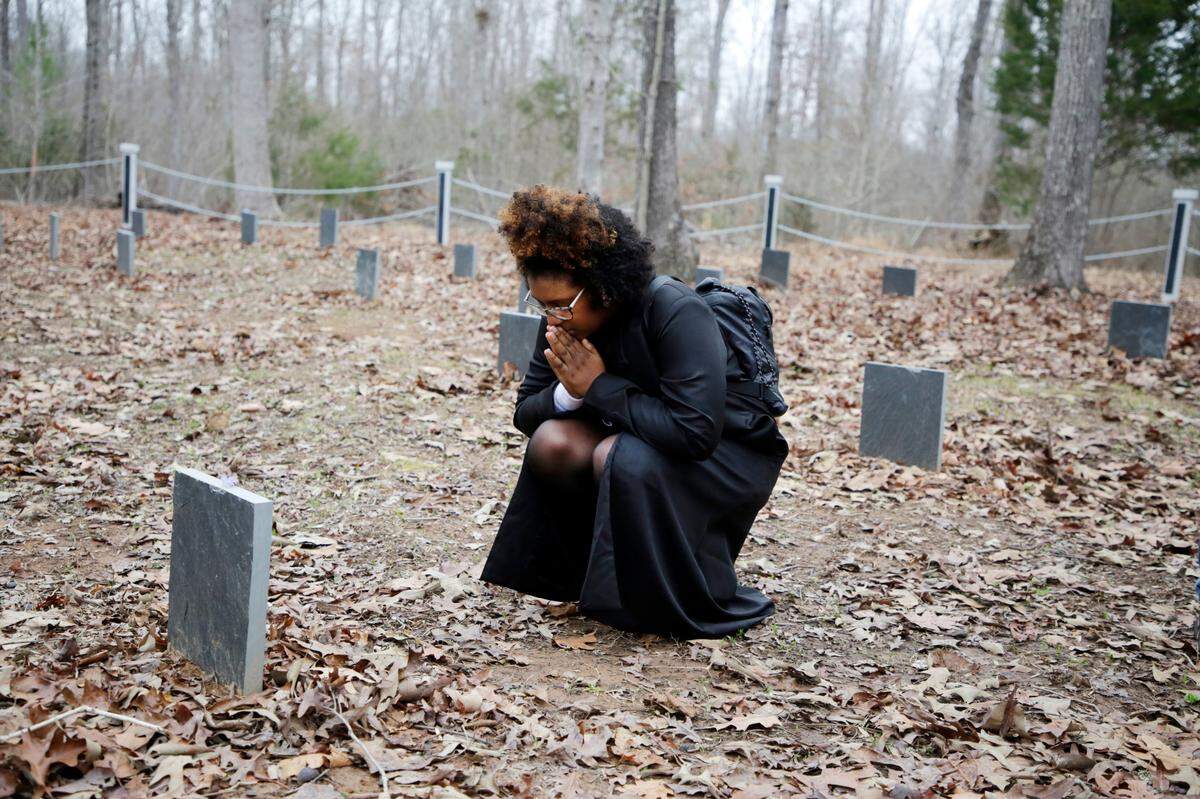
At least one person knelt, as if praying, near a grave.
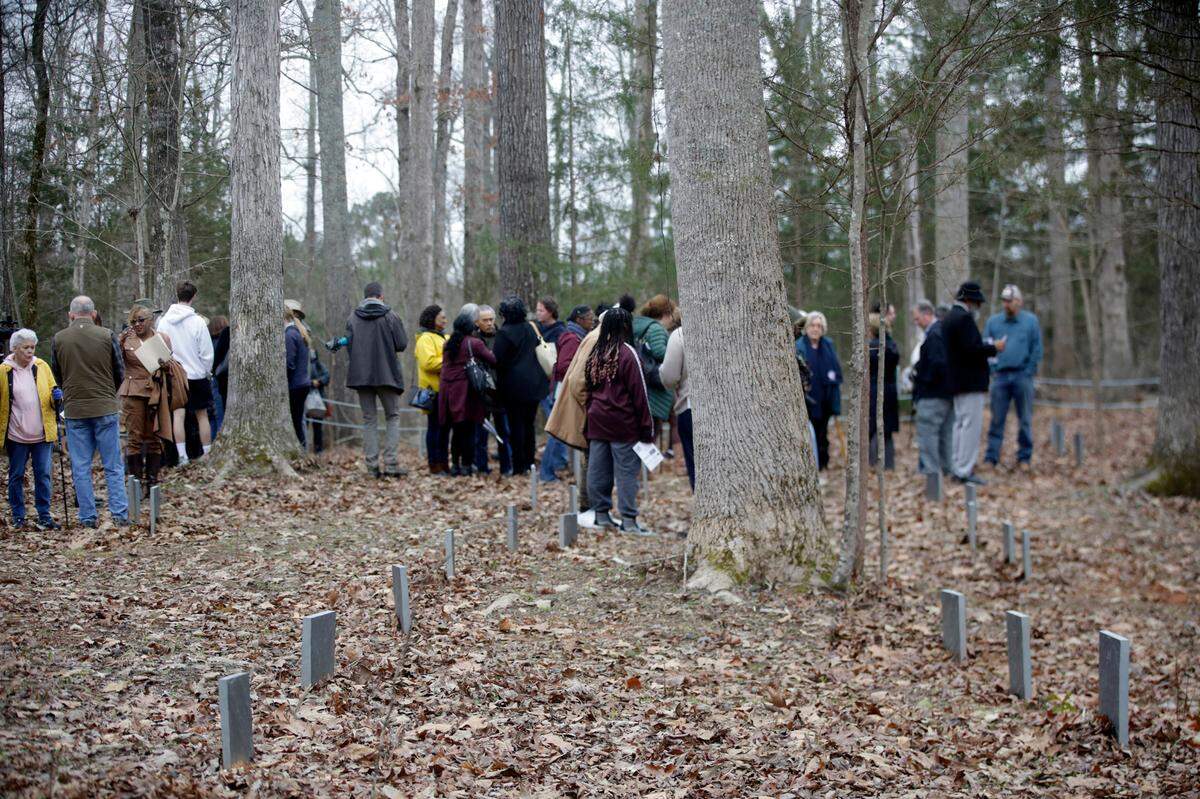
It was a history lesson that transcended a classroom. And it will outlast any twisted politics that would steer us away from these facts tied to this part of the American saga.
It was a graceful setting for those who rest there. Fittingly, the crowd sang “Amazing Grace.”
Then, Bishop John Alvin McCullugh read a Bible passage from 1 Thessalonians, Chapter 4, and delivered final rites: “Ashes to ashes, dust to dust...”
It was human closure.
Unceremoniously placed in the ground
John Smith, a board member for Nation Ford Land Trust and UNC Charlotte faculty member, was the speaker of the day.
If you were enslaved on a plantation, your experience with death was different, he said.
There was no modern-day handling of bodies. If a an enslaved person died during the day, the body probably was left unattended until night, he said. After dark, someone would take the body and bury it. There would be no casket, no funeral or identification, he said.
“So we don’t know how many of these people there are,” Smith said. “We just don’t know.
“In 1831, it was illegal to teach a slave to read and write. If a grave had a stone (with a name), you announced that someone could read and write. That could lead to a sentence of death or extreme torture. So most graves were marked with a rock with a brand (like cattle) or a symbol...
“We don’t talk about the fact that these were people. They were moms. They were dads. They were tortured souls.”
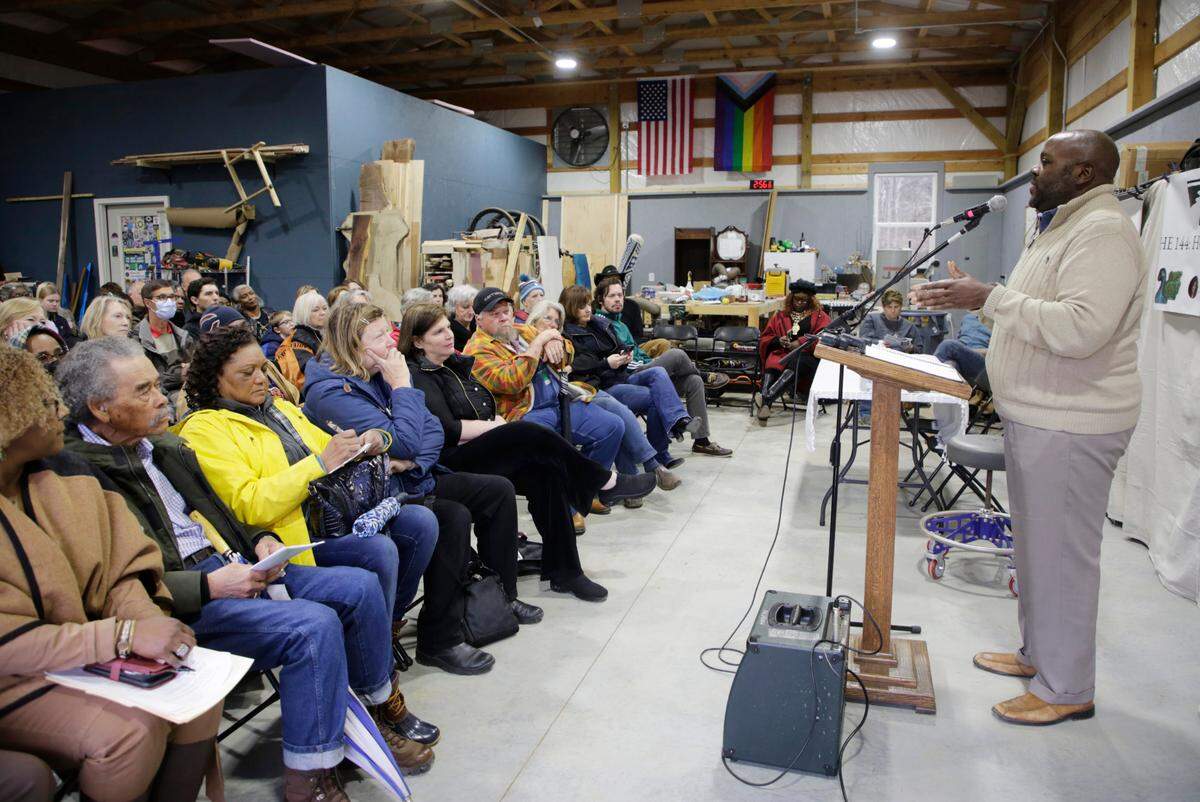
Smith said many people who were enslaved died from harsh work conditions rather than natural causes.
“We often dehumanize these people,” he said. “Regardless of how you’ve been treated, we’re all human. That binds us together.”
Site could have been plowed over
The panel discussion mostly focused on Andrew and Mary Sanders Lazenby’s efforts with Nation Ford Land Trust to save the site.
Andrew talked about how some advised him to plow the site over because he could make the land more valuable by opting for commercial development.
In an interview with The Herald earlier this month, Andrew explained his motivation.
“I like sleeping at night,” he said. “I was told I should have plowed it over...
“We are heartbroken at how much history is being lost. I thought I knew some history. But I had no clue. It was far more violent, far more horrific. We’re losing this, and we’re not getting it back.”
One can reasonably assume much history related to the treatment of enslaved people already has been plowed under. But for a moment on Saturday, a single hug seemed to be a bond between history and the present.
And human kindness prevailed.
This story was originally published February 28, 2023 at 7:35 AM.