‘Pay like the best.’ Should Fort Mill pay more to improve high school sports?
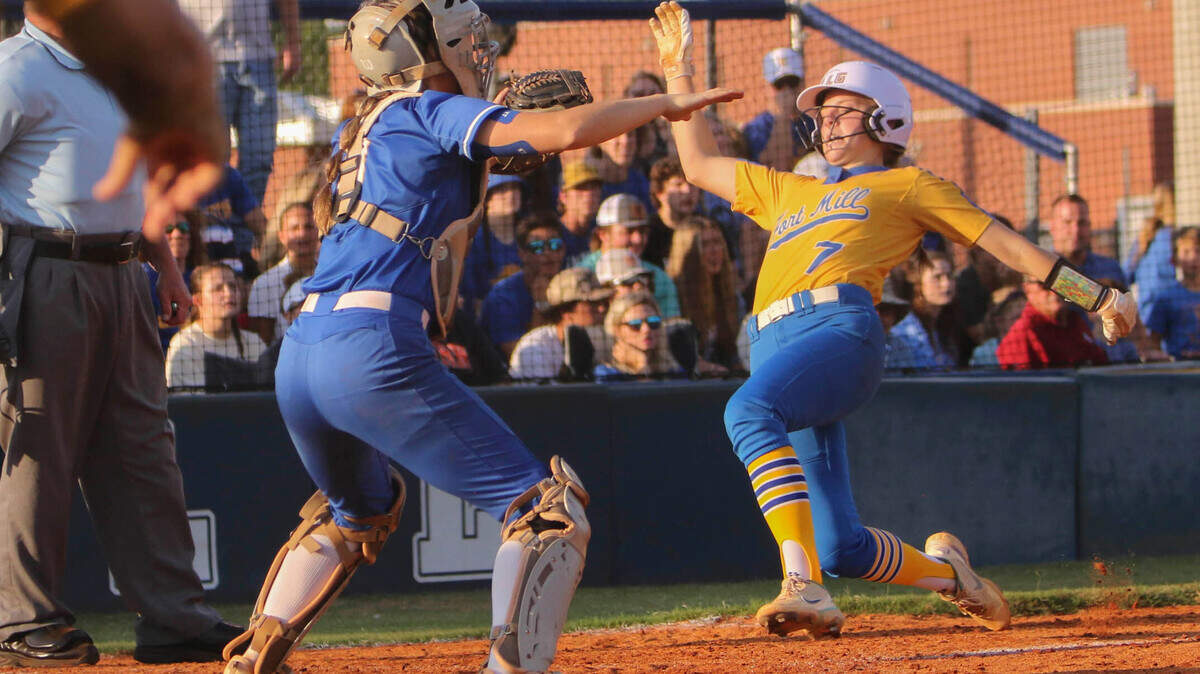
On a night when updates pinged in from three separate state championship finals, high school athletic directors in Fort Mill made their case for more money to keep the wins coming.
“We really feel like it’s an imperative for our coaching staffs and our continued growth in athletics,” Nation Ford High School athletic director Jaybe Shackleford told his school board Tuesday night.
Shackleford joined his counterpart at Catawba Ridge High School, Rick Lewis, to make a request of the board for more money toward athletic department and coach stipends. Fort Mill High School athletic director Dwayne Hartsoe wasn’t there, as his baseball team played for a state championship against Berkeley High School.
Fort Mill baseball and softball teams, plus Catawba Ridge softball, all played Tuesday night in state final series games.
If the district wants that kind of continued success, athletic directors say the district will have to pay for it.
“You’re looking for a combination of a quality teacher, who also has the experience in that coaching realm,” Lewis said. “Whether it’s football, it could be any of them. The more we can get in the school, the better.”
Coach stipend pay
The Fort Mill district pays about $188,000 each year in total stipends to high school coaches, Shackleford said. He compared that number to roughly $338,000 in the Clover district, $268,000 in Rock Hill and $207,000 in York.
The request in Fort Mill would increase stipend pay to almost $237,000.
“It moves us from the bottom to second-to-last in this (county),” Shackleford said. “We’re just asking for that to move us to the next level.”
Catawba Ridge and Nation Ford have about 700 athletes per year. Fort Mill has about 800 athletes.
The proposal would increase individual athletic director supplements to $15,000. An assistant athletic director supplement would be set at $9,000 and could be split among multiple people throughout the school year. Varsity head coach stipends would range from $2,500 golf or tennis to $7,500 for football and $7,000 for basketball. Some positions for coaches who teach within the district would add days to their annual contract to account for extra work done.
Sports vary in how many coaches they have. The new plan would add more assistant coach stipends, some as a safety measure to have multiple coaches at all times for smaller sports. The sports with the most overall stipend money across their staffs would be football ($68,500), basketball ($31,900), soccer and lacrosse ($16,000 each).
Another request is playoff pay. When teams make the playoffs, coaches would get another week of pay at the same rate for each week that team advances. The district would divide the stipend by the number of regular season weeks to get the amount coaches would stand to get extra with each playoff week.
The athletic directors said playoff pay would apply to coaches in all sports. It also would help, they say, in hiring.
“That would be a draw to get coaches who we sometimes lose,” Lewis said.
Change in sports landscape
Grey Young is assistant superintendent of student services and administration. He called the discussion a month ago with athletic directors eye-opening. High school sports aren’t the same as when he was in school, just a couple of decades ago.
“It was usually like your social studies teacher that was your coach,” Young said. “But we’re in a day and age where high school athletics is just so much bigger. You can turn on the TV almost any weekend and you can watch a high school athletic sporting event. We’re at the point now where coaches are professionals.”
Often, for example, football and basketball coaches don’t take the summer off.
“If you do not practice in July you will not be competitive in 4A or 5A football,” Shackleford said. “That’s the bottom line.”
Most sports hold youth or team camps, or both, during the summers. Athletic directors say they’re often the second most visible person at their schools, behind only principals, and can routinely work 65-hour weeks. They hire coaches, schedule games and check player eligibility.
There’s also training beyond the games. Catawba Ridge has a certified weightlifting coach while the others don’t.
“Their kids are bigger and stronger than ours,” Shackleford said. “You can see it. Our coaches talk about it.”
Together, directors say, it takes more to develop and maintain top athletic programs. Which takes more money.
Lewis points to the softball program that played in a state final game Tuesday night as the board met. When Catawba Ridge opened there were three outstanding candidates to coach that team, Lewis said, and the school was fortunate to find someone local to lead it. One coach was making twice what Catawba Ridge offered as an assistant elsewhere, and thus wasn’t an option.
“If we want really good people in the building,” Lewis said, “we’ve got to be able to pay.”
School board support
The school board heard the case for increased funding, but didn’t make a decision on it. The issue will come back to the board either on its own or through the next round of district budgeting. Yet even without a vote, there was support for many of the concepts presented.
Board member Scott Frattaroli worked as a teacher or school administrator for almost two decades before taking his seat. He said he’d like to see head coach stipends bumped up, using a thought he’s shared before in relation to teachers or other district employees.
“I talk all the time about the fact that if we want to say we’re the best around, we’ve got to pay like the best,” Frattaroli said.
Board member Celia McCarter agreed on the head coach stipends. They have more contact with college recruiters, decisions on items like region or state players of the year, meetings and research than other coaches.
“Those coaches are doing just a little bit more than I would think a JV coach would do, or an assistant coach,” McCarter said.
Board members discussed stipends based on the number of students on a team, time commitment for coaches, training levels that may be required and similar factors. So a head football coach would get more than a head coach of a smaller sport with fewer athletes, due to demands and not the popularity of either sport.
“It also is a big draw with revenue, but that really doesn’t impact the proposal that we’re seeing right here,” Frattaroli said. “Gates don’t effect what the board is going to approve.”
Board member Brian Murphy was a band person, but has seen district athletics through a parent’s view. With now the largest student population in York County, he said, the Fort Mill district should support its programs.
“It looks like there’s an issue that needs to be addressed,” Murphy said.
Financial impact
Leanne Lordo, district CFO and associate superintendent of finance and operations, sat through the athletic directors’ pitch a month ago and again Tuesday when the board met. Lordo said the presentation is impressive.
“Sitting in my seat,” Lordo said, “it’s really just about the funding.”
The board will have to make decisions inside and outside of athletics, like what to do with the wildly successful marching band programs at each school. The Fort Mill district gives the same extra contract days to head football coaches and band directors. High school bands get the same 10 district paid assistants high school football teams do.
“The band also has a wish list,” Lordo said. “They’ve reached out to me.”
This story was originally published May 26, 2022 at 12:31 PM.