Shooters shoot, and North Carolina’s have carried Tar Heels to brink of NCAA title
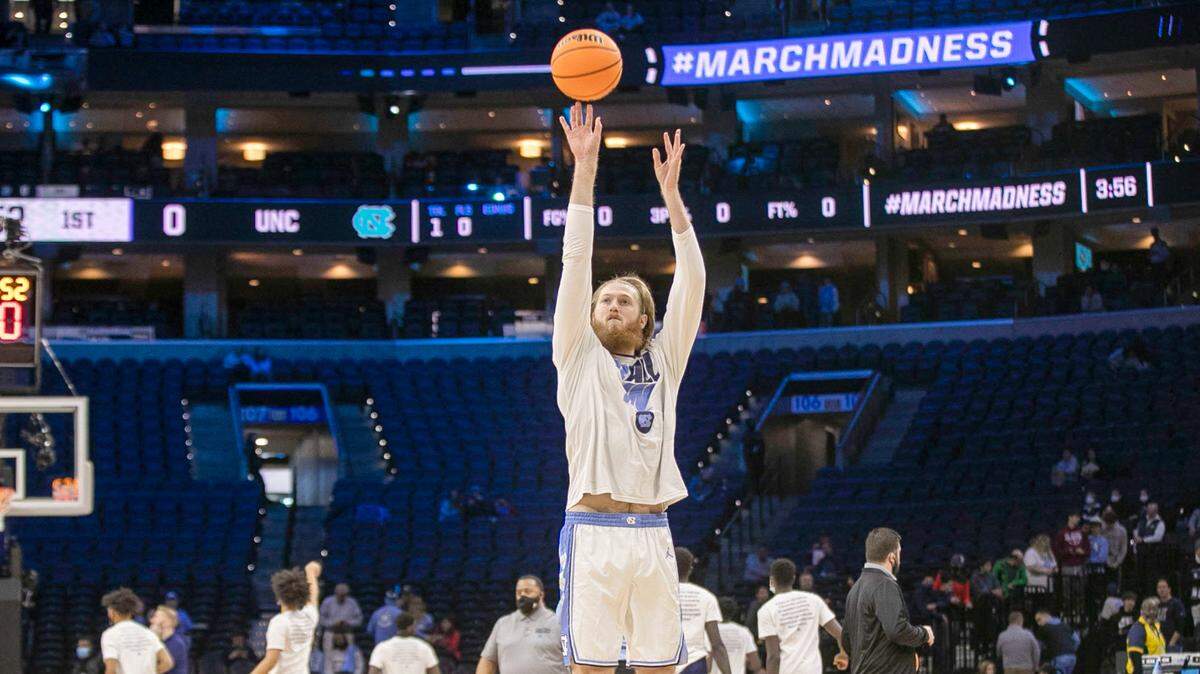
There was no hesitation at all in Caleb Love as he cut to his left, using an RJ Davis screen to find open space at the top of the court. The game was in his hands in the final minute. He knew it. Duke’s Mark Williams, a step late, ran at him, all 7 feet of him, arm outstretched toward Love.
It wasn’t for a national title, the way Michael Jordan’s shot against Georgetown was 40 years ago, in this same building, at the same end of the floor. But it wasn’t far off, given the stakes and the opponent and how far North Carolina had come. In Love’s career, nothing else comes close.
“No. 1, for sure,” Love said. “That’ll be No. 1.”
Then again, there’s never any hesitation from Love, no regrets, no remorse, never a shot he didn’t think he could make, never a miss that would deter him from shooting again. Both he and Brady Manek will persevere in the face of any evidence to the contrary, so strong is their belief that the next one is going in.
“I know I’m not going to make every shot,” Manek said. “But I deserve to make every shot.”
Shooters shoot. And a hot-shooting shooter can make the real unreal and the impossible possible.
Love and Manek, both hot at the same time, have shot North Carolina into Monday’s national title game against Kansas as a No. 8 seed, from the bubble to the brink of a championship in the space of a month, the kind of imposed chaos that can only happen within the tiny six-game window of the NCAA tournament.
Love is averaging 10 3-point attempts a game, Manek eight, and they’re each averaging exactly 20 points per game in the NCAA tournament. Those are the kind of numbers that can skew history.
“I know it’s going in, especially if I’m passing them the ball,” RJ Davis said. “Brady and Caleb, they both make terrifically difficult shots.”
Even the best quarterback can’t operate without an offensive line that can protect him. An ace pitcher can shut down the opposing lineup and throw a perfect game, but his team can’t win unless it scores, too. But a shooter … a shooter can shoot his or her team to victory regardless of what happens around them, especially within the vast variances of survive-and-advance college basketball.
The game can blur and swirl into an abstract mess with a shooter at the center of it, in focus, just as the basket is in focus for that player in that moment. A shooter can change not merely a possession or a game but the course of an entire season, for better or for worse, for his team and elsewhere.
This phenomenon can be a ripple in the ocean that gains speed and momentum and power until it becomes a tidal wave that swamps faraway coasts without warning.
Steph Curry did it for Davidson in 2008, shooting the Wildcats to the verge of the Final Four. Kemba Walker took a Connecticut team that finished the regular season 4-7 in its final 11 games to a title in 2011 and Shabazz Napier did it again with a seventh-seeded UConn team three years later (with a newish head coach who starred at the school taking over for a legend, if that sounds at all familiar). Buddy Hield got Oklahoma to the Final Four in 2016 … only to come up empty in a 45-point loss to eventual champion Villanova.
Collectively, they have upended seed expectations, obliterated brackets, become one-man bands going on world tours. And they have done it, as Love and Manek have, in the face of enormous negative feedback at times, internally and externally, where every miss only seems to steel their reserve that the next is going in, a level of confidence that’s almost dangerous.
“(Manek) believes that he can make any shot,” Love said. “He was falling out of bounds last night, and he hit it. And I was like, that’s just Brady. Having a guy like that who doesn’t lack confidence at all, just like me, that’s a great thing to have.”
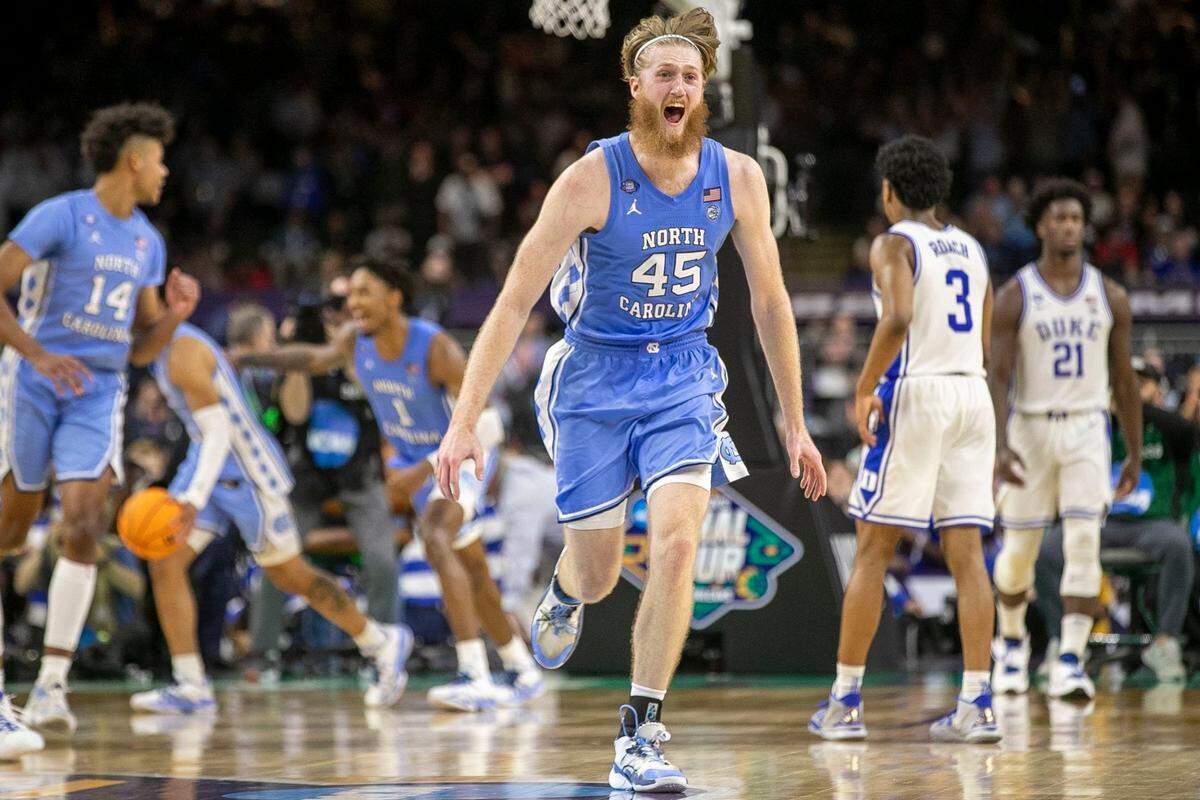
That starts at the top, where Hubert Davis – a prolific, high-volume shooter himself as a college and NBA player, by the standards of the time – has given his players the ultimate green light.
“You never see us shoot a shot that we think is a bad shot,” Armando Bacot said, “because he’s never telling us, ‘That’s a bad shot, don’t do this, don’t do that.’ He’s always encouraging us.”
That feedback loop can make bad losses worse, as it did for North Carolina early in the season, when Love’s shot selection in particular was the subject of intense criticism. Or it can make a good team great, as Love and Manek have in this postseason.
Love has almost singlehandedly redirected the fate of not only North Carolina but UCLA and Duke, the latter in a cataclysmic winner-take-anything-and-everything victory that was sealed by that quick-fire 3-pointer with 24.8 seconds to go.
Manek hasn’t been far behind, with the quickest of triggers at 6-foot-9, banging in corner 3s at critical moments in the second half Saturday after being a nonfactor for much of the first half. And Davis has had his moments as well, bailing out the Tar Heels against Baylor with Manek ejected and Love fouled out – an overtime win that may be the miracle of miracles in March.
“(Manek) and Caleb are arguably the two best players in the tournament,” Kansas coach Bill Self said. “It’s shocking to me, I just noticed this morning looking at the statistics, we’ve shot 91 3s in tournament. Manek and Love shot 90 by themselves. It’s amazing.”
The Tar Heels will be an underdog, again, against Kansas, which looked defensively dominant in Saturday’s almost forgotten win over Villanova. But they have the ultimate wild card, two no-regrets, no-remorse shooters who will live and die from long range, and the Tar Heels will, one last time, live and die with them as well.
Never miss a Luke DeCock column. Sign up at tinyurl.com/lukeslatest to have them delivered directly to your email inbox as soon as they post.
This story was originally published April 3, 2022 at 5:12 PM with the headline "Shooters shoot, and North Carolina’s have carried Tar Heels to brink of NCAA title."