
‘What idiots decided that?’ How the Silfab plant landed next to 2 Fort Mill schools
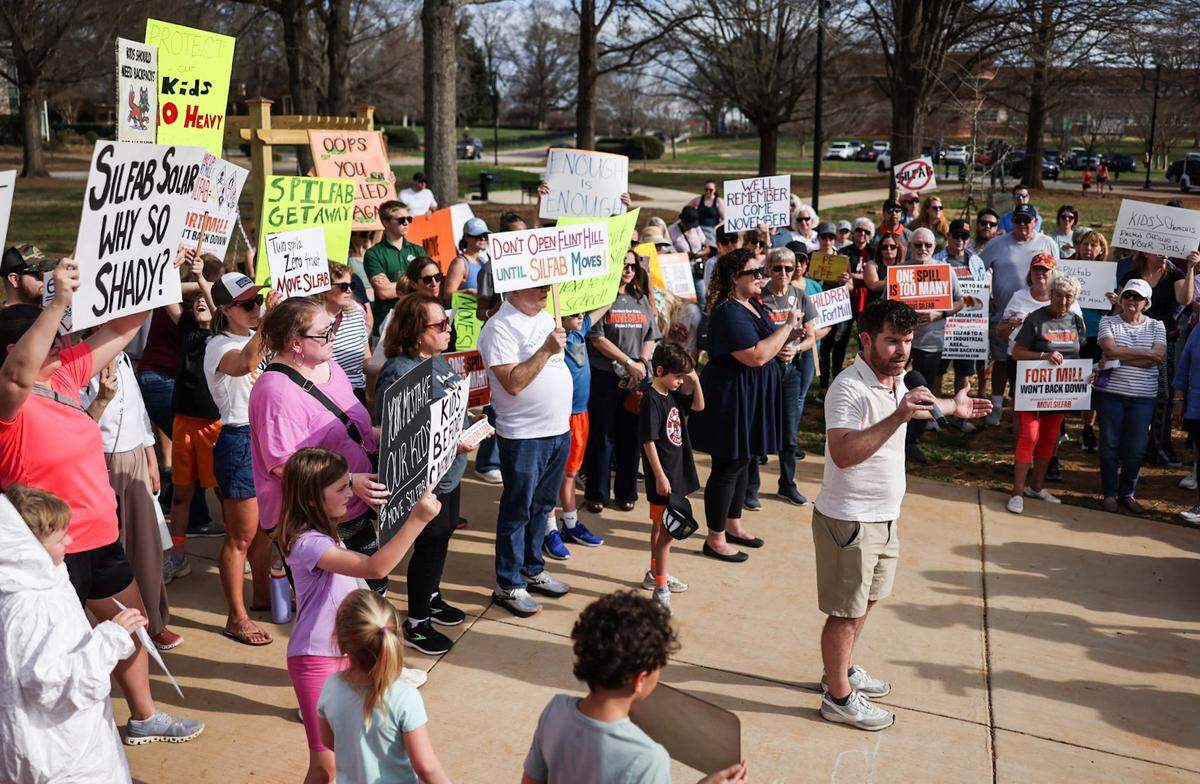
A flood of public comments washed through the Rock Hill region last week after two reports of chemical spills at the Silfab Solar plant in Fort Mill.
Many people asked a pair of questions that already were a common refrain in three years of intense public debate: How could a manufacturing company using industrial chemicals be allowed to operate beside an elementary school? And why did the school district decide to put two schools near there?
This comment was typical following a 300-gallon potassium hydroxide solution spill on March 3: “Never should have been built beside schools and homes,” Carole Flynn commented on a Fort Mill School District Facebook post. “What idiots decided that?”
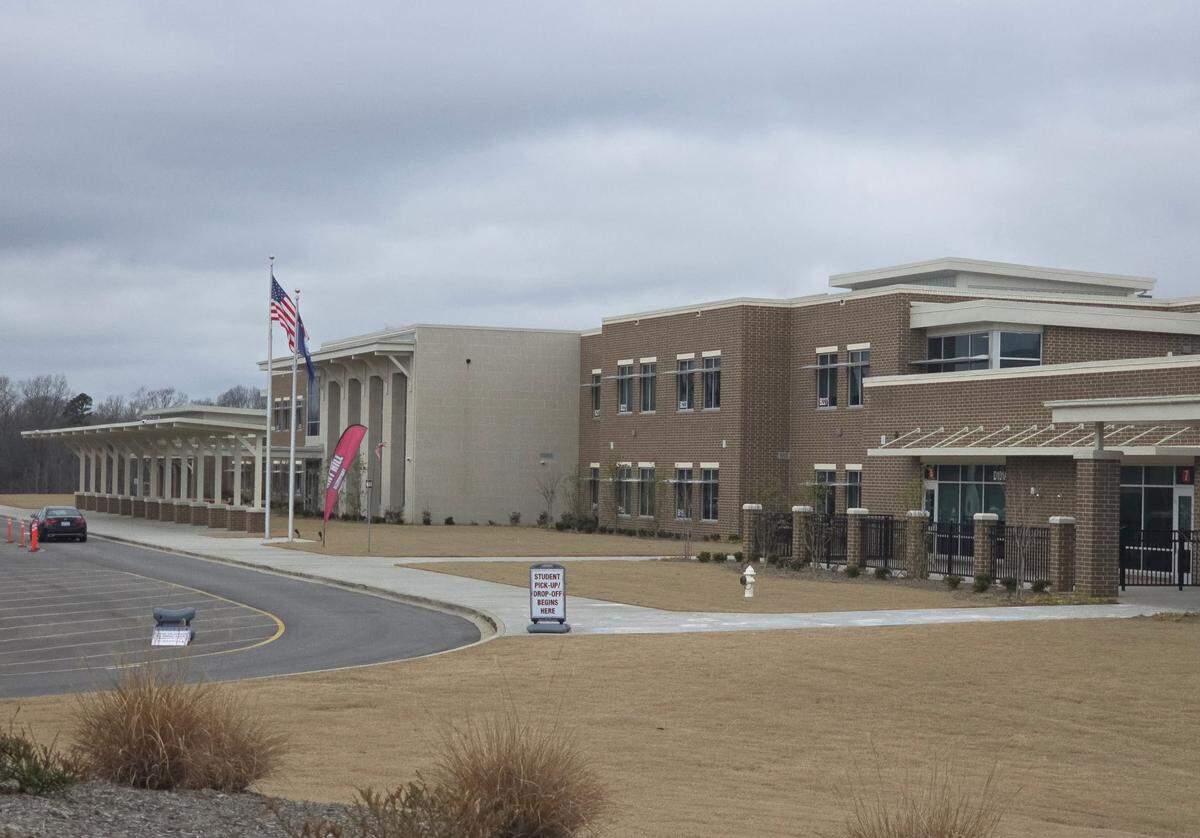
Flint Hill Elementary School is adjacent to Silfab and Flint Hill Middle School is under construction.
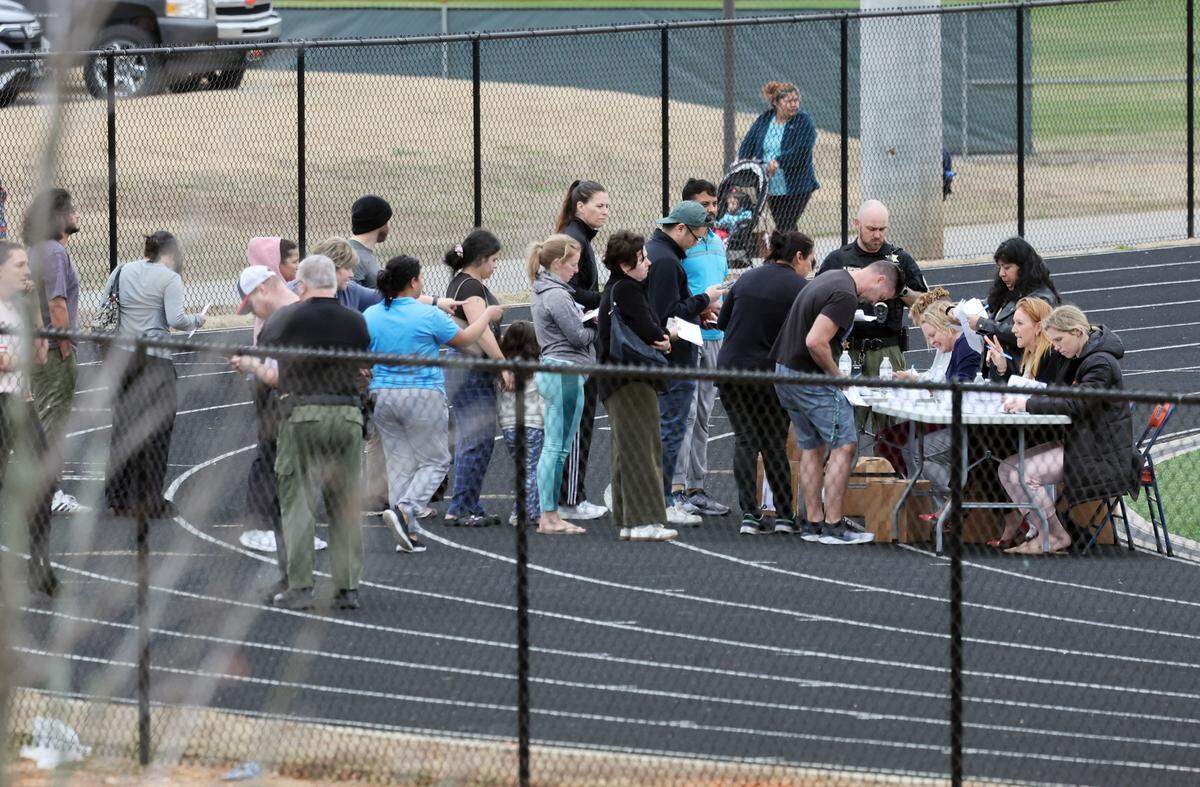
Two days after the potassium hydroxide spill, York County reported a leak that Silfab found in February from a hydrofluoric acid holding tank. That second report prompted the S.C. Department of Environmental Services to issue a stop work order for Silfab until the agency could investigate.
That review happened Monday, and Silfab resumed its solar panel assembly operations Monday night. It has yet to begin manufacturing that involves chemicals.
Many residents blamed York County for allowing Silfab to open next to a school. Some blamed the school district for building next to Silfab.
So, who is actually responsible for how Silfab and the schools wound up being neighbors? To untangle the issue, The Herald reviewed county, court and property records dating back nearly a decade, as well as school district documents, county public statements, zoning decisions and the paper’s archive coverage to determine what happened, and how.
Who owned their property first in Fort Mill?
Like many aspects of the Silfab controversy, the question of whether the Fort Mill School District or Silfab got to Gold Hill Road first isn’t a simple one.
Both sites belonged to The Eubanks Family Partnership, in a spot between Interstate 77 and U.S. 21 that was zoned for light industrial uses in 1992.
In 2017, the school district acquired 40 acres from the Eubanks partnership for $10. That was the first part of the now 88-acre district site where Flint Hill Elementary is, and where Flint Hill Middle School is under construction.
The district got the rest of the property in the summer for 2020, through three deals with Eubanks family members combining for $4.5 million, land records show.
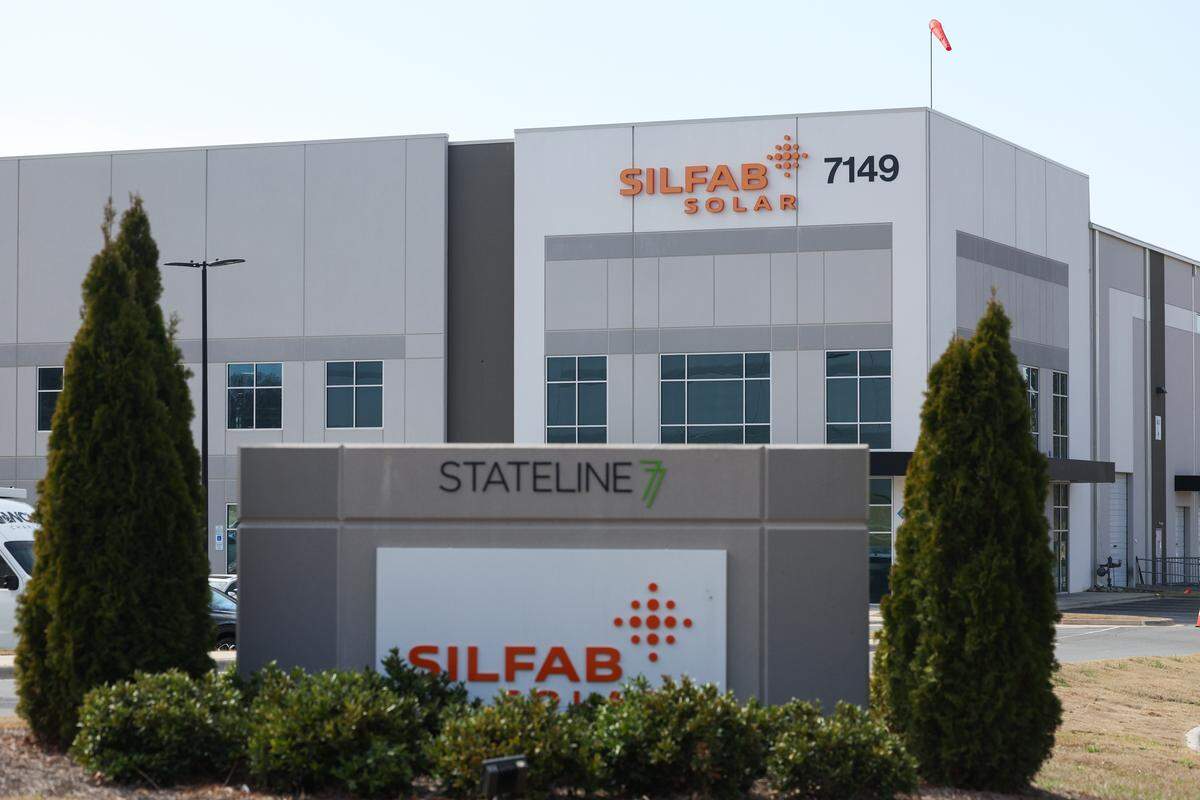
In between those deals, work began that eventually would bring Silfab to Fort Mill. In 2019, York County planners approved a traffic analysis for three new commercial buildings at 7149 Logistics Lane.
That fall, The Eubanks partnership sold two properties beside the school site, at nearly 70 acres combined, for $8.5 million. Properties would be subdivided in 2020 for those new buildings, including the one where Silfab is.
So, the school district owned some property on Gold Hill Road first — but commercial building development was underway before the district owned its entire site.
Who planned to build first, Silfab or schools?
Economic developers are typically tight-lipped about big deals before they’re complete, but it’s clear Silfab was in the picture by summer 2021.
That’s when York County Economic Development asked county planners if solar panel manufacturing was allowed in light industrial areas. County staff indicated it was. The Silfab building was completed in 2022.
An early 2022 county code update that disallowed schools in light industrial areas prompted the Fort Mill school district to rezone its 88 acres. The school district applied for rezoning in October 2022, telling county planners to expect an elementary and middle school.
The district had some conversations about putting schools there since 2016, school officials told the county.
In late December 2022, while the school rezoning request was still under consideration, York County planners sent a letter to Silfab stating solar panel manufacturing would be allowed at 7149 Logistics Lane.
At that point, the possibility of neighboring properties with manufacturing chemicals and school children began its collision course.
Should York County and Fort Mill schools have seen the conflict coming?
In February 2023, The Herald named Silfab as the company negotiating with York County for a Fort Mill site. Two weeks later, on On March 6, 2023, the school and Silfab projects both reached a key decision point.
Rezoning for the schools would finish right as Silfab’s incentive approval began.
York County Council voted unanimously that night to finalize the school site rezoning to a zoning class that allows for schools. Later at that meeting, Council voted 5-2 for a tax incentive agreement for Project Mountie, then the codename for Silfab, a Canadian company.
The tax incentives were finalized in September 2023. It projected 800 jobs and a $150 million investment from Silfab.
Early on, though, there were concerns.
Council deferred a vote on the Silfab incentive package when it first came up on Feb. 20, 2023. Councilwoman Debi Cloninger, who represents the district that includes the Silfab and school sites, brought up environmental issues with new schools going beside manufacturing.
As for whether someone in authority should have seen the chemical and school issue coming, some people did. Most of the pushback came from residents, however.
They began speaking out about those concerns in early 2023, and kept doing so through September 2023 when Council approved the Silfab incentive deal by a 4-3 vote.
Split votes on large incentive deals aren’t common in York County. But they happened throughout the more than six-month approval process for Silfab.
Along with traffic, environmental concerns due to chemicals were a major reason why some Council members voted against the Silfab deal. Board members even amended the deal the night they finalized it, requiring Silfab and the property owner to maintain $1 million in environmental insurance for the duration of the tax incentive deal.
That policy would also insure the county, according to the Sept. 18, 2023, vote.
A $50,000 letter of credit was required in the event property owners or tenants had to address an issue requiring “clean up in order to allow a business to occupy the site,” according to the deal.
When residents brought concerns to the school board, board members told them Silfab zoning questions were a York County issue. The school district did address environmental testing plans at Flint Hill Elementary, contracting with environmental monitoring consultant Citadel EHS in May 2025.
The school board never openly discussed any plans to stop construction at either of the new schools once the Silfab project became publicly known.
The school district owned land in the area first, but Silfab’s building was completed before either school opened. Both projects were too far along to back out on account of the other.
Was the Silfab and school conflict inevitable?
Once Silfab and the school district had their county approvals, the groups followed similar timelines.
Two weeks after York County finalized the Silfab incentives, the Fort Mill school board approved a construction contract on Oct. 3, 2023, to build the $56.3 million Flint Hill Elementary. The next day, RG Baxter Lane sold what is now the Silfab property to Pennsylvania-based Exeter 7149 Logistics for $106 million.
In early December 2023, the school board voted to hold a $204 million bond referendum the following spring that included money to build Flint Hill Middle right beside Flint Hill Elementary.
But by early 2024, the Silfab project faced mounting questions from residents.
Neighbor Wally Buchanan asked the county for a zoning interpretation in February on why Silfab was allowed in a light industrial spot. Dissatisfied with the response, Buchanan appealed his request in March 2024 to the county Zoning Board of Appeals.
That same month, school district voters approved the bond referendum that allowed for construction of Flint Hill Middle.

Should the courts have intervened over Silfab?
Public debate turned feverish by the time Buchanan’s case made it to the Zoning Board of Appeals. On May 9, 2024, a packed crowd at the government center in York heard the appeals board vote against county planning staff’s prior decision.
The appeals board ruled solar panel manufacturing, previously unlisted by name in the county code, should only be allowed in heavy industrial areas.
Silfab opponents thought they’d finally won. They thought wrong, and learned a month later that York County didn’t intend to stop Silfab. The county took the position that the zoning board’s decision impacted future projects, but not Silfab since it was ongoing.
Still, Silfab appealed the appeals board decision in June 2024.
In November 2024, Silfab announced it had closed on $100 million of new funding to scale its solar cell manufacturing site in Fort Mill. The company intended to be operational by the end of that year, about eight months before Flint Hill Elementary’s planned opening.
In July and December 2025, the Supreme Court of South Carolina declined to hear two cases related to Silfab. In between, Flint Hill Elementary opened on Aug. 4, 2025.
As several state court cases progressed, the school board continuously called Silfab zoning questions a legal issue outside its control.
In January, a state Circuit Court ruling dismissed a case challenging York County’s actions in support of Silfab. The county issued a statement urging citizens to “be respectful in their disagreement and to avoid publicly advancing allegations or accusations” impugning the county’s character or conduct.
Two months later, York County posted the first report of Silfab’s initial spill. And residents erupted again.
Not just because schools were built beside a factory and a factory was built beside a school. But because both pushed forward with parallel plans without breaking stride, regardless of how they’d be impacted by the properties beside them.
Use the timeline below for more details on school and Silfab decisions:
Reality Check reflects the Rock Hill Herald’s commitment to holding those in power to account, shining a light on public issues that affect our local readers and illuminating the stories that set the Rock Hill region apart. Email realitycheck@heraldonline.com
This story was originally published March 13, 2026 at 5:08 AM.