These pilot programs could pay for York County electric vehicle owners who share data
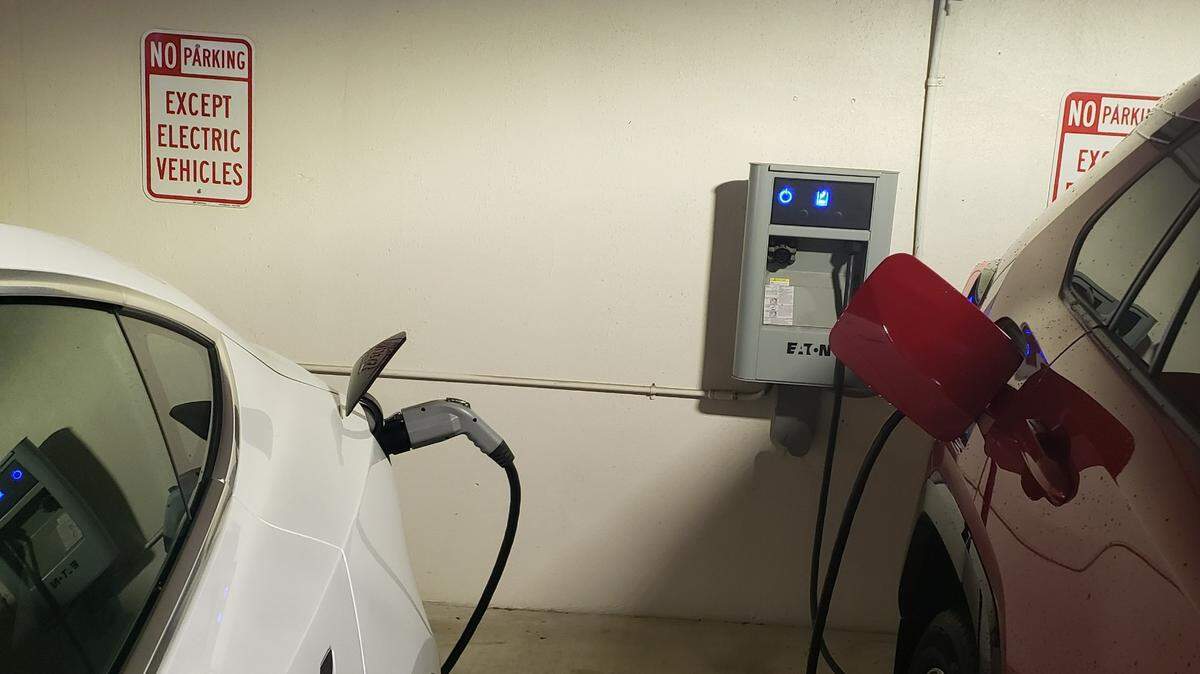
Electric vehicles might change the transportation experience in been in place for generations — and not just for drivers.
More electric vehicles on the road will mean more demand for electricity to charge them. For York Electric Cooperative, new pilot programs coming will help determine how best to meet that need.
“We are monitoring the influx of EVs on our system and the impact we can see on a local level,” said Porter Gable with York Electric.
Optiwatt is an app that electric vehicle drivers use to manage charging. It automates charge times to reduce costs and strain on area power grids. The California-based company started in 2020 and now manages more than 60,000 vehicles across North America. Optiwatt works with about 500 vehicles in South Carolina, and about 100 in the greater Charlotte region.
“As EV adoption increases, widespread charging peaks can become more noticeable, where vehicles charging at the same time begin to stress the power grid at a macro scale,” said Matt Grace, head of growth with Optiwatt.
Optiwatt already is working on some of these issues with South Carolina electric cooperatives, including using software to align vehicle charging with grid priorities, Grace added. This will ensure affordable pricing and reliability.
York Electric is one of more than a half dozen cooperatives in South Carolina partnering with Optiwatt. The statewide goal is to have 250 enrolled vehicles for a six-month study. York Electric customers who participate will get $150 in bill credits per vehicle. Owners of fully electric or hybrid vehicles can participate.
The pilot program asked existing Optiwatt users, who also were cooperative members to allow York Electric to offset EV charging during peak times, Gable said. The data gathered from the EV charging will be used to better inform and create new programs, he added.
Optiwatt may occasionally postpone charges at home during high peak demand. Drivers can override that limitation, or opt out at any point. The setup will keep vehicles charged in time for trips. The setup doesn’t impact charges away from home.
Gable added, the company hopes the pilot program reveals several things including:
- The charging habits of members.
- Whether the platform is a viable option to offset peak energy use demand times.
- Evaluating how EV charging affects our transformers and other equipment used to distribute power
South Carolina only has about 1% of the electric vehicle registrations California does, but even relatively small demand can cause issues, Grace said. It’s largely since infrastructure may be similarly scaled down.
“Grid stress can arise from small pockets of EV adoption early on,” Grace said. “Optiwatt sees the highest density of EVs currently in Fort Mill, Myrtle Beach, Summerville and Simpsonville, with many other locations following close behind.”
Word-of-mouth, as electric vehicle owners discuss their experience with neighbors, is one reason why certain areas might pop up with more demand need than others.
“In these early days of EV expansion, localized infrastructure concerns emerge first, where multiple Level 2 EV chargers on the same circuit can stress assets near or above their rated capacity and reduce their estimated life,” Grace said.
The pilot is part of a larger effort to understand the EV impact. Cooperatives across the state spent the past year on an All Things EV project with stakeholders, to forecast potential risks and benefits of the technology.
There’s a new strategic plan, a webinar series for York Electric employees, modeling using state transportation department data on EV saturation and information for members on EV buying options.
“We have taken several steps to address the opportunities and challenges faced with the electrification of this sector of our economy,” Gable said, “while maintaining the importance of providing affordable, safe and reliable energy.”
Rock Hill, Duke electric providers
York Electric, one of 20 cooperatives across the state, serves portions of Lancaster, Chester and Cherokee counties in addition to York. York Electric serves more than 65,000 members.
Rock Hill has more than 30,000 customers. Duke Energy serves more than 38,000 customers in York County, and another 37,000 in Lancaster County.
Logan Kureczka with Duke Energy said the company has several electric vehicle initiatives, in addition to supporting state infrastructure plans with new charger installations — often at no cost to the area where they’re installed.
Kureczka said the utility wants to simplify EV adoption for its customers via innovative programs, while readying the grid to support increase electric vehicle use.
Duke’s Park and Plug program assists companies by installing 60 fast chargers at 30 sites across the Carolinas. Duke contracts with providers, then provides two fast chargers and everything needed to operate them, at no cost. Lancaster has one of eight sites since the program started in fall 2021.
For electric vehicle owners, a Duke pilot program in South Carolina provides up to $1,000 for customers who install charging stations in their home garages, provide access to charging data and allow Duke to manage charge times during non-peak hours. About 300 customers are enrolled, and the program is full.
Duke proposed two more programs, but as a utility they have to work their ways through various approvals in South Carolina. One would provide credits to reduce upfront costs of upgrading electrical system to install chargers for home and businesses. Another would increase access for residential and business customers to get charging and other equipment for electric vehicles.
Rock Hill’s support of electric vehicle usage comes largely through its access to public chargers.
This fall, federal approval of a South Carolina statewide deployment plan put more than $25 million toward new charging stations over the next two years. The state will prioritize new stations along interstates.
That state plan identified 19 public charging sites with 51 chargers in York, Lancaster and Chester counties. Almost double the number of stations the region had in 2020.
A dozen of the regions stations and more than half its chargers are in Rock Hill. City Hall, the municipal garage, operations center and airport each have chargers.
Another major driver of charging stations is the hotel industry. The largest charging stations are Tesla outlets, at hotels in Fort Mill and Rock Hill.
The city offers free charging at its stations. The city was a stakeholder in statewide electric vehicle programs and is a member of the International Parking and Mobility Institute where the city participates on electric vehicle readiness for next year’s conference presentations.
“They’re getting ready to send out a survey on EV readiness globally, and we’re part of the cohort of volunteers putting this together along with cities that include Grand Rapids, Miami and San Diego,” said Katie Quinn, communications manager for Rock Hill.
Widespread electric vehicles
Though South Carolina fully electric or hybrid vehicle registration has gone up roughly 30-60% each year since 2016, it’s still a relatively a small percentage of state traffic. Last year, the state had more than 12,000 electric or hybrid vehicles. The state has almost 3.9 million licensed drivers, per the Federal Highway Administration.
Yet change is on the horizon. Three years ago, the Rock Hill-Fort Mill Area Transportation Study forecast for area public officials a transition that will occur in time not only to electric, but semi-autonomous or completely driverless vehicles. Rock Hill began a free, all-electric public bus service that same year even the bus manufacturer said was a novel step forward.
“A lot of transit systems throughout North America, throughout the world, have started to dabble in electric vehicles,” Proterra CEO Ryan Popple said at the 2019 bus debut in Rock Hill. “But to the best of my knowledge, this is the first one where the transit system from the start is designed to run on clean electricity.”
Three months ago when the I-77 Alliance held its annual economic development summit, electric vehicles were a key conversation topic. Keynote speaker Mark Williams with Strategic Development Group said the automotive and battery sectors are hot. Williams said by 2030 about 30% of automobiles worldwide will be electric, and companies from car to battery to battery component makers are looking for expansion sites.
“Gradually internal combustion engines are going to come down,” Williams told the Alliance. “EVs are going to go up. I don’t think internal combustion engines are going to be completely replaced, but the trend is strong.”
President Joe Biden set a goal for half of all new vehicles sold nationwide by 2030 to be zero-emissions vehicles.
This story was originally published December 5, 2022 at 1:00 AM.