Here’s why the cost to do business in Fort Mill is about to go up — again
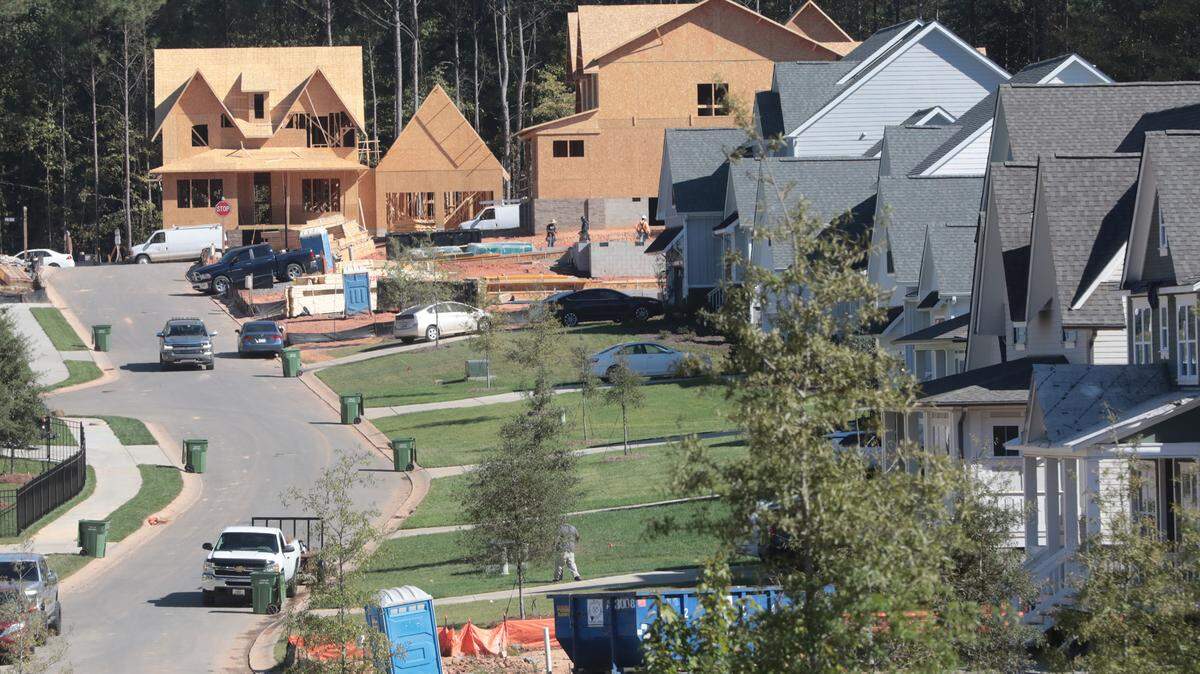
The cost to build in Fort Mill will go up — again. On Monday night, the town approved new, higher rates for its impact fees.
The fees are a one-time charge on new development aimed at funding needs created by growth. Fees apply to new residential and commercial construction. Fees on new business construction vary considerably based on size and type of business.
The town started collecting impact fees for municipal services, fire protection and recreation in 2015. The full recreation fee and parts of the others are added to the price of new homes.
Parts of the 2015 fire and municipal fees charged on new business stirred controversy. Business leaders said at the time they didn’t want the town to push away new business ventures. The town lowered the fire and municipal rates from the maximum amount state law would allow. The town also chose not to charge anything for a transportation impact fee, which could fund road work but would hit new businesses hardest.
However, impact fees have to be updated every five years. A new study came in mid-2020, and Fort Mill raised its impact fee rates for fire and municipal costs, amid continued public needs in one of the region’s fastest growing towns.
Controversy over the increase
Fort Mill Economic Partners and the York County Regional Chamber of Commerce asked the town to reconsider that move, given extraordinary COVID-19 business challenges at the time. Those two business groups showed the fees for some new business types increased by 300%, or more, with the mid-2020 rate change. Data they presented from a Winthrop University economics professor’s study showed an increase in the average commercial investment as a result of the fee up 108% after the change.
A new fast food restaurant would see an almost 350% increase, per the presented study. New car dealerships, furniture stores, supermarkets, tire stores, business hotels and movie theaters all saw costs more than 150% higher. A 60,000-square-foot supermarket with a $23,000 impact fee prior to the 2020 change would have a more than $63,000 charge, per the study. A 2,000-square-foot restaurant doubled to almost $8,000 and the same size fast food restaurant went up almost five times to more than $15,000.
In November 2020 the town set its rates back to what they had been, to reduce the strain on businesses.
The decision Monday night puts the fees back at what they were for the period between July and November 2020. The new fees begin in 30 days.
“Impact fees can be raised or lowered,” said Mayor Guynn Savage. “There’s no time constraint on how frequently or how much time between (changes) occurs. That is not important. What is important is the structure of impact was such that growth would pay for growth.”
To date the town has collected more than $8 million in impact fees.
It’s time for a fee increase
That money funded or helped fund the new town hall, a second town fire station, property acquisition near Dobys Bridge Park, Banks Athletic Park, the amphitheater and other upgrades at Elisha Park.
The town now needs land or office space for public works, money for large vehicles or equipment, parking and related items. An updated capital needs list in the next budget cycle will be reviewed and potentially add items eligible for impact fee funding.
Even as the business community asked for relief during the COVID-19 pandemic, leaders said they understood the need for more funding in a growing town. They asked for relief during the worst stretches of the pandemic.
Town officials now say it’s time to make the change.
Councilman Chris Wolfe, formerly a town planning commission member who worked extensively on impact fee rates, said recent interactions with business leaders have been positive and they understand the change. No one spoke Monday at a public hearing on the proposed changes.
“The point is the schools have grown,” Wolfe said. “All the other facilities have grown. The town is in need of additional capacity to support the growth.”
Savage, too, said her discussions with business leaders in recent weeks have been positive.
“They knew that we were considering this and understood the reasons for it,” Savage said.
Impact on home prices
The impact fee study required by state law allows Fort Mill to charge more than $3,100 per home and almost $2,400 per apartment. It also allows, for every 1,000 square feet of space, charges of more than $2,400 for an office building, $1,900 for a shopping center and more than $1,300 for light industrial development.
Yet the actual charges are lower. The coming fees still will be lower than what the town could charge, but will be higher than they are now.
In a month the fee categories all will be down 10% from the maximum amount the town could charge. Today, with municipal and fire fees further discounted, the total town charge on a new home or townhome is about $2,000. An apartment is $1,600. Business rates vary from a few hundred dollars for every 1,000 square feet to $5,000 per 1,000 square feet for some types of fast food restaurant.
This story was originally published July 26, 2022 at 1:34 PM.