
York County residents wary over secrecy behind plans for old Panthers HQ in Rock Hill
Amid public grumbling about York County economic development deals settled behind closed doors, some county residents are questioning the need for secrecy for a potentially transformative Rock Hill project.
The city has an agreement to sell part of the former Carolina Panthers headquarters site off Interstate 77. Yet few details are public due to state and local economic development practices that allow or even mandate confidentiality until deals are finalized.
Several community groups and political candidates have posted on social media the past week asking why there aren’t more details when the seller, the city, is a public body. A Facebook post on York County District 2 for Change generated 170 comments. Examples include:
“What happened to all this transparency? When (do) the citizens of Rock Hill get a vote in how land in our community is being used?” asked Donna Bustle.
“Most things done in secret are never good,” said Dana Dalin.
“I don’t mind the buyer staying anonymous, but what the use will be should be public,” said Mike Maddox.
There’s been a huge push from the community toward transparency in economic development deals, York County Council Chairwoman Christi Cox told the Economic Development Committee last week.
Much of it stems from past deals that proved controversial after the county approved incentives without announcing the company that was coming. A data center in Lake Wylie and a solar panel maker in Fort Mill are the two prominent recent examples.
Transparency is a critical issue, Cox said, that county leaders should address.
“We need to explain it, and we need to identify ways that we can be more transparent with the community,” she said. “Because frankly they’re asking for it, and I don’t blame them for that.”

Palmetto Rock project in Rock Hill
There’s evidence to suggest another large economic development project is afoot.
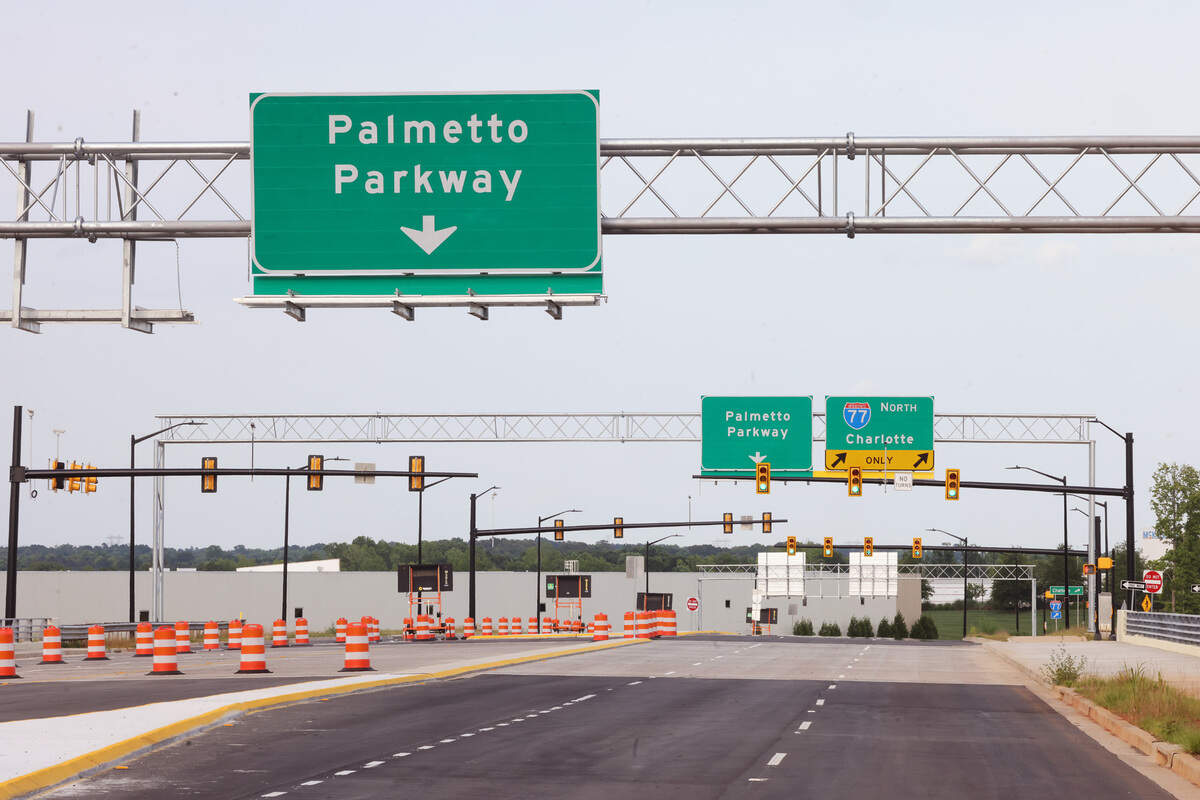
In a special session on April 27, Rock Hill City Council voted unanimously to approve the sale of 50 acres at 3286 Palmetto Parkway to a group called Project Palmetto Rock. That move still requires a second, final approval from Council. It also allows the city manager to make changes needed to the sale agreement if needed.
That Palmetto Parkway address is the site off Exit 81 where the Carolina Panthers had a new headquarters and training facility under construction, before pulling out of the deal four years ago during a contentious dispute with the city on funding obligations.
The property for sale to Project Palmetto Rock is nearly a quarter of the city-owned site.
City Council next meets on May 11. If the city doesn’t finalize the decision then, the next upcoming opportunities are May 26 and June 8.
City officials didn’t comment on the deal when they gave initial approval, except for City Attorney Paul Dillingham stating economic development and disclosure rules prevented the disclosure of details.
Large economic development deals often involve York County, as the county sets fee rates and structures when big companies seek tax incentives. The county also works closely with the South Carolina Department of Commerce on incentive deals to attract new business.
The York County Economic Development Committee met April 29, with a contract issue related to Project Palmetto Rock listed as the only item in a more than hour-long executive session. The group didn’t discuss the project in open session.
Project Palmetto Rock wasn’t listed on York County Council’s May 4 agenda, either in public or executive session. Details weren’t given in an Economic Development Committee report in open session.
Typically, York County Council discusses tax incentives for large economic development deals at least once in executive session before scheduling them for the three votes needed to approve them. Council next meets on May 12. No agenda has been posted for that meeting yet.

Engineering firm tied for former Panthers site in Rock Hill
The Rock Hill Planning Commission agenda for May 5 gives some new details about plans at the former Panthers site.
Minnesota engineering firm Bolton & Mink, with offices in Charlotte and Rock Hill, submitted a petition to rezone 50 acres of the city property. The company specializes in planning, engineering and design of public sites and facilities, according to its website.
The new zoning would allow for a master planned business or industrial park. That listing gives a property owner more flexibility with density, design standards and other details it might propose to the city.
The Planning Commission would’ve heard details and held a public hearing on Tuesday, but Bolton & Mink asked for and received a deferral. No date is listed for when the item will come to the Planning Commission.
The Planning Commission recommends for or against rezonings, which then go to Rock Hill City Concil for final approval. That process takes two votes and a public hearing.
Messages left for Rock Hill city officials and for Bolton & Mink were not returned.
Past York County projects prompt concern
Two previous economic development deals have prompted public calls for more transparency. Three years ago, York County approved incentive agreements for a $1 billion QTS data center in Lake Wylie and a $150 million Silfab Solar manufacturing site in Fort Mill.
Residents, including several with anti-data center signs Monday night, have questioned County Council for months on what impacts data centers will have on the area. They’ve brought environmental, noise, water use and power demand concerns. The county modified its rules since approving QTS that determine how data centers are approved.
The Silfab Solar deal has proven even more contentious.
Public outcry has been steady for three years, related to whether manufacturing with chemicals should be allowed in a light industrial area and how Silfab was approved beside a public school site.
There’s no information to suggest the new Rock Hill site will be a data center or solar panel manufacturing site. The issue for many online is that they don’t know what it will be, just like they didn’t with QTS or Silfab until those deals were done.
“This decision of who and what occupies this space with their own exit from I-77 is a critical one for both residents and existing businesses in the city of Rock Hill,” former York County Councilwoman and Rock Hill business owner Allison Love posted on one of several Facebook posts about Project Palmetto Rock.
State law allows for project secrecy
Keeping companies secret as they negotiate terms isn’t always a York County decision, county Councilman Watts Huckabee explained when the Economic Development Committee met last week.
“Normally when a project comes to us from the state, it comes with a nondisclosure agreement,” he said. “So it would be up to the entity whether they want to disclose their name.”
County officials often cite unfavorable commercial tax structures in South Carolina compared to neighboring states as a reason to offer economic incentives to attract large companies. They note how operations funding for schools comes from businesses. Those and similar details are the ones Cox sees as adding transparency, not necessarily sharing company names faster.
The South Carolina Freedom of Information Act creates exceptions for what public bodies have to disclose. That includes pending economic development negotiations, South Carolina Department of Commerce Deputy Director of Communications Alex Clark said in an email to the Herald.
“The exemptions allow public bodies to keep working papers, proposed contracts, company names and proprietary information confidential during negotiations,” Clark said.
The state act doesn’t give an exact time for when a company name has to become public.
It often happens when incentives or agreements require public posting or county approval, Clark said. That matches how York, Lancaster and Chester counties often do it, at their third and final approvals.
If the incentive is a fee in place of taxes, that’s a county decision. The state Commerce Department has separate grants and incentives that typically lead to a company name being released with a project announcement. If there isn’t one, the project is subject to disclosure after an incentive agreement is finalized.
The Commerce Department echoes the common county response that without incentive deals, and the secrecy behind them, many large companies wouldn’t come here.
“Economic development is incredibly competitive,” Clark said. “This is especially true in the Southeast, as neighboring states often compete for the same projects and often have similar business advantages.”
Incentive deals rarely make a deal by themselves, Clark said, but can separate similar proposed project sites.
While many community members have argued against secrecy, economic developers say there’s a case for it.
“Economic development is a fiercely competitive arena, and projects are extremely sensitive about confidentiality,” Clark said. “Companies often evaluate multiple states simultaneously, and premature identification of the company can jeopardize the deal, harm the state’s competitive position and violate contractual nondisclosure obligations.”
From the economic development end, deals birthed in secrecy can help create new jobs and fund public services through new investments into communities. From the public response side, the value in keeping projects quiet often comes down to whether neighbors like the end result.
That’s one piece of the Rock Hill project the city has in its favor.
As the property owner, city officials have long said they wouldn’t sell all or part of the former Panthers property to someone who wouldn’t add value to the community.
That was the message Mayor John Gettys shared with the Herald two years ago, in looking to attract life sciences or advanced manufacturing companies to the site.
“We can create our own future,” Gettys said.
Reality Check reflects the Rock Hill Herald’s commitment to holding those in power to account, shining a light on public issues that affect our local readers and illuminating the stories that sets the Rock Hill region apart. Email realitycheck@heraldonline.com