
Will drought impact Lake Wylie’s data center? Will it grow? QTS offers answers
Amid lingering questions on water and power use for its massive data center project in Lake Wylie, heaven only knows the answer to one of them. What happens if the area is still in severe drought when the data center is finished?
The Herald met with QTS Data Centers officials from across the country on Tuesday in Lake Wylie to pose that, and other questions related to the new data center campus. Officials talked water, power and the type of company expected to do business with QTS at the site.
Here’s a look at the data center project, from how it got here to answers for several pressing questions:
What is QTS and why is it in Lake Wylie?
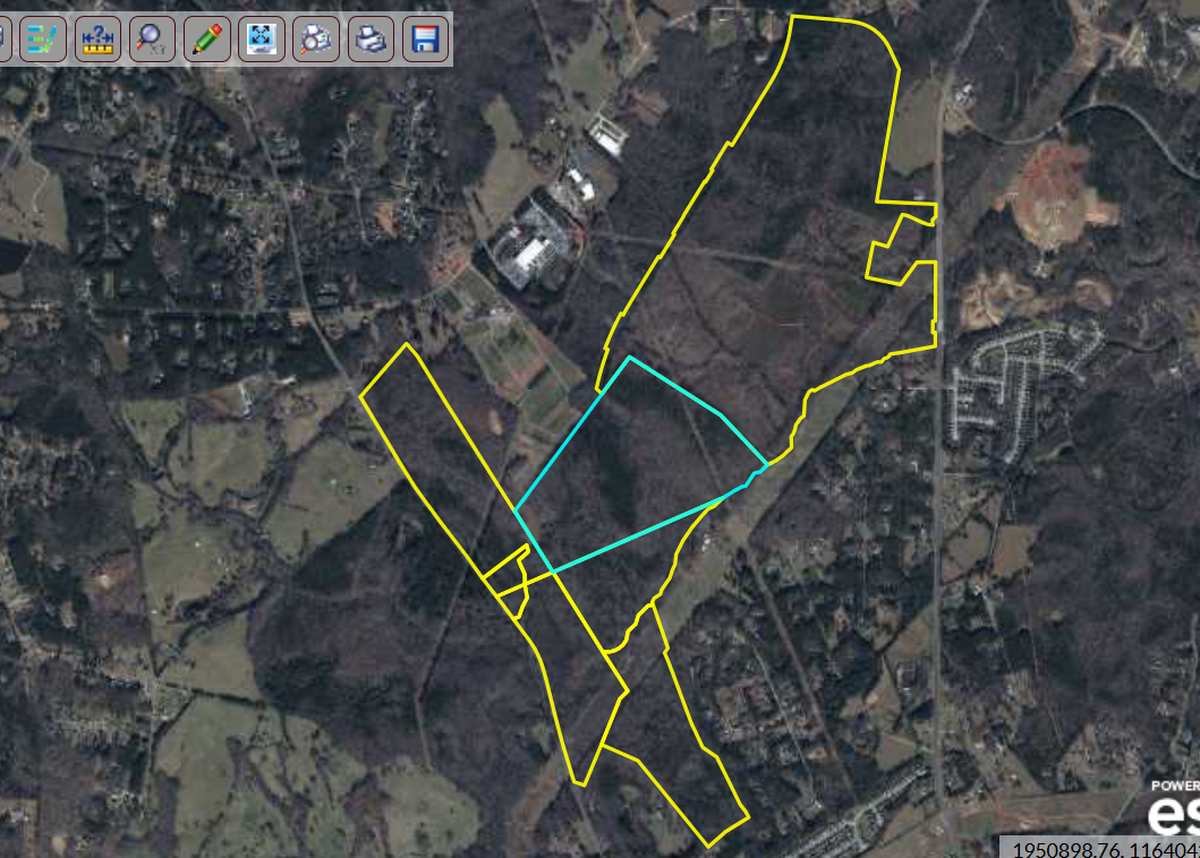
In summer 2023, Kansas-based QTS Data Centers bought more than $10 million of York County property. Some of it previously belonged to York County. Multiple deals at the time combined for more than 360 acres in Lake Wylie.
The Herald was the first to report QTS was the new owner, connecting the company to an economic incentive deal that county was negotiating with an unnamed company. As part of that deal, finalized that fall, QTS projected a $1 billion investment.
Several changes have come since, pointing to an even larger data center project. York County changed its rules last year to allow taller data centers. Late last year, QTS bought more than $26 million worth of property—400 acres—that more than doubled the size of its property.
There has been some pushback from the community in recent months, either to the QTS plan or to data centers in general. Residents poured into Oakridge Middle School in February with concerns about water use, power drain, jobs, sounds and a range of other issues during a QTS public meeting.
That meeting happened amid county reviews and proposed changes to the way future data centers are approved, including where they would be allowed.
What are the latest data center plans?
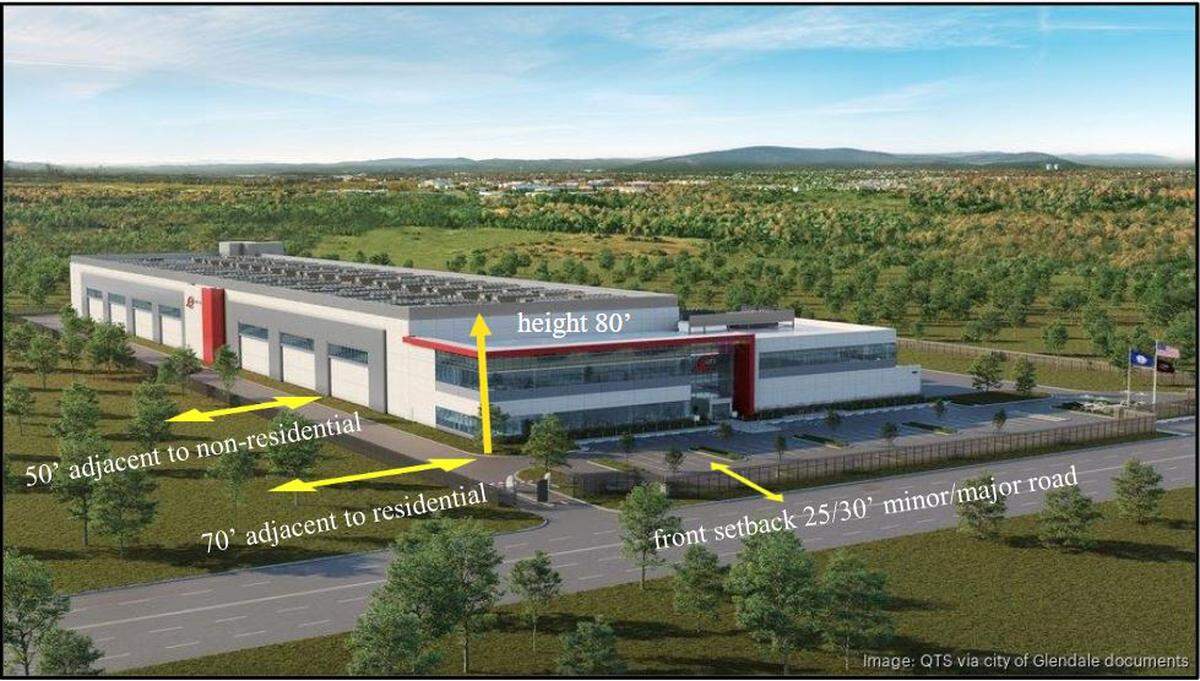
Now, QTS has a nine-building data center campus planned across three phases. The company lists the project as an $8 billion investment creating 200 permanent jobs and 1,000 construction jobs.
The first phase of construction is four buildings on about 200 acres. “They’re well underway, and I expect it will be done—that first phase—here in the next year, year-and-a-half at the most,” said David McCall, brand evangelist out of the company’s Atlanta office.
What about water use, especially in a drought?
Once the Lake Wylie site is operational, a closed-loop water system means the main need for water will be landscaping, bathrooms and drinking water. Each data center building should the equivalent of four houses worth of water.
There is an initial water draw, though, to start the system company official compare to a radiator in a car. That water will be used to cool servers.
“Then you just use that same water over and over and over again for the life of the facility,” said Travis Wright, Vice President of Utility Engagement with the company’s Phoenix office.
The company declined to give an amount for how much water that initial draw would take, but a $10 billion company project in Cedar Rapids, Iowa, needed 2.5 million gallons. The water would come from municipal pipes, not wells.
The Rock Hill and Charlotte regions are in a severe drought that has communities facing mandatory water use restrictions, cutting back by up to 15%. Officials aren’t sure what would happen if the area is still under those or more severe restrictions once the first phase is ready.
“In a worst-case scenario, if we were not able to use municipal water to fill the initial fill, there is the option to truck water in from somewhere where they’re not in a drought,” Wright said. “That is possible. We’ve never run into that situation, and feel like there’s probably a workaround.”
If future drought restrictions hit once a data center is operational, the largest water cutbacks would likely be landscaping. The data center campus could help in future droughts, officials say, by operating on a closed-loop water system where otherwise thousands of homes could be built.
How much power is needed, and who pays for it?
QTS cites security and confidentiality for not disclosing overall power capacity. Power needs for the QTS portion will be “in the range of about two large paper mills,” Wright said. Customer demand at full build-out will determine total power needs.
QTS is paying for all new power infrastructure. Duke Energy will do most of the work to upgrade transmission lines. York Electric Cooperative is the retail supplier. Because utility rates are typically the investment amount divided by electricity usage, QTS officials don’t expect Duke Energy or York Electric customers to see rate increases due to the project.
If anything, it may help rates since QTS is adding infrastructure that those utilities won’t have to pay for in order to get more electric output.
“It actually puts downward pressure on rates, not upward pressure,” Wright said.
The data center project will help modernize the electric grid and help support other power needs in the area by creating a consistent power load, officials say.
“Data centers are very flat loads,” Wright said. “There isn’t a whole lot of difference from day to night, season to season.”
What companies will use the Lake Wylie data center?
QTS doesn’t give details on companies that use its facilities. Generally, the company works with three types. There’s federal business, enterprise business (well-known but not giant companies) and hyperscale business.
“It’s probably one of the hyperscalers,” Wright said of who is likely to use the Lake Wylie data center, “which is one of the six or seven largest tech companies in the world.”
One or two buildings may be set aside for enterprise businesses.
Data centers are large sites with utilities in place to support companies that roll their own racks of servers in to store data. Typically, QTS will have one or more companies under contract for a data center building before construction begins.
Will the data center campus get bigger?
With the company buying more than half its total acreage in Lake Wylie after the project was announced, an obvious question is whether QTS plans to expand.
That’s a possibility, but so is using additional acreage for buffering. QTS came to York County expecting a supportive community and talented workforce, Wright said. If the ongoing build-out becomes the positive for this community that officials expect, that could make the case for additional data center space.
“(We) just felt like if we can grow this to be even bigger and better, let’s do it,” Wright said of the later property purchase. “But honestly we don’t have a real strategy and don’t have a plan for that yet.”
Company officials call cell phones a “data center remote control” and compare data usage to past inventions from the car to the internet. Needs only go up as technology improves, and even people concerned about having data centers in their communities are unlikely to stop using online data that creates the need for them.
Growth in the Rock Hill and Charlotte regions is a main reason why the QTS project is happening here, and on this scale.
“It’s going to be big in South Carolina,” Wright said. “I do think that there are some large data centers in the state, but this will be a big data center for the country.”
Want to know more?
QTS hosts a public meeting from 5:30 to 7 p.m. May 12 at Oakridge Elementary School in Lake Wylie. Company officials will be on hand to answer questions. The school is located at 5670 Oakridge Road.