Black History Month: Rock Hill business owner helps others grow by ‘filling a need’
READ MORE
Highlighting Black voices in the Rock Hill region during Black History Month
This month, in honor of Black History Month, The Herald is highlighting voices in the region who you may not have heard. These are Black people who quietly have an impact in our communities.
Expand All
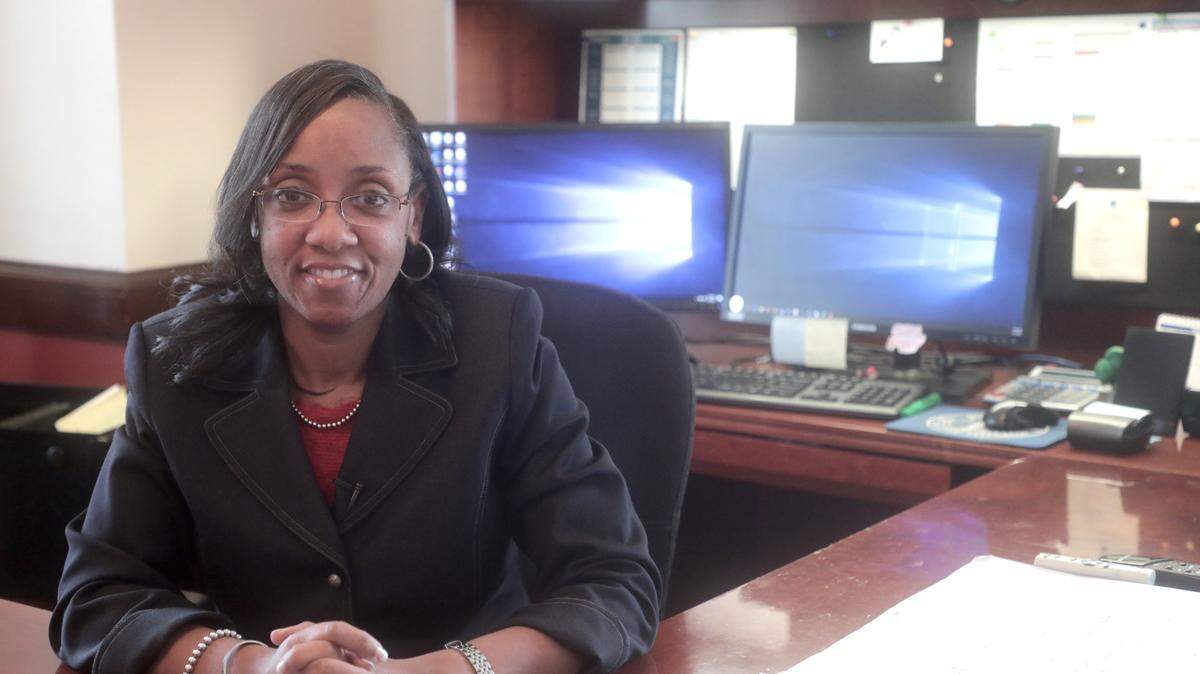
Editor’s note: This month, in honor of Black History Month, The Herald is highlighting voices in the region who you may not have heard. These are Black people who quietly have an impact in our communities. Today The Herald is featuring Dawn Johnson.
Dawn Johnson, 51, is a business owner and community leader in Rock Hill. She owns the State Farm office in Rock Hill, which she opened in December 2006. She is the chair of the Rock Hill Economic Development Corporation and chair of the Black Economic Development League in Rock Hill. Both of these organizations help to nurture business owners and foster talent in the area.
Johnson grew up in New York City and got her Bachelor’s degree from Florida State University. After college, Johnson said, she wanted to help others. “My parents had a third-grade education, and they did well with what they had,” she said. But when she learned more about managing her own finances, she wanted to pass that onto others.
Johnson likes to reference Black multimillionaire and activist A.G. Gaston. “He had a saying, find a need and fill it,” she says. That’s what she lives by.
Herald reporter Tobie Nell Perkins sat down with Johnson to talk about Black History Month.
What is the significance of Black History Month to you?
Johnson: You know, first I’m a proponent of Black history being better integrated in history, period. When you think about the contributions that African Americans made to, you know, building America. So it’s kind of like, you know, okay, this is a start. So but the significance is that there is this focus, this increased curiosity, around learning more about Black history and the people in Black history who we haven’t heard of before. And I love the fact that it’s evolved over the years that it used to be more about Martin Luther King and Rosa Parks. And now we’re just learning about people that you just didn’t know about.
The Hidden Figures was huge to know that, because I love math, and to know that those women existed who worked for NASA. Black woman worked for NASA mathematicians. If I had known that when I was in high school, things would have been a little bit different in terms of me thinking about what all my opportunities could have been. So I’m grateful that young people now are learning more about significant people in our history, who have made contributions in every aspect of not just the United States, but the world. So that’s the significance, is that there just seems to be a heightened focus and awareness of digging up those untold stories about African Americans and their ingenuity and innovations. And so that’s what I love about the month.
Is there a particular incident that inspires you when it comes to race and politics?
Johnson: I would like to say that when President Barack Obama was elected, that that really was significant in terms of us saying that, really, African Americans had the opportunity to be whatever they want to be in the world, that cemented that, okay, that could actually happen. So, definitely an experience that, you know, was a turning point.
It was a little frustrating because we wanted to embrace it as it we’ve really had a turning point in America, but it really seems to give way to showcasing that racism kind of emerged a little bit more as a result. But we need to know, just like now, we need to understand where we are. We have a good pulse on where we are in America, and that we do have a lot more work to do. So that was significant that it could happen. And it’s significant, even today that Kamala Harris is a woman of color who is a vice president and a woman. So these turning points give us hope. But they also shed a light on how far we have come and how much further we have to go. So there’s like mixed emotions, but they’re significant either way, because we’re learning something.
Is there anyone in history who particularly inspires you, or who you admire?
Johnson: I think who’s fresh on my mind right now is [recently deceased actress] Cicely Tyson. I’ve just I’ve been inspired by so many people in history. I mentioned A.G. Gaston, who was an African American multimillionaire that most people don’t know about, even today, who was a serial entrepreneur had many businesses. So he was a huge inspiration because he started out in life insurance.
And then, Cicely Tyson, being able to have always admired her and her work. But you know, it’s unfortunate when people pass away, you dive a little deeper into who they are as people and their stories. To know that she just had standards, she had standards that she wouldn’t accept certain roles unless they really spoke to her, and they really said something about who she was as a Black woman and her humanity. That was so important to her, to demonstrate our humanity that we are human beings, and just the sacrifices that she made to make that happen. It was interesting to learn that as successful as she was during this journey., she had to still find a day job to pay her rent, while she declined some roles. So she’s a huge inspiration for me as well, just in terms of sacrifice. Like I don’t have the right to complain about anything, any of the experiences that I have that frustrate me, when I think about the sacrifices that people like she made.
What do you think is the key race-related issue in your community?
I just had the wonderful experience of attending a two day training session on racial equality by the racial equality Institute. And the understanding is that this is not a Black people’s problem, and it’s a white people’s problem, we have to understand that there’s ownership and we can partner in solving the problems of racial inequality, but it doesn’t fall in the laps of the African American community.
And any, you know, entity that is doesn’t feel that they have equal rights, any race, any gender, we have to turn this page on seeing people simply as human beings, and that we don’t have the right to take away their rights because of their choices. We’re human, and we get to live our lives equitably. And that’s the conversation that I think has taken place now. Time out for just disliking people because they don’t look like you. They don’t act like you. They don’t behave like you. They haven’t made the same choices you’ve made. Let’s get over it. Let’s just treat people like the human beings that they are, accept them for who they are.
Let’s move on with living and loving and growing and having phenomenal experiences that can come out of the differences that we have. So that’s going to be the turning point. And I think as long as we keep having these tough conversations, we’ll get there.
How would you face this problem, or work to solve it?
We have to do a deep dive in policy and legislation, we have to scour every law and legislation that is on the books It needs to be a national project, and eradicate anything that makes any decision that’s not equitable; around housing choices, around financing, around anything that you know, is related to people living happy lives. That’s the key, we have to make those deep dives.
And we have to start electing people who get it. People who push power and control are not people who should be in a position to make decisions for the masses. So we have to really take a good look at who we’re electing, and what their platforms are. And they have to be people who are not all about power and control. That’s what leads to this wanting to have power and rule and made decisions over other people’s lives. That drives some of the behaviors that we see in policy. So I think those are the two things: really focusing on our policies and legislation and the people that we lead.
If you could give any message to your community, what would it be?
Attend our city council meetings. Make sure you understand those local things that are happening. I heard a statement saying we have to think globally, but act locally. So that’s the message: understand your local situation. It starts with your elected officials right in your own town. And when you start engaging in those experiences and having conversations around decisions and helping to educate and doing the research and giving people information that they need to make better-informed decisions for the masses, for the betterment of all people. That’s what it’s gonna take. We kind of burn out our leaders. If everybody just did a little bit more of engaging at that political level, we can probably get more accomplished more effectively.
This story was originally published February 17, 2021 at 4:09 PM.