Black History Month: Rock Hill prosecutor, first York County Black female magistrate
READ MORE
Highlighting Black voices in the Rock Hill region during Black History Month
This month, in honor of Black History Month, The Herald is highlighting voices in the region who you may not have heard. These are Black people who quietly have an impact in our communities.
Expand All
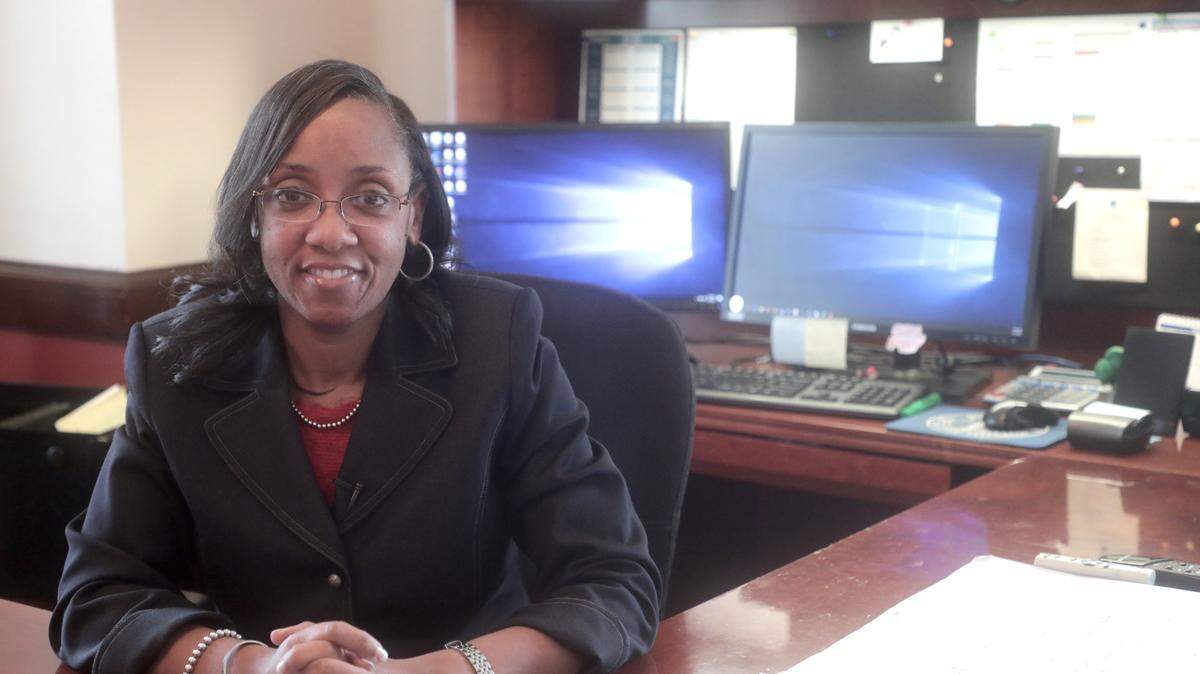
Editor’s note: This month, in honor of Black History Month, The Herald is highlighting voices in the region who you may not have heard about. These are Black people who quietly have an impact in our communities. Today The Herald is featuring Chisa Putman, Senior Solicitor for the City of Rock Hill and formerly the chief magistrate judge for York County.
Rock Hill’s top prosecutor is no stranger to being first. And in all of her firsts, from graduating college to the judicial bench, the words “Black,” “female” and “attorney” have been an embraced and powerful part of Chisa Putman’s success.
In 2017, Putman became the first full-time Black female magistrate judge in York County’s long history. Magistrate judges hear cases, issue arrest warrants, set bonds, and perform other vital functions in the justice system.
“I was honored to have that position and serve the public,” Putman said. “I was the first one to hold the position who looked like me.”
The Chief Justice of the S.C. Supreme Court chose Putman, a graduate of Winthrop University, the Charleston School of Law, and Clemson with a Masters in Public Administration, to be York County’s chief magistrate. She was the first African-American to ever hold that position. Putman was in charge of all magistrates and municipal courts in York County.
“It was humbling to know that my home state of South Carolina had confidence in my abilities to lead a system of judges and courts that are crucial to the justice system and to the public’s belief that the system is fair to all people,” Putman said.
Putman was the second full-time Black magistrate in York County. Mandrille Young was a magistrate before her. Michael Scurlock, a former Carolina Panthers player and former York County Sheriff’s Office deputy, followed in Putman’s footsteps as a full-time magistrate.
Putman was hired in 2020 to be the first Black attorney to hold the position of Senior Solicitor in Rock Hill. That office is responsible for prosecuting hundreds of cases each year in the city’s municipal court. In that job where prosecutors work with police, Putman said her job is to make sure everyone is treated fairly.
Putman said as a Black female attorney and prosecutor in an era where there is at times concerns about the relationship between law enforcement and people of color, she hopes to ensure public confidence in the fairness of the system and how people are treated. Community and public safety is important to all people, Putman said.
“I believe I can do something to inspire others,” Putman said. “I am for equity and fairness.”
Putman, a native of rural Cowpens near Spartanburg, is a leader among lawyers in America. She serves as a diversity and inclusion chair for the American Bar Association, and with the Next Generation project with the S.C. Bar Association. A wife and mother of three children, she is the president of a school parent-teacher group and does other volunteer and community service. She teaches an introduction to law class at Winthrop University, with a goal of inspiring students to consider a legal career.
For Putman, 40, the word “can’t” is not part of her vocabulary, and she wants young girls and boys to pursue their own can-do dreams.
“I want every young person to know if they are willing to work for it, they can get there,” Putman said.
Putman said she was inspired by the election of President Barack Obama as the first Black President in America, and by the grace, manner and drive that First Lady Michelle Obama showed. As the United States’ first Black first lady, Michelle Obama was, and remains, an inspiration to millions of African-American girls, Putman said.
“Michelle Obama was a successful lawyer, a Black woman, just like me,” Putman said. “You have to be the first person through the door to open it for others.”
Putman sat down with Herald reporter Andrew Dys and videographer Tracy Kimball to discuss her pursuit of achievement and success, talk about her views on Black History Month, and her perspective on being one of the quiet heroes of inspiration for young people.
What is the significance of Black History Month to you?
Black History Month is significant to me because it recognizes those who realistically should be recognized throughout the year. It is during this month that students, Black and white learn about the accomplishments of Black and brown people. A month is not enough time to go through the history or learn about our contributions. It is quite unfortunate that it can only be acknowledged in a few pieces of stapled papers rather than in the history and science books with others.
Was there a particular incident that inspired you when it comes to issues of race or politics?
The election of President Obama inspired me. I recall being extremely proud and thinking that it was going to improve race relations. I also recall saying “now my baby can be President.” In reality, my son could have been POTUS at any time in the future that he was eligible and qualified to do so, but realistically, I feel that we as people of color believe that we have to have that one person to be the first before we are comfortable and confident to aspire for the same. Although I assumed race relations would improve during Obama’s term, I found the opposite to be true. While I was completing a domestic terrorism class, I learned that hate groups actually increased during Obama’s presidency. That was disheartening and continues to be.
Who do you admire that has helped you achieve success?
I admire my parents. My mother raised me as a single parent. My God-father stepped in during my early middle school years to be my father figure. They have been my greatest supporters and prayer warriors.
What is the key race-related issue you see in our community?
I think one of the key race-related issues in our community is the lack of cultural diversity interaction. The diverse communities need more opportunities to interact with each other and bridge the gap of understanding. I think it would assist if we had a group/organization to foster and encourage the “uncomfortable” discussions that would assist with the dialogue. I believe that a great deal of division comes from lack of understanding and sometimes miscommunication, so if the forum could be provided, the discussions could and would be initiated.
Concerning that issue, how would you solve it?
My suggestion would be to schedule quarterly meetings, like a National Night Out, and have a neighborhood feel, but it would not be focused on one neighborhood. It would be located at a neutral location and have a different dialogue leader for each meeting, with a different topic.
It could also be implemented in the K-12 school system by requiring students to obtain Cultural Event credits, similar to what Winthrop requires for graduation. If you think about it, it starts with the children. By the time you start trying to force an adult to participate/ understand cultural diversity, it’s too late. As an adult we are already set in our ways, so it would be the children who would be the agents of change for cultural diversity. The teachers would also receive cultural diversity training because they have to understand it and incorporate it into their class room.