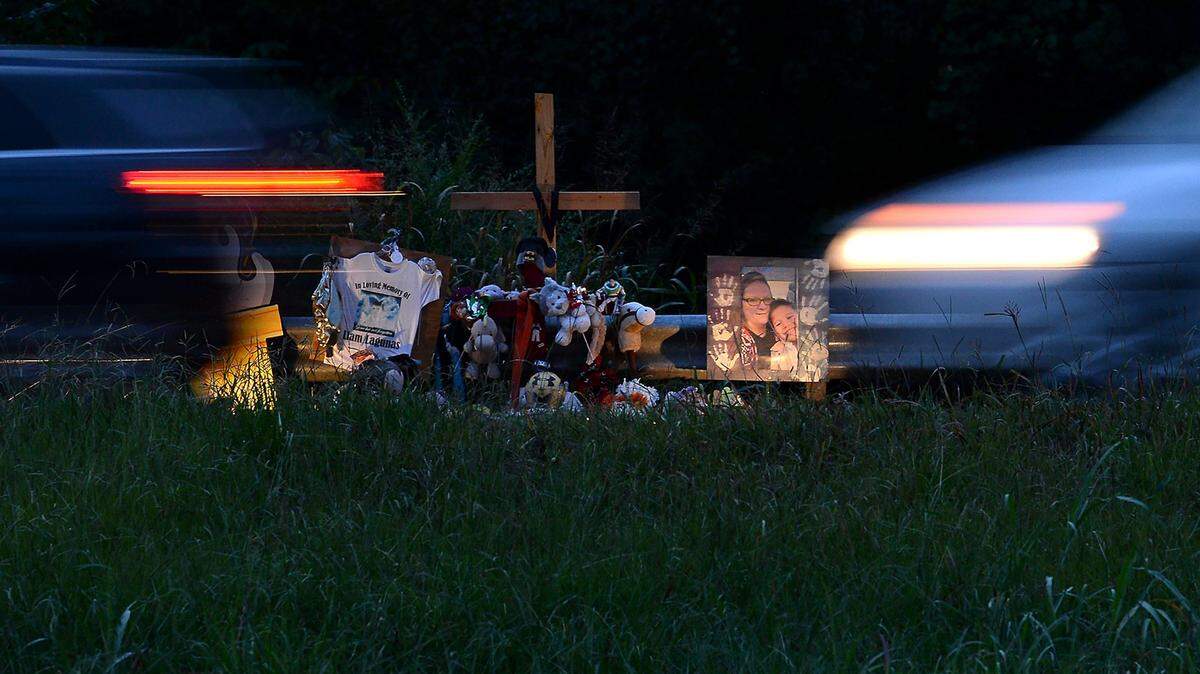
Speeding enforcement has dropped in NC. Is that making roads more dangerous?
READ MORE
Death in the Fast Lane
The Charlotte Observer and News & Observer in Raleigh wanted to know how often extreme speeding was happening on North Carolina’s roads — and whether the COVID-19 pandemic had made highways deadlier. They found that nearly 92% of extreme speeders get breaks in the courts that allow them to avoid the full penalties.
Highway Patrol troopers, meanwhile, acknowledged they were stretched thin. Experts say that helps explain why highway deaths have increased — and why people who drive 90, 100 mph or more routinely get away with it.
Expand All
The fact is not lost on many State Highway Patrol troopers: Despite the rapid growth in North Carolina’s population in recent years, speed enforcement is down.
Troopers issued fewer speeding tickets in 2019 than in any of the previous eight years. Then in 2020, as the COVID-19 pandemic reduced driving and curbed enforcement, the number of speeding tickets plunged even further.
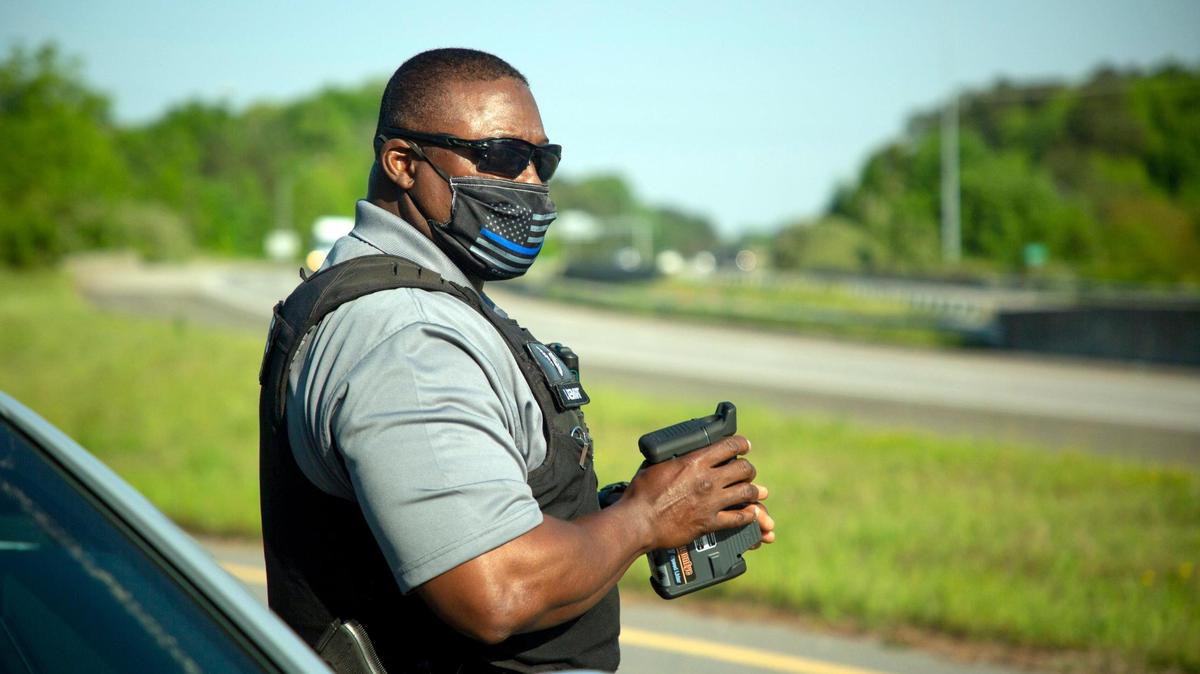
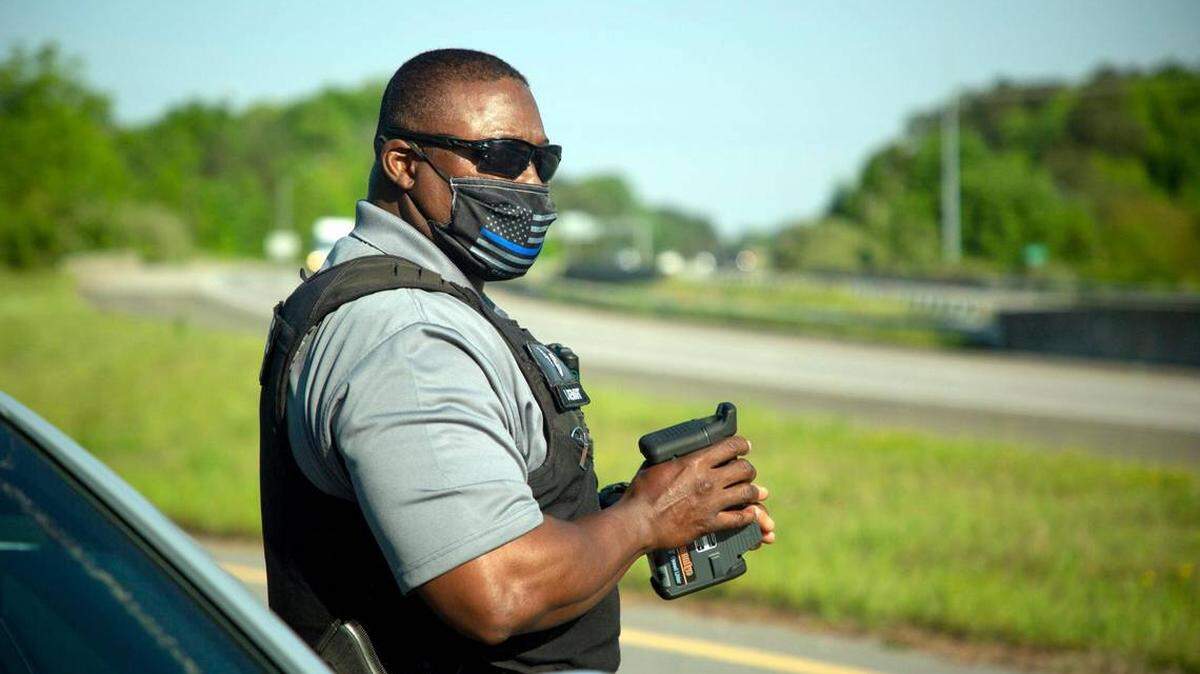
Trooper Mitch Geracz, who works in Cabarrus County, said troopers in understaffed areas often must run from crash to crash, leaving little time to do speeding enforcement.
“People are just not seeing us out there,” Geracz said.
Over the past five years, the N.C. Highway Patrol has issued more than two-thirds of the state’s tickets for extreme speeding — those involving drivers who go 20 or more mph over the limit. Local police departments across the state wrote most of the rest.
But the Highway Patrol isn’t the only law enforcement agency writing fewer speeding tickets these days. The total number of speeding citations issued statewide — which includes those written by local law enforcement agencies — fell 7% from 2016 to 2019, according to an analysis of state courts data by the Charlotte Observer and The News & Observer in Raleigh. The number dropped an additional 22% in 2020, despite an increase in the number of speed-related fatal crashes statewide.
Wake County was among the many places where enforcement plummeted. There, the total number of speeding tickets issued by all agencies dropped nearly 29% from 2016 to 2019, and then another 21% in 2020.
That matters, experts say, because research has shown that conspicuous traffic enforcement reduces speeding and saves lives.
Data and interviews point to a clear reason for the enforcement decline: Workloads for law enforcement agencies have been increasing far faster than staffing.
From 2011 to 2019, calls for service to the State Highway Patrol increased about 16%, according to state data. But over the past 10 years, the number of Highway Patrol troopers has remained flat.
The result: Troopers in many areas are stretched thin.
Retired state trooper Robin Benge said the rising number of crashes has left most troopers in urban areas like Mecklenburg County with little time to catch speeders.
“They’ve got the equipment to check the cars,” he said. “But as for the manpower, it’s not happening.”
When Benge began working for the Highway Patrol in 1994, the typical trooper in Mecklenburg investigated about 50 wrecks a year, he said. By the time he retired in 2018, most troopers were investigating about 300 crashes a year, he said.
On many mornings between 2 a.m. and 5 a.m., there are no more than two troopers on duty to cover all of Mecklenburg.
Troopers say that’s partly because the Highway Patrol has had difficulty attracting and retaining officers. Starting pay for troopers in North Carolina — about $37,000 for cadets and $46,000 for troopers who’ve completed training — discourages many from joining the patrol. Even after recent pay increases, North Carolina troopers still earn less than those in many other states, including Virginia and Texas.
As of early March, 35 troopers were working in Mecklenburg, and seven of them were new officers still in training. First Sgt. Ben Miller thinks a county Mecklenburg’s size should have 50 to 60 troopers.
“If they had the opportunity to increase enforcement, I’d think you’d be able to stop the high speeds and reduce the number of wrecks,” said Miller, who has worked in both Mecklenburg and Cabarrus counties.
But crashes in Mecklenburg have spiraled over the past decade and troopers there are often swamped.
“I think the guys are worn out by the calls for service in the urban areas,” he said.
‘We were advised not to stop people’
COVID-19 changed speed enforcement.
In the early days of the pandemic, officers in some law enforcement agencies were instructed to reduce non-essential traffic stops to limit the threat of infection.
Trooper Ray Pierce, who works primarily in Mecklenburg, Gaston and Union counties, said that during the lockdown months, “we were advised not to stop people unless it was an egregious offense.”
In the years before the pandemic struck, Pierce said, driving over 100 mph would typically cost drivers a few hours in jail. But since COVID-19 hit, county jails have asked officers not to bring people in for speeding.
“I tell (speeders), you’d better be glad it’s this year,” Pierce said. “If this were another year, I’d be putting handcuffs on you and you’d be going to jail.”
Sgt. Chris Knox, a spokesman for the Highway Patrol, acknowledged that troopers limited their stops in the early days of the pandemic, before all officers were equipped with the necessary protective gear. But he and others said enforcement has picked up since then.
Knox also said while speeding citations have dropped in recent years, the Highway Patrol’s safety education programs were increased for several years before 2020. Then the pandemic put a damper on such efforts.
“We know writing a ticket is not the end-all, be-all,” he said. “We have to educate.”
In Wake County, the number of speeding tickets issued by all agencies declined about 45% in the past five years, with most of that drop coming before the pandemic. The Highway Patrol issued nearly 28% fewer tickets in 2019 in Wake than it did in 2016. Knox said any explanation for why would be “highly speculative and dependent on numerous factors.”
Local police departments traditionally account for the bulk of speeding tickets issued in Wake, close to two-thirds, and they handed out about 24% fewer in the year before the pandemic compared with 2016. Raleigh police cited drivers for speeding 5,219 times in 2019 — about half as many as in 2016. The number dropped by nearly half again in 2020, spokeswoman Laura Hourigan said.
“During the first few months of the pandemic in 2020, there was a significant reduction in the amount of traffic on the roadways,” Hourigan wrote in an email. “This would have been at the onset of the governor’s executive orders to stay at home.”
The sharpest decline came from the Wake County Sheriff’s Office, which accounted for about 5% of speeding tickets in the county in 2016. With the election of Gerald Baker in 2018, the sheriff’s office shifted its priorities, spokesman Eric Curry said, and the number of speeding tickets issued in 2019 was down 85% compared with four years earlier.
Curry said that was the result of a “paradigm shift of law enforcement philosophies” that directed more attention to crimes such as domestic violence, drug distribution and other felonies.
“The Sheriff’s Office refocused its efforts around the protection of lives and property more than addressing motor vehicular violations,” Curry wrote in an email, adding that “deputies continue to be vigilant to obvious traffic violations.”
Although speeding enforcement declined in most counties from 2016-19, it climbed in some places. In Mecklenburg, total speeding citations increased from about 27,500 in 2016 to a little over 34,000 in 2019. In 2020, the number of speeding citations in Mecklenburg dropped again, to about 27,000 — slightly below the 2016 level.
Officers with the Charlotte Mecklenburg Police Department acknowledged that the department did fewer traffic stops during the early days of the pandemic. But they said they’ve since picked up speeding enforcement. In May 2021, CMPD announced that a 6-month investigation into illegal street racing resulted in more than 50 arrests and the confiscation of more than 60 cars.
They speed because they can
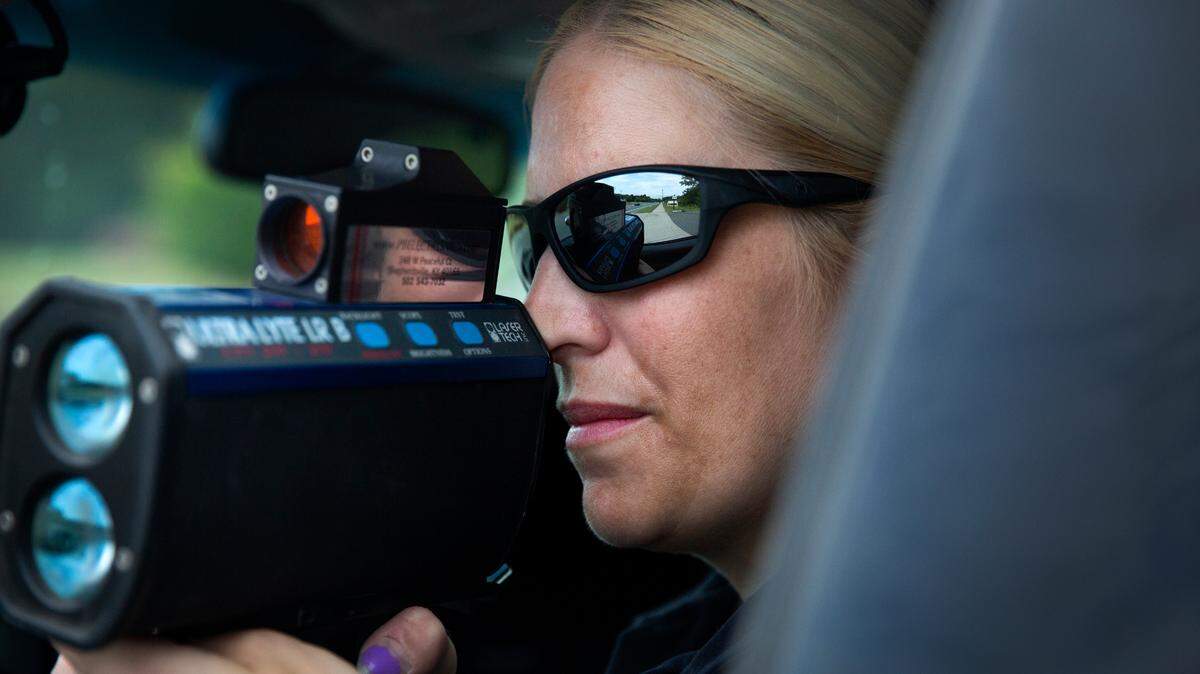
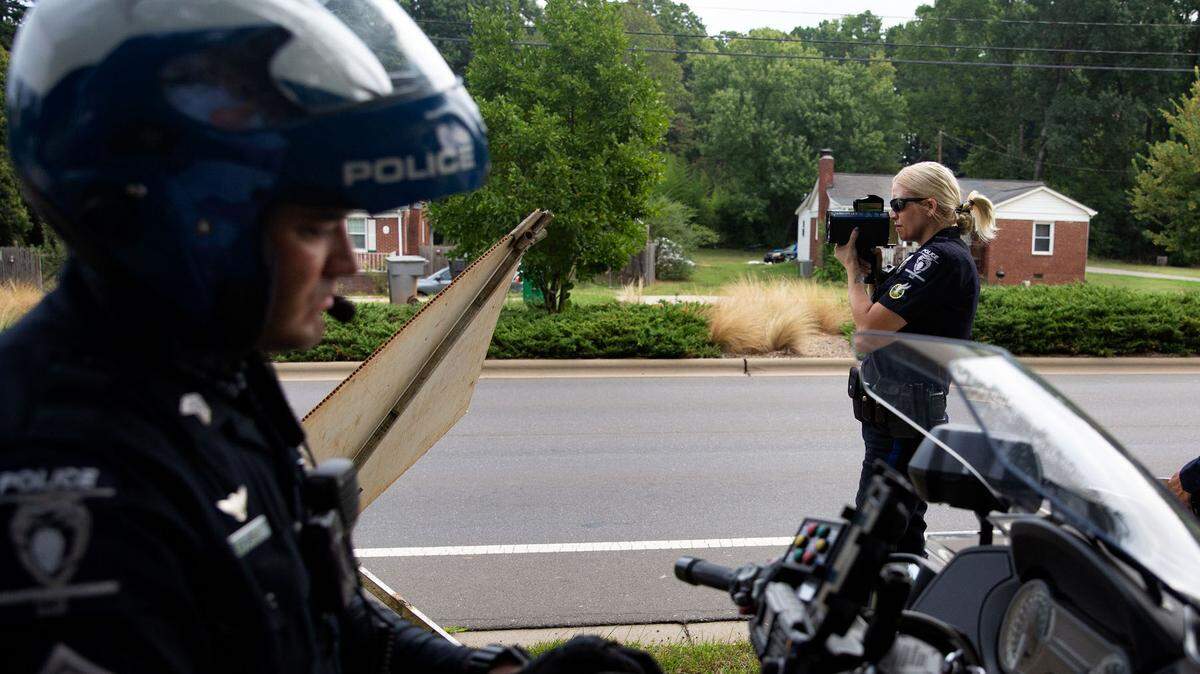
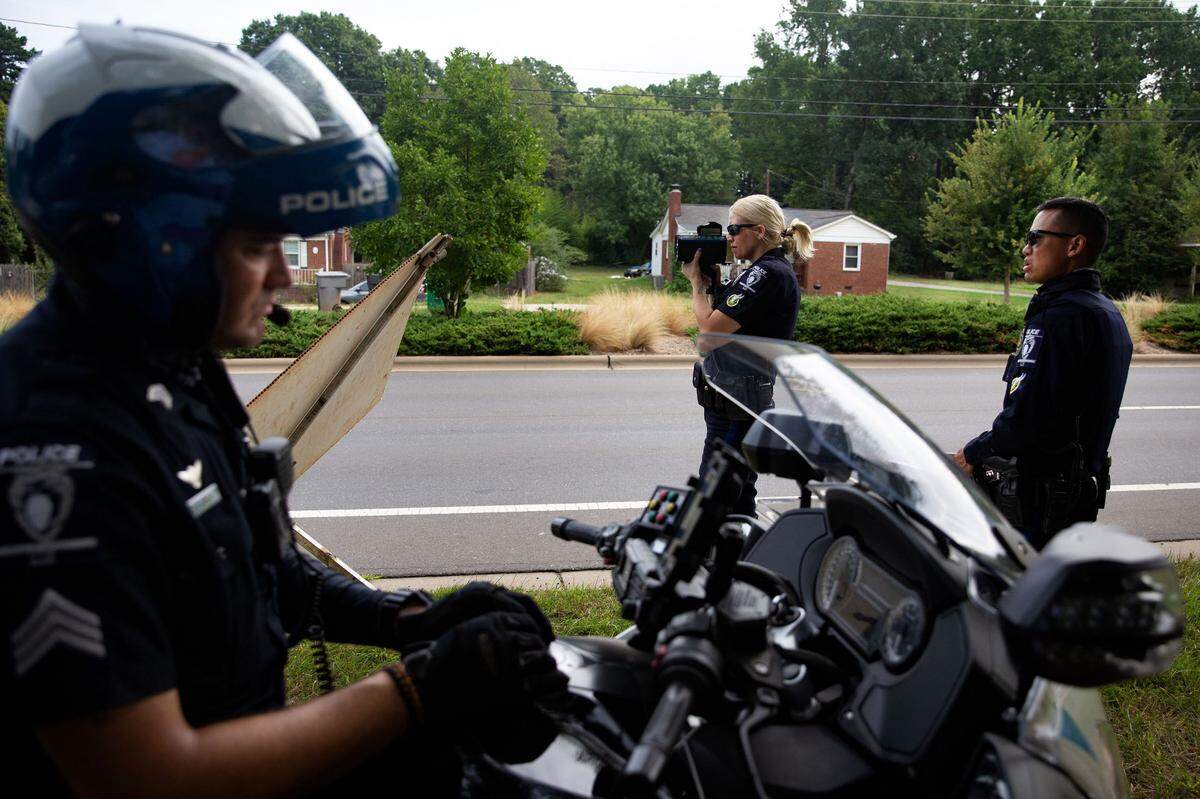
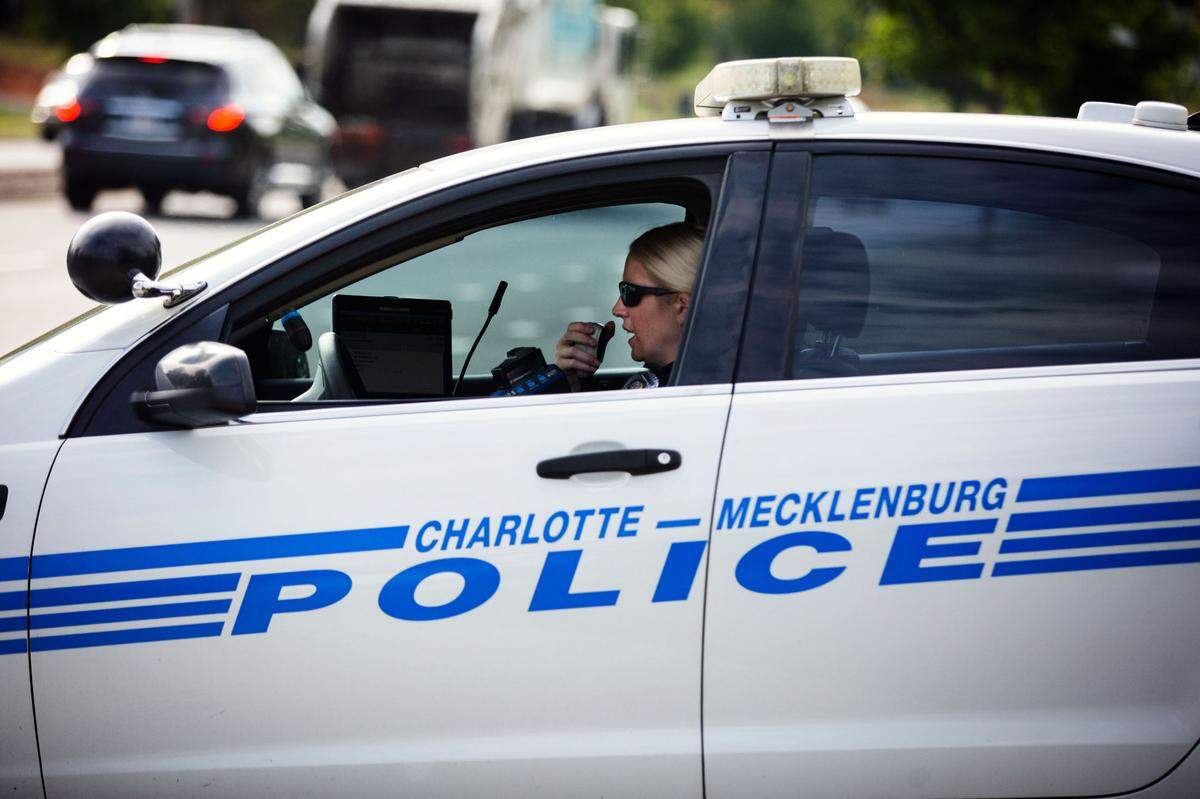
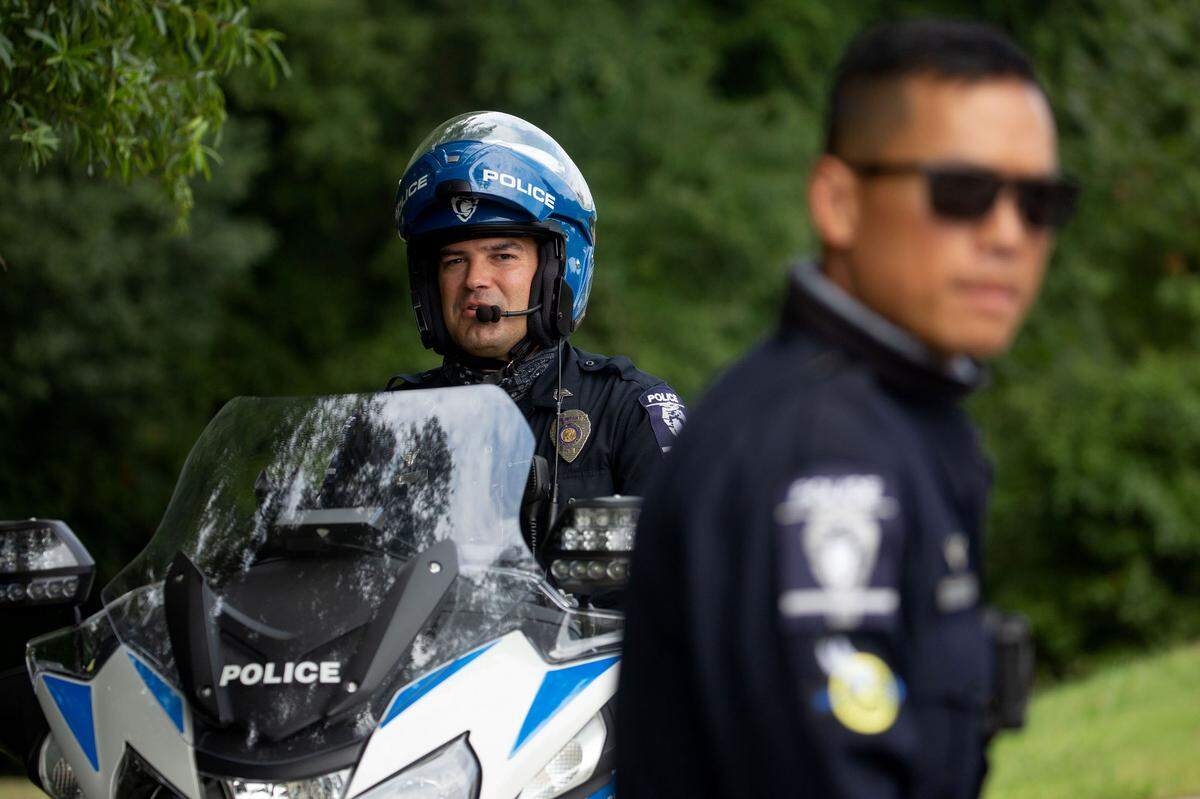
During a morning enforcement operation last August, about six months into the pandemic, CMPD Officer Amanda Walters sat in her patrol car at the end of a church driveway, looking through sunglasses as she pointed a laser device to clock the speeds of the cars zipping past on Freedom Drive. Other officers, perched on motorcycles nearby, were ready to pounce when Walters radioed in her alerts about speeding vehicles.
Sgt. Adam Jones was on deck when he got Walters’ report about a white Kia traveling 64 mph in a 45-mph zone. Jones activated the lights on his BMW motorcycle, set off after the speeding car and, in seconds, stopped it. The woman behind the wheels said she was going to a doctor’s appointment, but didn’t explain why she was driving so fast. Jones left her with a speeding ticket.
CMPD officers on motorcycles stopped more than 30 speeding drivers on Freedom Drive that morning. They focused on drivers there because Freedom Drive is too often a speedway, with some drivers soaring down the roadway at 90 mph — twice the speed limit.
Danny Leung was another one of the officers who chased down speeding drivers by motorcycle that morning. But Leung said his first priority wasn’t writing a lot of tickets. It was getting people to slow down. That’s why he sometimes uses Waze, a traffic and map app for smartphones, to let drivers know that police are doing an enforcement action.
“If it gets them to slow down, it’s worth it,” he said.
Durham County sheriff’s deputies rarely stop anyone who isn’t going 15 mph or more over the speed limit, said Casey Norwood, who heads the traffic unit. Everyone creeps over the speed limit at some point, Norwood said, but 15 mph or more starts to get excessive.
But even 15 mph is not excessive in some places, such as on Interstate 85 where the speed limit drops from 65 mph to 60 mph coming into the west side of Durham. Deputies usually won’t stop anyone there unless they’re doing 20 mph or more over the limit.
“So anybody that’s going 80 or above, we pull them over. If we stop 15 cars, it will be 15 cars that are going over 80,” Norwood said. “We’ll see cars going 17 over, 18 over, and consider that, for that area, the flow of traffic.”
Statewide, experts say, there simply isn’t enough enforcement to discourage people from speeding.
Libby Thomas, senior research associate for the University of North Carolina Highway Safety Research Center, said she, too, sees enforcement failing to keep pace with the state’s growing population and traffic.
“Why do people speed?” Thomas asked. “The answer is, because they can.”
This story was originally published June 3, 2021 at 7:52 AM with the headline "Speeding enforcement has dropped in NC. Is that making roads more dangerous?."
.JPG)