NOAA and the almanacs offer NC winter weather forecasts. Is this our year for snow?
READ MORE
What to know about cold weather & winter storms
Here’s everything to know about super cold weather and winter storms headed our way: forecasts, power outages, closings, snow cameras, winter prep, safety and more.
Expand All
A La Niña weather pattern expected to develop this fall is likely to mean another warmer-than-average North Carolina winter, but farmers’ almanacs say there’s still at least a chance of some snow.
While the rest of us were complaining about the summer heat, forecasters at the National Oceanic and Atmospheric Administration, the Old Farmer’s Almanac and The Farmers Almanac pondered what the weather will be come December, January and February. They disagree on details, but the almanacs offer a little hope for those wondering if it will ever snow again in Raleigh.
What’s La Niña got to do with it?
NOAA forecasters have been on a La Niña watch nearly all year. In a September update, forecasters said conditions now suggest the La Niña will develop between September and November, a month or more later than originally expected. It’s expected to last at least through January and possibly through March.
A La Niña often, but not always, follows an El Niño like the one last winter and is essentially the opposite phenomenon. NOAA says La Niña happens when the trade winds over the Pacific Ocean along the equator are stronger than usual and push warm water toward Asia. That causes cold water to rise to the surface off the U.S. Pacific Coast, which pushes the jet stream toward the north.
That has different weather effects in different places. It can mean a more active Atlantic hurricane season, as has been predicted this year.
The N.C. Climate Office has said it also typically results in warmer, dryer winters in North Carolina compared to historical averages.
NOAA weighs in on the winter to come
NOAA and the National Weather Service don’t make specific weather predictions more than about a week in advance because meteorologists say they would be unreliable. But they do forecast trends based on global weather patterns.
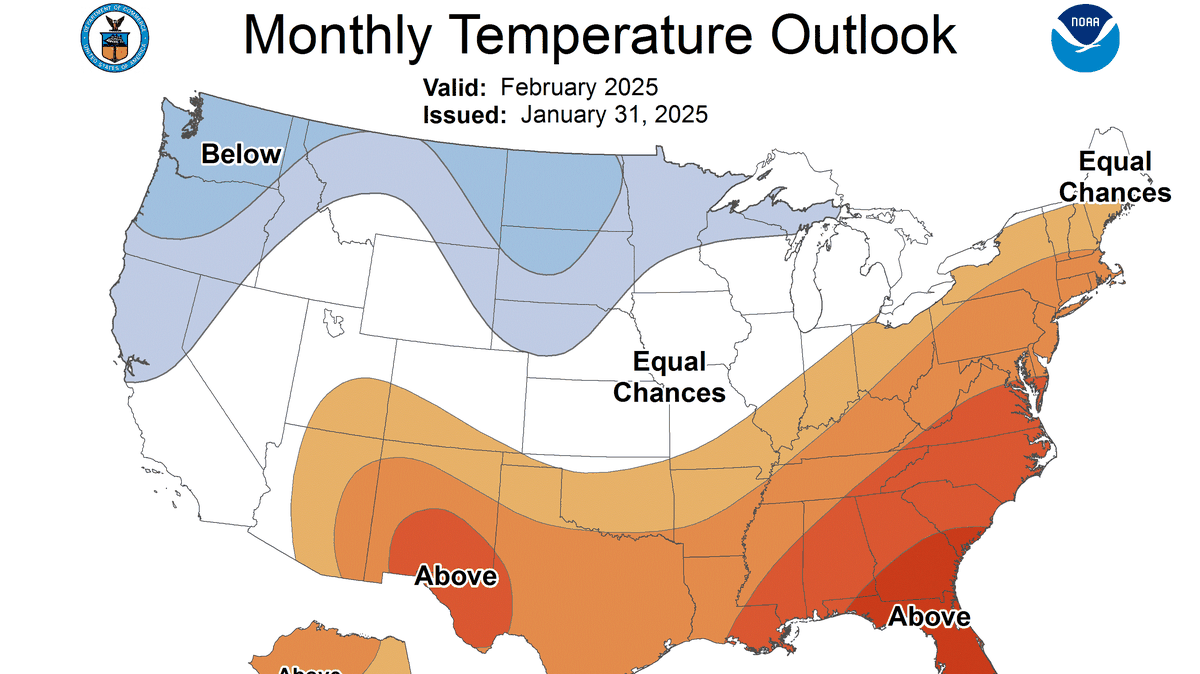
NOAA’s seasonal outlook for meteorological winter 2024-2025 shows a 40% to 50% likelihood of above-average temperatures for December through February in North Carolina.
The agency’s forecasters have slightly less confidence in their precipitation outlook for the period, saying there is a 33% to 40% likelihood of below-average precipitation. The seasonal forecast doesn’t specify what type of precipitation is expected; could be rain, snow or something else.
What the almanacs say
▪ The Old Farmer’s Almanac divides North Carolina into three weather zones this winter:
Western N.C. and a strip along the whole border with Virginia, from the mountains to the coast: warmer than average, and snowy.
Central N.C., in a pie-shaped slice that is wider at the South Carolina border and comes to a point at the Triangle: Mild and wet.
Eastern N.C.: Cooler than normal, and wet.
The coldest periods are expected in late November, late January and late February, according the Old Farmer’s Almanac.
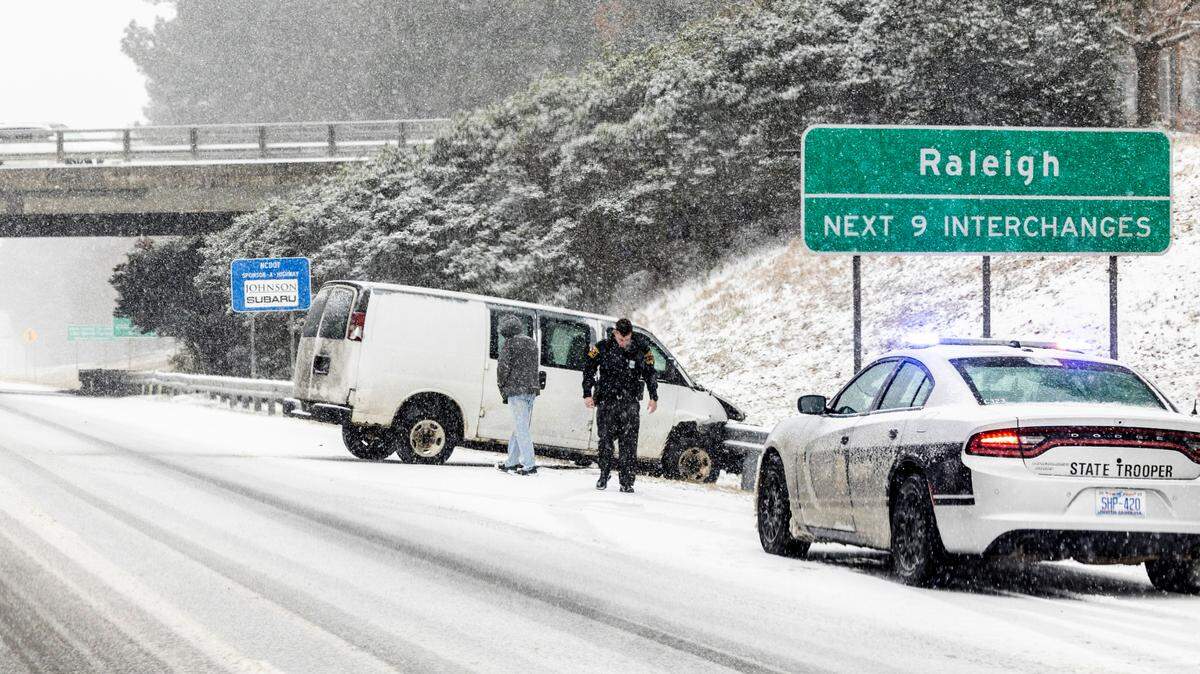
For the Southeast as a whole, this almanac’s forecasters say, precipitation, including snowfall, will be above average. The best chance for snow anywhere in the region will be late January, early February and late February, the almanac says.
▪ The Farmers’ Almanac – the other almanac – doesn’t mention the possibility of snow until February 8-11, when forecasters say North Carolina could see some scattered wet snow or rain showers.
On President’s Day weekend, Feb. 16 to 19, the Farmers Almanac says North Carolina should look for rain, possibly mixed with sleet and wet snow.
What’s NC’s weather forecast for Christmas and New Year’s?
The two almanacs seem to agree that Christmas and New Year’s will be cool and damp, if that helps with holiday plans and gift lists.
The Old Farmer’s Almanac is calling for cool temperatures and isolated showers from Dec. 19 through Jan. 1.
The Farmers’ Almanac predicts showers from Dec. 24-27, followed by blustery cold winds under a mix of clouds and sun from Dec. 28 to 31. The almanac calls for storms from Jan. 1-3.
This story was originally published October 17, 2024 at 3:53 PM with the headline "NOAA and the almanacs offer NC winter weather forecasts. Is this our year for snow?."

.JPG)