Indian Land feels the pressure as traffic builds, but highway funding is elusive
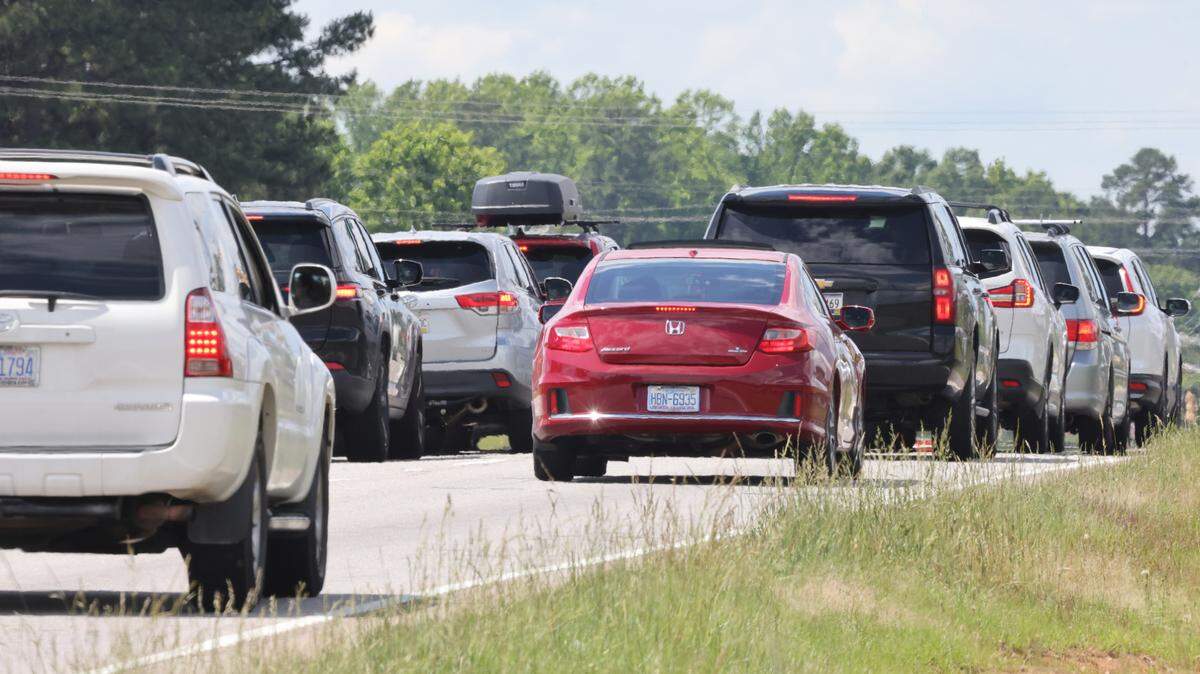
As more federal money gets tied up in interchange construction along Interstate 77, drivers along busy York and Lancaster County highways have to wait their turn.
That waiting also gives elected officials an opportunity to consider their role in the traffic buildup.
“We can’t build roads faster than we’re growing,” Fort Mill Mayor Guynn Savage told public officials from both counties last month when the Rock Hill-Fort Mill Area Transportation Study policy committee met.
Skyrocketing costs for interchange projects mean fewer options to fund improvements on busy corridors in high-growth places like Fort Mill, Indian Land and Lake Wylie. One of the most difficult options is to plan better and say no to growth that communities aren’t prepared to deal with, Savage said.
“I’m pointing a finger collectively,” she said. “This is up to us.”
No community feels that pressure between massive population growth and a need to widen roads more than Indian Land.
The panhandle has ignored the cost of development outpacing infrastructure needs for too long, Lancaster County Councilman Jose Luis told the policy committee. Luis represents the northernmost part of Indian Land.
“It is up to us as elected officials to say no,” he said. “And when we say that development is beyond our control or development just happens, that is not a fact. That is a choice.”
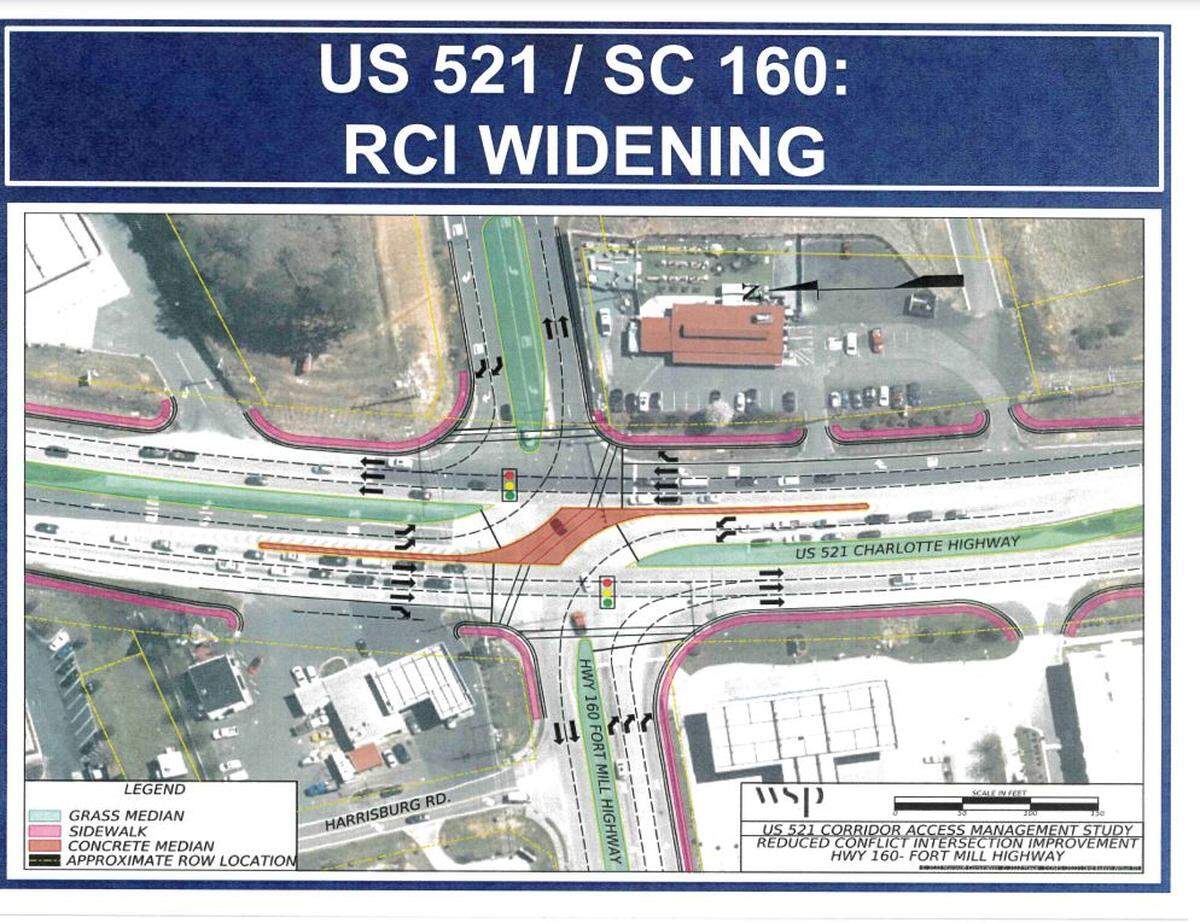
The policy committee has corridor studies on file for U.S. 521 in Indian Land and S.C. 49 in Lake Wylie, showing needed improvements but no firm path on how to pay for them. Widening some portion of S.C. 160 through Fort Mill, Tega Cay or Lancaster County has been ongoing for years.
It’ll be at least six years before new federal money is available to help widen area highways. If one large Rock Hill project can’t hit its cost estimate, the wait could be much longer.
Exit 82 construction in Rock Hill
Ongoing reconstruction of Exit 85 in Fort Mill, between Baxter and Kingsley, grew to $147 million as the project scope increased, and construction costs soared up to 70% two years ago. The transportation study group went into debt service for that project through 2031.
Exit 82, at Cherry and Celanese roads in Rock Hill, will get a $106 million makeover paid largely through state and York County funds.
Construction isn’t set to begin for a couple of years. If costs run high for that project, like they did for many others in the area since 2020, the transportation study is committed to using its federal funding when it becomes available in six years.
Lancaster County Council chairman and policy committee member Brian Carnes supports the financial backstop for Exit 82. “It does concern me that we just keep borrowing out and out and out, delaying all the other projects that we need to do,” Carnes said.
David Hooper, administrator for the transportation study, recognizes that concern.
His group’s federal money has traditionally funded highway widening and local intersection improvements. There’s been a generational run of interchange work, though, that began with the Gold Hill Road diverging diamond that opened four years ago.
Along with Exits 82 and 85, there’s been funding and early planning for Exit 90 at Carowinds Boulevard. There are backburner plans to improve Exit 77 in Rock Hill. A new Exit 81 was built when plans were still ongoing to build a Carolina Panthers headquarters in Rock Hill.
“The eastern side of the planning area has been patiently waiting, for more than 10 years,” Hooper said.
The Exit 77 work would be pushed back if the transportation study has to put its money to the Exit 82 project, Hooper said. Highways are in the same situation. While York County is growing rapidly, Hooper notes that Indian Land is growing even faster.
“It is only fair and reasonable for the panhandle to say, let’s not keep pushing that into debt service because that keeps delaying us,” he said.
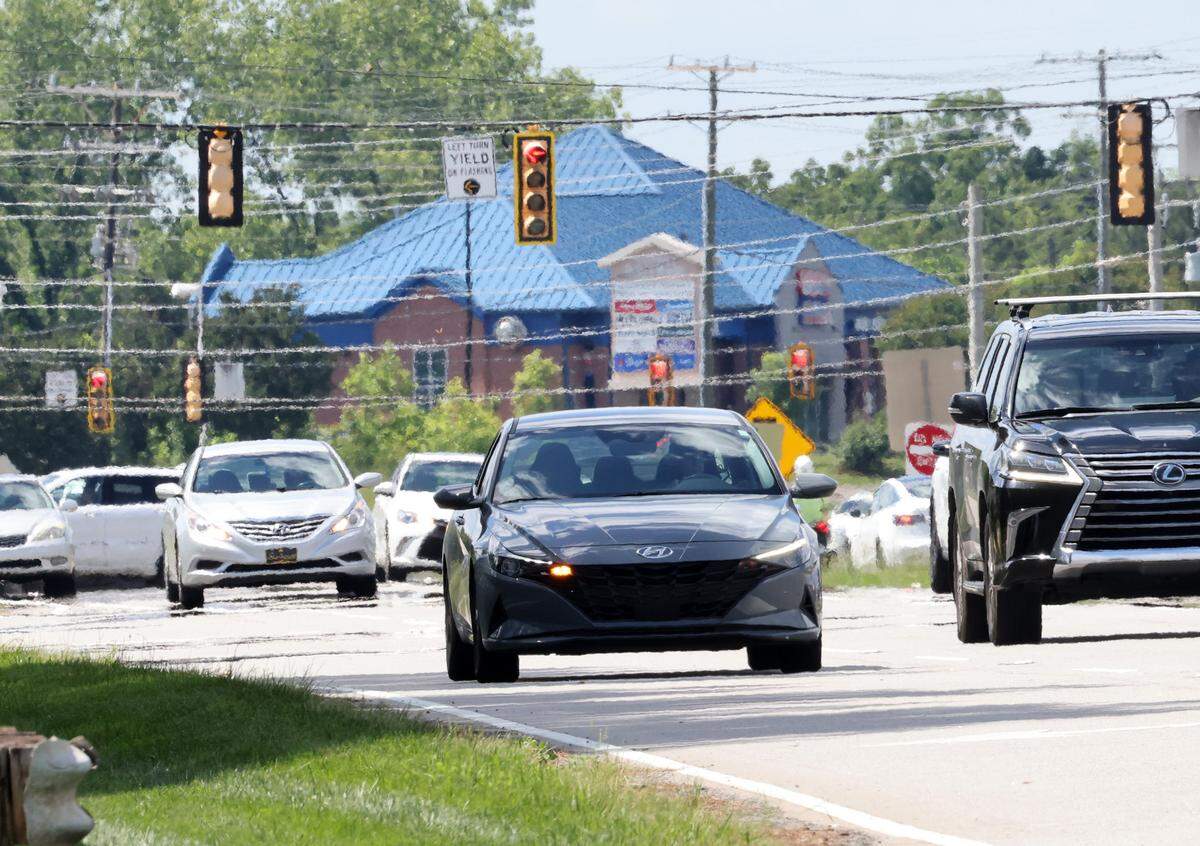
Funding options for busy highways
Last year, York County voters approved a more than $410 million road improvement plan through Pennies for Progress.
More than half of that total, at $225 million, will go to projects approved in prior Pennies campaigns that weren’t finished due to cost overruns. Pennies is a 1% sales tax that runs for seven years.
Large highway projects that aren’t already on a Pennies list would have to wait several years to get funding.
Lancaster County doesn’t have that option.
Voters there turned down a similar 1% sales tax for roads last year. They voted down a revised option this year, by an even wider margin. A large portion of both campaigns was U.S. 521 in Indian Land, which could cost close to $100 million to widen and upgrade intersections.
When the federal transportation study devoted much of its money to busy local highways, the Pennies program had a doubling effect. Pennies would sometimes pick up projects on the transportation study’s to-do list, which then freed up those federal dollars and spread them across other jobs.
Interchange jobs can cost $100 million or more, several times what a typical local highway upgrade might.
“We don’t have that opportunity anymore,” Hooper said. “The odds of an interchange project being shifted over to Pennies are essentially zero.”
Optimism for area road improvements
There are some reasons for optimism.
Construction costs are down from a peak in recent years, leaving planners more confident in project cost estimates. New funding sources could emerge, too.
Lancaster County has a more than $40 million grant request in to the South Carolina Transportation Infrastructure Bank for U.S. 521. If it comes through, that money could help toward other grant applications to complete the work.
There’s also the federal census in 2030.
High population growth since 2020 could be converted into more federal funding in the coming decade. Hooper expects $7.5 million of federal money in 2032, $13.7 million in 2033 and $26.8 million in 2034 if the transportation study doesn’t see cost overruns on Exit 82. Those figures are based on existing population-based allocations.
Forecasting those possibilities, though, leaves public officials in the same position of borrowing from the future. That’s a strategy some say will only carry them so far.
“I do think there are other alternatives to continuing the search for funding,” Savage said. “I think those alternatives, unfortunately, require us to say no.”