How two South Carolina lawyers ripped the Murdaugh case wide open
READ MORE
Murdaugh murders in Colleton County
Two members of a powerhouse legal family were shot and killed June 7 in Colleton County, SC. Read more of our coverage.
Expand All
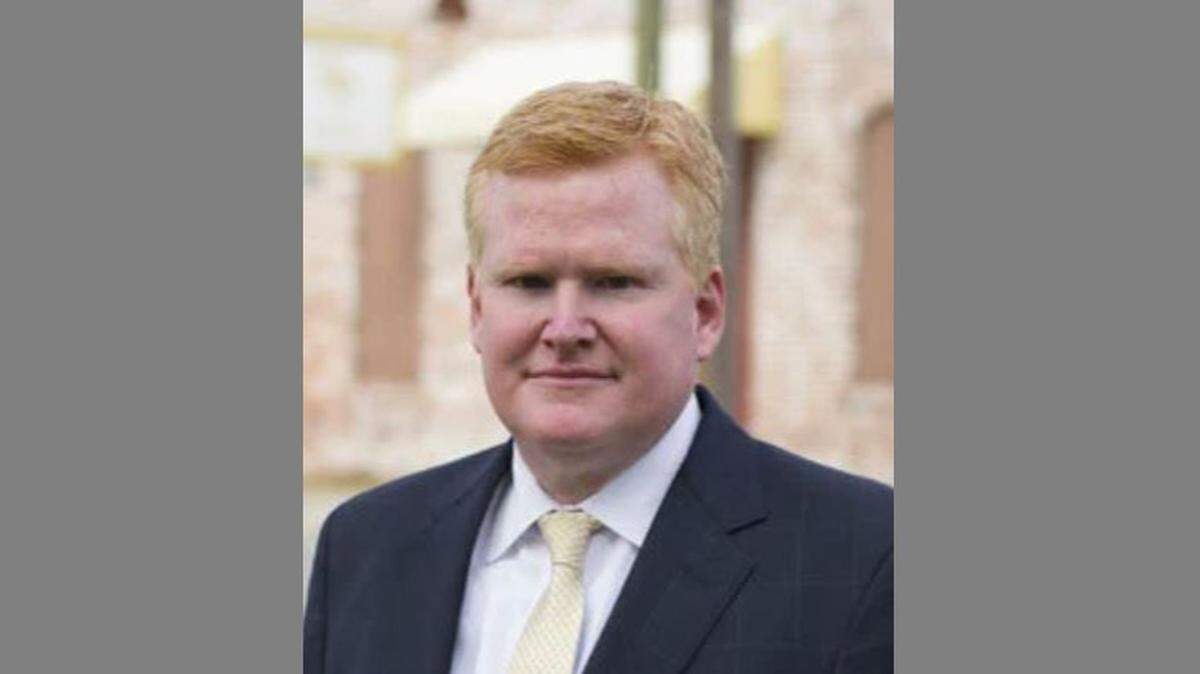
Alex Murdaugh was in deep trouble by early September.
The 53-year-old suspended lawyer already was a person of interest in the unsolved June shooting deaths of his wife and son, and now he was being investigated for faking a suicide so that his surviving son could collect $10 million in life insurance. His family law firm — PMPED in Hampton County — also had just dumped him, alleging he had misappropriated money.
It was yet another turn of events that came two years after his family was first thrust into the spotlight following the death of Mallory Beach, a 19-year-old woman who died after being thrown from a boat that Murdaugh’s now-deceased son, Paul, was reportedly driving while under the influence of alcohol.
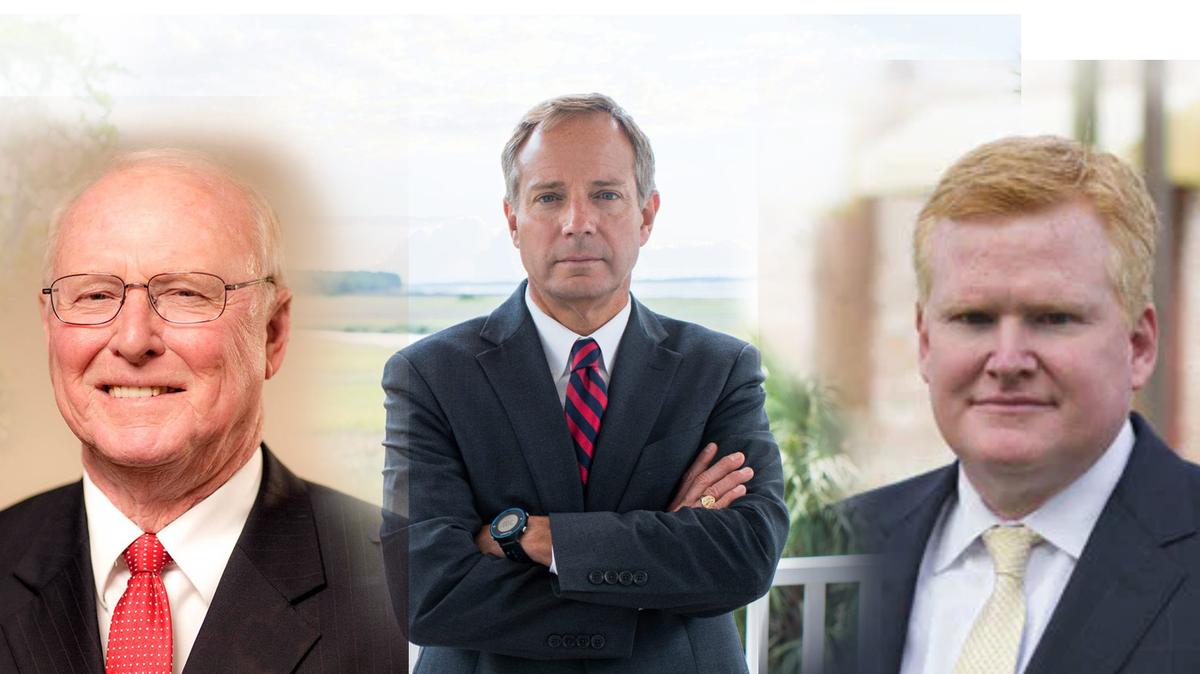
Another stunning development was to come — this one in the form of a civil lawsuit against Murdaugh in mid-September by Eric Bland and Ronnie Richter, two South Carolina attorneys with a penchant for suing other lawyers in a clubby legal state where lawyers value collegiality and relationships with their colleagues.
“One reason this case is continuing to be such a public spectacle is because there is no apparent end,” said Seth Stoughton, an associate professor at the University of South Carolina School of Law. “Every time you get to the bottom of the drawer, you realize it’s even deeper.”
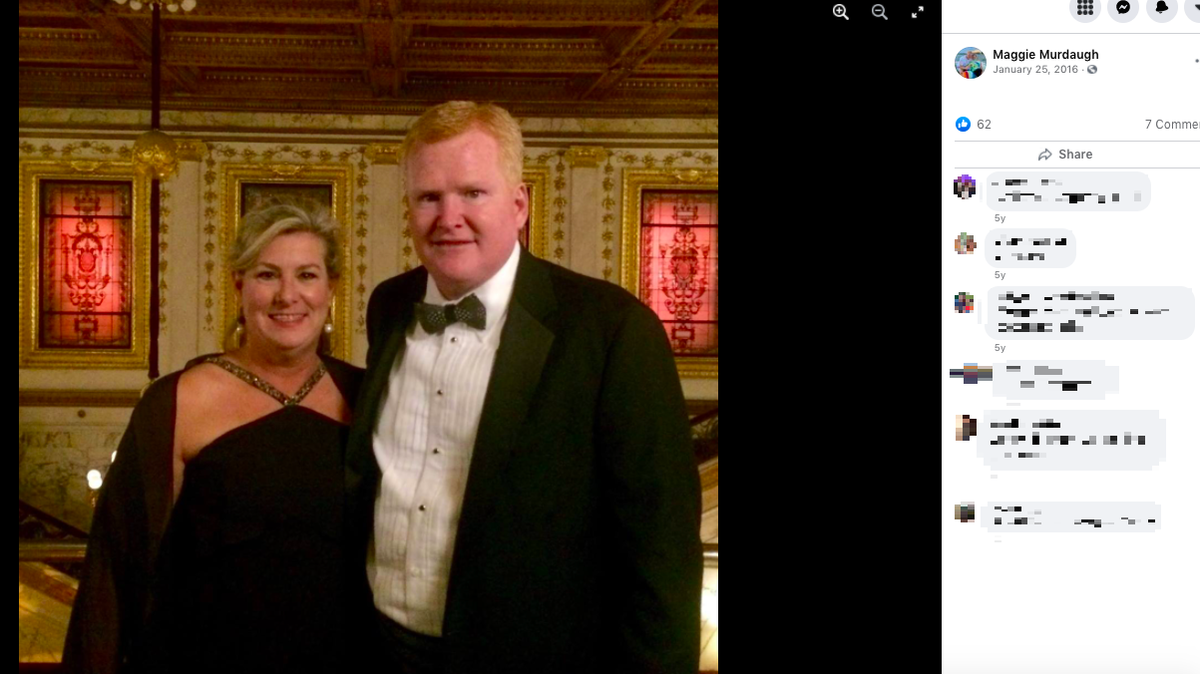
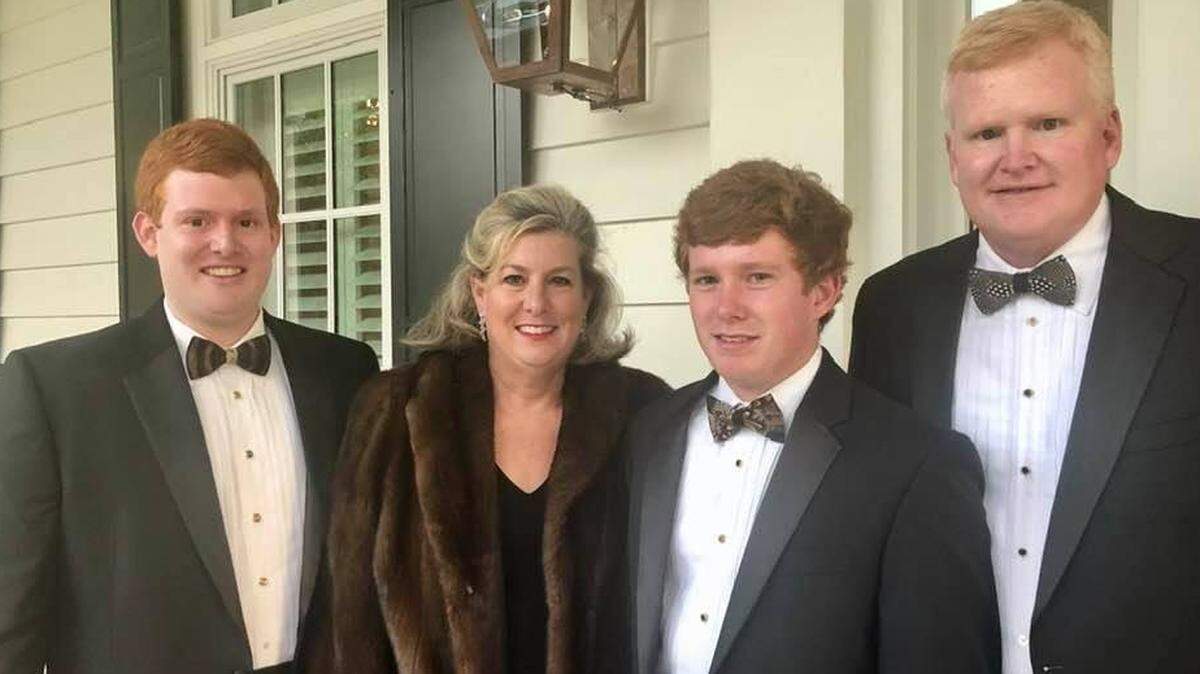
For years, Murdaugh’s image had been that of a family man, a prosperous lawyer and respected former president of the state trial lawyers’ association.
But following Bland and Richter’s Sept. 15 civil lawsuit alleging theft from the estate of Gloria Satterfield, Murdaugh’s deceased family housekeeper, Murdaugh’s public persona — already unraveling — began to shred at warp speed.

In November and December, a state grand jury charged him with a slew of financial crimes involving alleged thefts of some $6 million from law partners, associates and friends. If convicted, Murdaugh faces more than 500 years in prison.
But it was Bland and Richter’s lawsuit in September that gave the public its first close-up glimpse of Murdaugh’s alleged financial crimes.
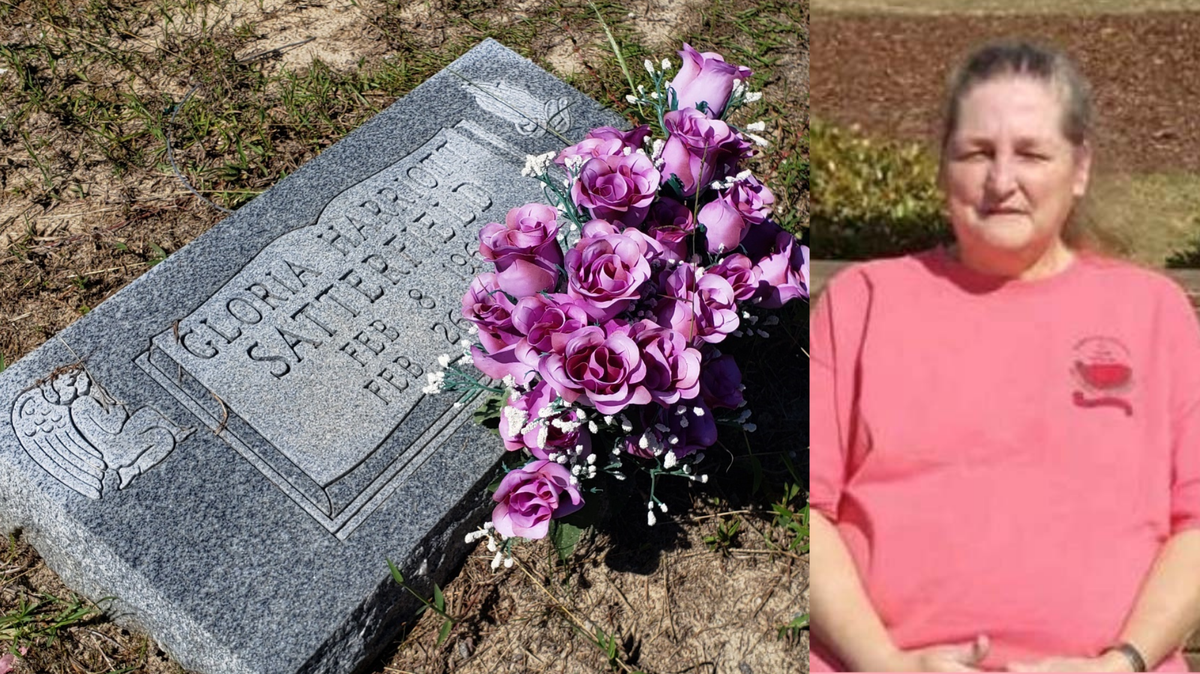
The lawsuit asserted that Murdaugh and two accomplices — a lawyer and a banker — had orchestrated a scheme to steal $505,000 in homeowner’s insurance from the estate of Satterfield, who was living in a trailer and had been a faithful family servant. Satterfield, 57, who had two children, died in a 2019 fall at Murdaugh’s house, and her two sons were supposed to get money from Murdaugh’s homeowner’s insurance, the lawsuit said.
“I’m going to chase anybody through the gates of hell to get the money these kids deserve,” Bland said Sept. 16 on NBC’s “Today” Show.
In the two months after the lawsuit was filed, law enforcement said little about its investigations into Murdaugh.
But Bland — the more aggressive of the two Satterfield attorneys — quickly became the public face of those clamoring for action in the Murdaugh case, talking with in- and out-of-state news outlets and social media.
He’s received so much publicity that Murdaugh’s attorneys, Dick Harpootlian and Jim Griffin, have asked a judge for a gag order to keep Bland quiet, saying he’s hurt their client’s chance for a fair trial.
In a recent interview with The State, Bland said when he and Richter filed the lawsuit in September, they didn’t know any other alleged victims existed besides the Satterfield family.
“We started the rabbit hole,” Bland said. “And now the state has gone down it. It looks like there will be tons and tons of victims.”
‘Not afraid to sue anybody’
Bland admits the two attorneys don’t get invited to many lawyers’ Christmas parties.
For 20 years in South Carolina, the legal duo — Bland, 59, and Richter, 55 — have been among a small handful of attorneys who regularly sue other lawyers for legal malpractice. In the state’s close-knit legal world, lawyers sue just about everybody — but rarely sue one of their own.
The conference room in Bland’s historic office in downtown Columbia has 18-foot ceilings. On the walls are framed newspaper clippings recounting their battles and victories with some of the states’ premiere law firms. The list of law firms they’ve sued is a who’s who of South Carolina legaldom: Nelson Mullins, Motley Rice, Nexsen Pruet, McNair and Haynsworth Sinkler Boyd.
“They are super aggressive, and they’re not afraid to sue anybody,” said Leighton Lord, managing partner of Nexsen Pruet, one of the state’s largest law firms that has been sued several times by Bland and Richter.
Wallace Lightsey, of the Wyche Law Firm, said he’s worked with Bland and been on the opposite side of Bland and Richter. “They hold attorneys to a high standard, which attorneys should be held to,” Lightsey said. “Their work is important.”
For those two decades Bland, in Columbia, and Richter, in Charleston, have racked up wins and settlements totaling some $75 million against more than 175 lawyers, by their reckoning. Only once against a lawyer have they lost a jury trial, and most of their cases result in confidential settlements, they said.
Their biggest legal malpractice jury case was winning a $5.5 million verdict in 2006 in Richland County against Nexsen Pruet after a two-week trial. Lawyers in the case, which resulted in perhaps the largest legal malpractice award in state history, reached a confidential settlement on appeal.
Their first case together was a medical malpractice lawsuit in a missed appendicitis case they brought against a Chester County doctor in the late 1990s. They not only won a sizable verdict for that time — $250,000 — but they hit it off and decided to work together.
”For a long time we have been the pariah of the Bar,” Bland said. “Lawyers certainly don’t have a problem in suing bankers, doctors, accountants, architects or contractors. Lawyers think they have some special license where they can’t be sued. And when Ronnie and I came along and started suing them, it was like, ‘Who the hell are you guys? Why do you think you have a right to do this?’“
They are on opposite sides of the personality spectrum.
Bland is brash and speaks with the accent of his native Philadelphia. Richter is mannered, a fourth-generation Charlestonian with an even temperament.
“Ronnie is quiet, soft-spoken, cerebral,” said Bland. “I charge ahead, and my greatest asset is my mouth, but it’s also my greatest liability.”
Richter said jokingly, “I keep Eric from being disbarred.”
Clients have nicknamed Bland “the pit bull.” Richter does not have a nickname, but if he did, it would be “‘silky,’ for ‘smooth as silk,’ ” Bland said.
It’s not only their personalities that differ.
Bland’s office is decorated with statues of superheroes, such as Batman and Superman. Richter is a Broadway fan and has decorated his office with framed posters of shows from “Wicked,” “The Lion King” and “Kinky Boots.”
They do have some similarities.
Both are active in sports. Bland, an amateur weightlifter, golfs and skis. Richter, a former top Charleston junior golfer, was a walk-on on the College of Charleston’s golf team. They still both golf.
Golf prepared him for law’s uncertainties, Richter said. “It’s all about pace and balance and rhythm and accepting bad results and seeing the challenge in a bad card dealt and doing the best you can with it. … Golf says, ‘All you can ever do is just hit the next shot.’”
Bland and he are “both outsiders,” Richter said. “I didn’t come from money. I didn’t come from lawyers. We both had kind of a similar, blue-collar work ethic, lunch pail lawyers, know what I mean? Just strap it on and go do the work. Don’t worry about the politics or bruised feelings. We had that in common, and that was important.”
The “secret sauce” in their chemistry — and their success — they describe is that Bland, being from the North and growing up in a working-class family, “almost needed a local to let people know that he’s with me,” said Richter, who said he is “more diplomatic,” more of a strategist than his partner.
“Eric is more direct, more confrontational, more willing to take the fight straight to you,” Richter said. “I needed and benefited by someone who was just willing to punch you in the face. To build a firm with two Erics or two Ronnies would have been ridiculous.”
The two have been successful since starting a practice together.
Among their highest-profile cases that didn’t involve legal malpractice includes a $2.1 million settlement with the town of Seneca for the police shooting of an unarmed teen, Zachary Hammond, in a Hardee’s restaurant parking lot in 2015. In that case, the lawyers’ aggressive efforts helped force the public release of body camera footage that supported their version of events.
They’ve also had setbacks.
In 2008, in a split decision, the South Carolina Supreme Court ruled they had acted improperly when they had kept a Nexsen Pruet law firm policy manual they were supposed to destroy from an earlier case, then used it as evidence to discredit Nexsen Pruet in a later case.
The Supreme Court’s decision, written by then-Chief Justice Jean Toal, overturned a lower court decision that had said Bland and Richter acted “commendably.”
Toal’s decision noted that Bland and Richter kept a trophy photo in Bland’s office that demonstrated ill-will “and vindictiveness towards Nexsen Pruet.” The photo showed Richter holding a blow-up of a check that is drafted payable to “Bland Law Firm and Richter Law Firm.” The amount of the check is “$$$$ Big Money $$$$.”
Years later, the two have no apologies to offer. They disagree with the ruling.
“I think Justice Toal got it wrong,” Bland said.
On the other hand, Richter regrets poking fun at another lawyer. The altered check photo, he said, was “sophomoric.”
“That’s 100% correct. We were younger at the time,” said Richter, who added that lawyers shouldn’t “celebrate when you get to the end zone. ”
Murdaugh launches the legal duo
Bland and Richter reject more than 90% of people who bring complaints to them. In the Murdaugh case, they filed their lawsuit only after efforts to find out what happened to the missing Satterfield money failed, they said.
Murdaugh was an especially high-profile lawyer.
Since 1910, the Murdaugh family had been a powerful legal dynasty, who through three generations provided elected prosecutors in Hampton and four other Lowcountry counties.
As prosecutors, the Murdaughs — including Alex, who served as an assistant prosecutor — put criminals on trial and in jail. As lawyers in private practice, the Murdaughs and their partners had sued thousands of defendants over the years, winning untold millions of dollars in jury verdicts and settlements.
Now it was Alex Murdaugh’s turn to be sued.
As part of the filing, Bland and Richter now had the power to issue subpoenas to compel the defendants to produce information about why money due to Satterfield’s children went missing. The lawyers sent subpoenas to Murdaugh’s alleged accomplices — now defendants, Beaufort lawyer Cory Fleming and Hampton banker Chad Westendorf — seeking to document what happened to that cash.
Within days, Bland and Richter had located an easy-to-follow paper trail, with evidence showing Murdaugh and his accomplices had actually stolen at least $3.5 million in Satterfield insurance proceeds.
And with each discovery, Bland shared details with reporters from traditional media and with bloggers and podcasters on social media.
“When we filed our lawsuit, we didn’t know the extent of it,” Bland said. “But I know from Day One, we would open up everything ... (and that) we would be able to prove at least there was $505,000 taken.”
Within six days, Bland and Richter had uncovered a document signed by state Judge Carmen Mullen of Beaufort County on May 13, 2019, approving a $4.3 million settlement in the Satterfield case.
The judge’s approval wasn’t part of any public record.
Per Mullen’s approval, Satterfield’s two sons were supposed to get $2.76 million.
But the Satterfield sons received “not one dime,” the lawsuit alleged in italics.
On Sept. 17, two days after Bland and Richter filed their lawsuit, State Law Enforcement Division Chief Mark Keel announced his agency would investigate whether Murdaugh had stolen from the Satterfield’s estate.
On Sept. 22, “SLED sat down with us, and we provided the documents to them, including Judge Mullen’s order, and explained the financial crime that was committed against the Satterfields,” Bland said. “They didn’t have any of these documents.”
SLED asked the public to be patient.
Bland kept up his public statements, demanding that Murdaugh be arrested and trumpeting every new development in the case. By his own estimate, he spoke with more than 50 reporters from state, national and international newspapers, magazines, television stations, networks, cable television, true crime podcasts and bloggers, saying things like, “The gig is up on Alex Murdaugh — whatever power he had before, and relationships he had before, are toast” on Nov. 15 in the Greenville News.
His revelations included another Bland-Richter key discovery: The existence of a Bank of America checking account Murdaugh allegedly used to launder millions of dollars.
It was a personal bank account that Murdaugh had labeled “Forge,” the name Murdaugh adopted after “Forge Consulting,” a respected financial services company used by many South Carolina lawyers to handle proceeds from jury verdicts or settlements. Bland alleges Murdaugh used the fake Forge account to launder the money he’d stolen from the Satterfields.
Forge Consulting said it didn’t know Murdaugh was using its name.
“It’s starting to look like a joke,” Bland said Oct. 7 on a “Murdaugh Murders” podcast, decrying the apparent lack of action.
The State Law Enforcement Division — whose agents investigate for state grand juries — meanwhile kept mum.
“Trust me, we were doing a lot. I think you see that now,” SLED Chief Mark Keel told The State last week, referring to the total of 12 state grand jury indictments against Murdaugh in November and December on 48 counts of embezzlement, computer crimes and laundering money announced this month.
At one point, Bland said, “Chief Keel called me and said, ‘Hey could you not hit us so hard?’”
Keel declined to comment about Bland, but said in general, “It’s a whole lot easier to file a lawsuit than it is to make a criminal case. Anybody can write a summons and complaint. But when you are trying to charge somebody and have enough evidence to convict, you got to have probable cause.” That takes time, the chief said.
By late November, Murdaugh’s attorneys Harpootlian and Griffin had had enough.
On Nov. 22, they filed an emergency motion in state court, saying Bland’s statements had prejudiced Murdaugh’s rights and violated lawyers’ ethical codes. They requested that a judge order Bland to keep quiet and to report his conduct to the Supreme Court’s lawyer ethics agency.
Bland made at least 17 separate “inflammatory” statements, including that Murdaugh was as “morally bankrupt” as South Carolina serial killer Donald “Pee Wee” Gaskins, who was executed in 1991, the gag order request said.
“Mr. Bland has made it clear he intends to continue, and, indeed, to escalate his campaign of extrajudicial disparagement so long as no one stops him,” they wrote, stressing that legal rules prohibit such statements. “Mr. Bland’s very public refusal to obey that rule brings the legal profession into disrepute.”
Bland denied his statements were improper. The gag order request is pending.
Bland said his high-profile stance was no accident.
“We had a definite strategy — to enlist the assistance of the public,” he said.
Murdaugh’s financial crimes unfold
A former federal prosecutor said Bland’s continued high-profile statements may have hurt law enforcement and were in a legal gray area of what lawyers are supposed to say publicly. Police like to keep details secret until charges are brought so as not to taint witnesses’ memories, said the former prosecutor, who didn’t want to be identified.
Asked about the criticism, Bland disagreed, saying his public comments were within bounds and generated numerous tips, both to him and to law enforcement.
As Bland has kept up a steady barrage of statements to state and national media, so too have developments happened.
▪ On Oct. 6, Murdaugh’s old firm, PMPED, filed a lawsuit in Colleton County against Murdaugh, alleging he had converted “client and PMPED money to personal use.” The lawsuit was the most detailed statement by the firm about how it discovered Murdaugh’s alleged unlawful activity, including his use of the fake “Forge” account.
▪ On Oct. 8, the S.C. Supreme Court suspended the law license of Fleming, the Beaufort attorney whom Bland and Richter alleged helped Murdaugh steal from Satterfield’s estate.
▪ On Oct. 15, SLED arrested Murdaugh on charges of stealing from Satterfield’s estate.
▪ On Nov 19, a state grand jury indicted Murdaugh for the alleged Satterfield embezzlement, as well as for four other schemes in which he allegedly stole a total of $4.8 million. Murdaugh had used the “Forge” account in four of the five alleged schemes, the indictment said.
▪ On Dec. 8, Murdaugh was indicted for embezzlement schemes involving seven other victims and totaling $1.3 million. Laundering money through the fake “Forge” account was mentioned in five of the seven schemes. The total Murdaugh is now alleged to have stolen is $6.2 million.
▪ On Monday, Dec. 13, Murdaugh’s lawyers said he would agree to pay the Satterfields $4.3 million.
That same day, Judge Alison Lee at a hearing issued Murdaugh a $7 million bond — one of the highest ever set in the state. He remains in the Richland County jail.
Already, others involved in the mishandling of the Satterfield estate have agreed to pay the Satterfield heirs an additional $7 million, Bland told Lee.
Bland and Richter are pleased at what they accomplished. Since filing their lawsuit on Sept. 15, they’ve recovered more than $7 million for the Satterfield heirs, they’ve learned what happened, they’ve held Murdaugh accountable, and he expressed remorse for his actions at Monday’s hearing.
“Both of us believed if we enlisted the assistance of the public, there was going to be a tremendous amount of sunlight on this case, and Alex was going to have to answer for what he did,” said Bland.
Other aspects of the case aren’t over. Bland predicts Murdaugh will be hit with more indictments.
Three key questions linger, Bland said: Who killed Maggie and Paul Murdaugh? Why did Mullen’s 2019 order awarding $2.7 million to the Satterfield children not get publicly filed, and why weren’t its directives followed? And what happened to the money Murdaugh stole?
“It’s at least $14 million,” Bland said. “Where did the money go? Who knew about it? What other people were involved?”
At Monday’s hearing, Bland told the judge he has discovered that Murdaugh wrote $2.8 million in separate checks in recent years to Curtis “Eddie” Smith, Murdaugh’s alleged accomplice in his apparent suicide attempt.
Bland hasn’t stopped his blunt talk. On Tuesday night, he told CNN’s Anderson Cooper’s audience, “Everything around Alex is a lie, or a deception, or half-answers.”
Bland is pleased with a cartoon by S.C. cartoonist Robert Ariail, whose recent depiction shows a can being opened and worms crawling out. The can is labeled, “South Carolina Legal System,” with a can opener nearby that says, ”MURDAUGH CASE.”
One worm is named “Corruption.” Another is “Public Confidence.”
“We opened a can,” Bland said. “And everything popped out of it.”
This story was originally published December 16, 2021 at 2:12 PM with the headline "How two South Carolina lawyers ripped the Murdaugh case wide open."