Did Jim Duncan kill himself? SC NFL player’s death still a mystery after 50 years
READ MORE
What really happened to Jim Duncan?
The Super Bowl hero from Lancaster, SC supposedly committed suicide in a police station.
Expand All
Return Man is a podcast and 7-part series brought to you by the Rock Hill Herald and McClatchy Studios. It explores the life and shocking death of NFL Super Bowl champion Jim Duncan and the result of more than a year’s worth of interviews and reporting. Parts 4-7 of our written Return Man series is exclusively available to subscribers. Please consider supporting local journalism by purchasing a digital subscription.
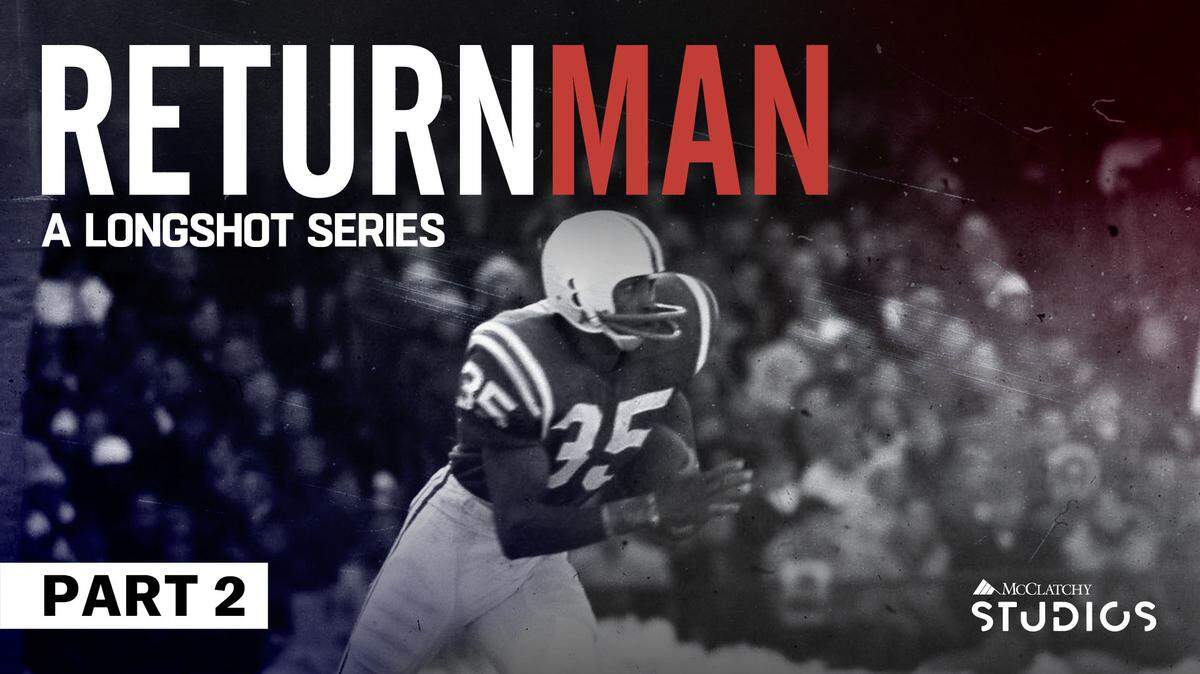
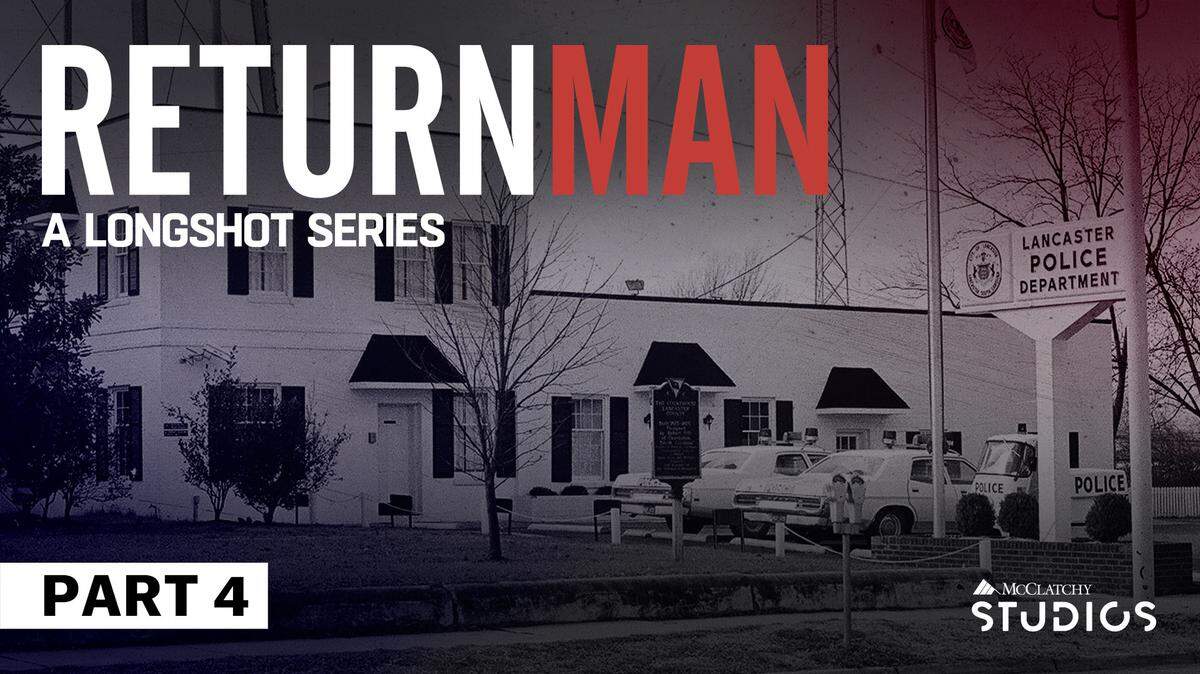
Jim Duncan, once the most feared kickoff return man in the National Football League, entered the front door of the police station in his hometown of Lancaster, South Carolina.
A Super Bowl champion with the then-Baltimore Colts less than two years earlier, he strode up to the counter where a detective stood, sifting through the day’s mail, not paying attention to the trim, handsome hometown hero approaching from behind.
What happened next — around 11:20 a.m. on Oct. 20, 1972 — has been a mystery for nearly 50 years in the little town an hour south of Charlotte.
Duncan, a 26-year old African-American man, was there to commit suicide in a bizarre fashion, according to a cursory police investigation and coroner’s inquest. Without saying a word, Duncan snatched a revolver from the fastened holster on the white detective’s hip. Duncan raised the gun to the right side of his head and fired.
Duncan was dead when the ambulance arrived.
He did not leave a suicide note in his yellow Volkswagen, parked several blocks away. Nor at the brick home nearby that he had bought for his mother and seven siblings after he was drafted by the Colts, and where he was living at the time.
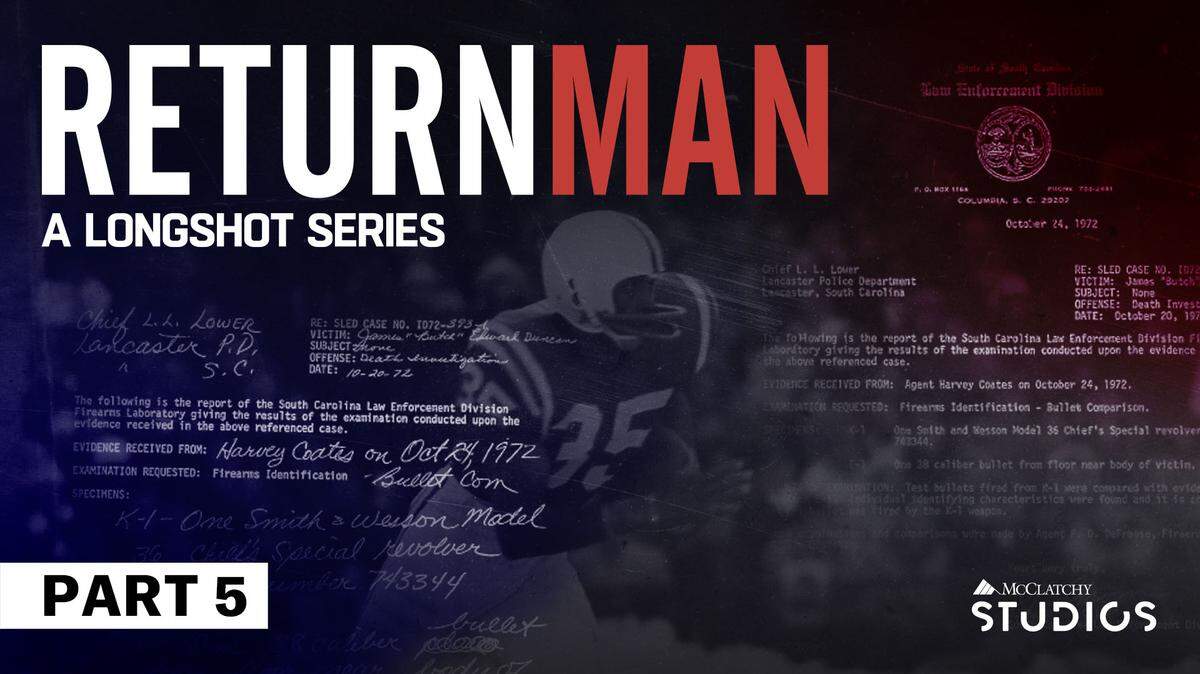
It’s never been confirmed who pulled the trigger of the gun that killed Duncan. The actions, or inactions, of Lancaster authorities in the aftermath spawned questions and conspiracy theories that for the past 48 years have haunted Duncan’s friends and loved ones.
It’s also never been completely clear why Duncan was in Lancaster. He should have been in the fourth year of a budding NFL career. Instead, a confluence of problems led to noticeable personality and behavioral changes, and spiraled his career out of control.
Still, supporters said the man they loved would never commit suicide.
“I’m saying, ‘What happened here?’ It’s one of the great mysteries to me,” said Upton Bell, the Baltimore Colts executive who drafted Duncan in 1968. “Why would Jim Duncan walk in and grab a police officer’s pistol and blow his brains out?”
Growing up in SC mill town
Duncan grew up in 1950s Lancaster, a textile mill town of almost 10,000 people, where the most dangerous activity was driving a car on country roads.
Lancaster was the birthplace of Maurice Williams and his doo-wop group, The Zodiacs. They hit No. 1 on the Billboard charts for a week in November 1960 with their song about Williams attempting to prolong a date with his girl, called “Stay.”
Today, the town’s Main Street looks very different from when “Stay” played on jukeboxes. During a June 2019 lunch hour, the four-block drag was almost empty, as were roughly two-thirds of the store fronts. Much of what’s left of Lancaster’s commercial activity has moved out to the S.C. 9 bypass.
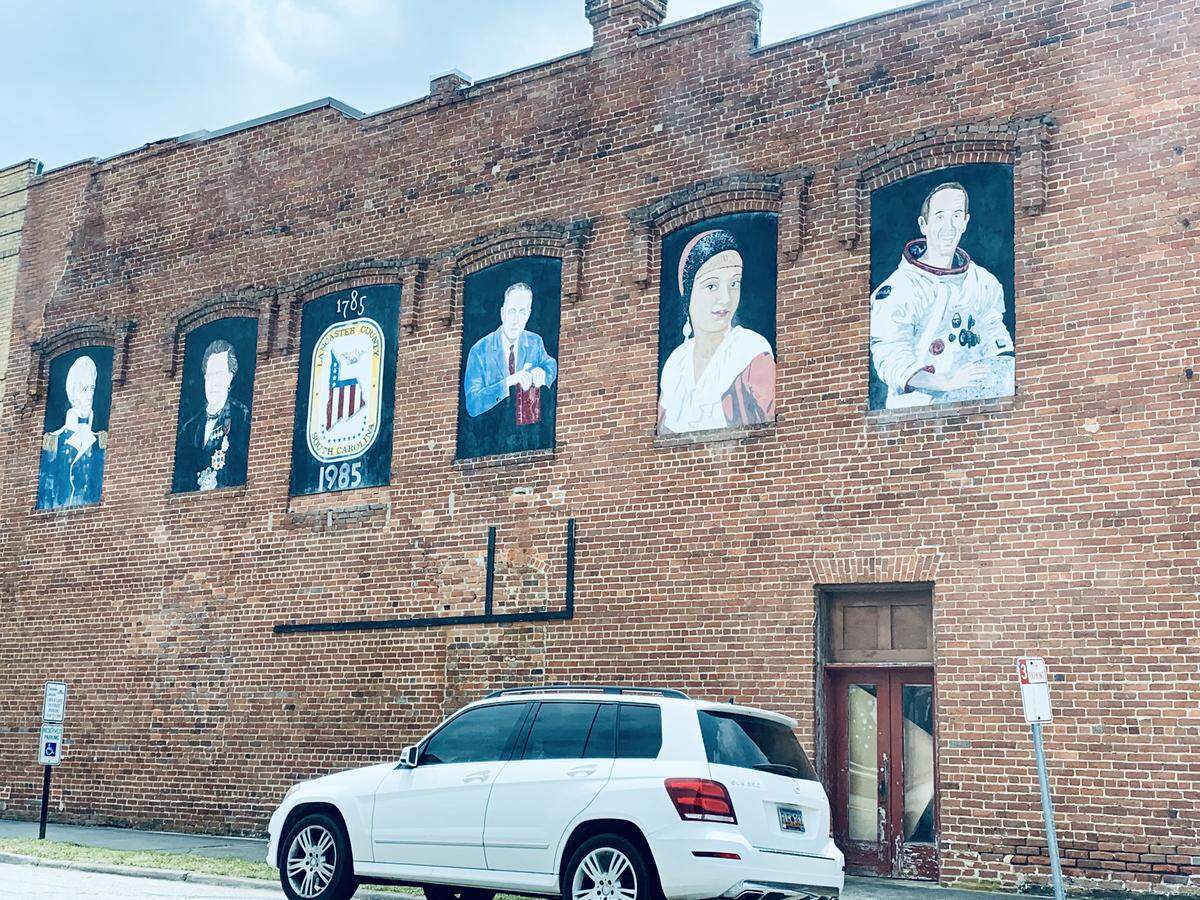
On the side of a Main Street building is a mural of five famous county natives, starting with President Andrew Jackson and ending with astronaut Charlie Duke, the 10th person to walk on the moon. Duncan is not pictured, and there is no mention of him at the museum in Lancaster’s historic courthouse. A man working at the museum didn’t remember Duncan.
Fifty years ago, before the bypass was built and Springs Mills closed its enormous midtown textiles plant, Main Street was Lancaster’s hub. Drivers couldn’t find a parking spot on the street and the numerous downtown department stores competed for shoppers by dressing up their font windows for each season and holiday.
Main Street also was Lancaster’s racial dividing line during Duncan’s youth. Black residents lived predominantly on the east side of the road. Most of the town’s public buildings and establishments were segregated, including the two movie theaters where Blacks sat in the balcony. African-Americans purchased ice cream cones at back windows of several local ice cream parlors. Water fountains and bathrooms were segregated by race, and using the wrong one could land you in jail.
Lancaster never made national headlines for racial violence, but like any Southern town at that time, racism was present.
A 1962 letter to the editor in The Charlotte Observer written by a Lancaster resident chided the newspaper for referring to the Ku Klux Klan as an organization of hate and listed several of the group’s community service projects in Lancaster County. The letter read, “Your writings on the Klan and others who are aware of basic racial differences show a bias on your part to the extent of irresponsible journalism.”
Floyd White coached Duncan in football at Barr Street School, Lancaster’s segregated school for Black children. He said Black teachers who became members of the local NAACP chapter had their teaching contracts canceled, one way of subverting any significant civil rights movement from developing in Lancaster. And he remembered a diner on a Main Street corner that had a window sign, reading, “No N******.”
White, who still lives in Lancaster and is now 86, described the Lancaster where he moved in 1963: “We knew how far we could go, what we could do, what we couldn’t do. Was nothing we could do about it.
“If we stayed on our side of town and did what we were supposed to do, we had no problems.”
Just 25 miles away, Rock Hill was experiencing a much more fiery civil rights transition. In early 1961, a group of Black college students sat down at McCrory’s lunch counter, but were refused service because of their skin color and asked to leave. They refused and were arrested, later becoming known as the Friendship Nine and attracting national attention to the fight for racial equality in Rock Hill.
“That was a world apart from us,” said 72-year old Thomas Houze, a childhood friend of Duncan’s.
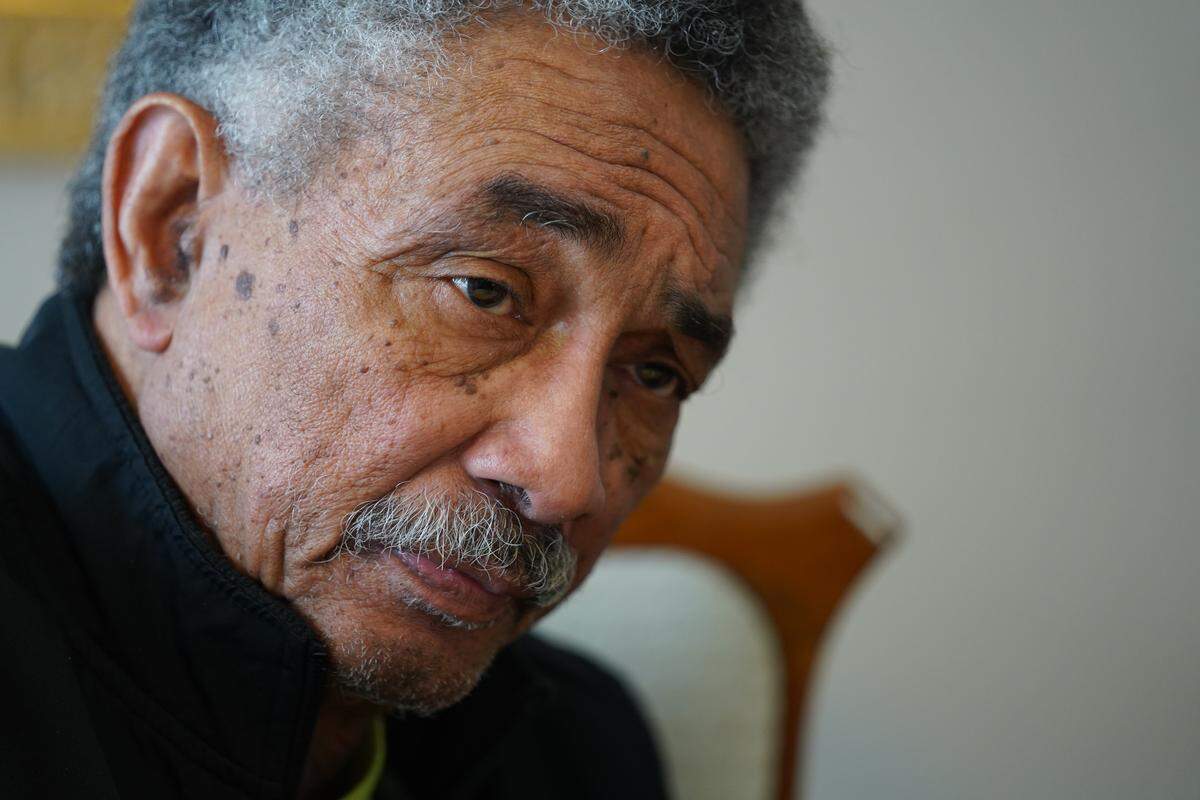
How Lancaster remembers NFL player
Duncan, who everyone in Lancaster called Butch, was the oldest of Ella Ree Clyburn’s eight children.
Clyburn, a tall woman who smoked unfiltered Camel cigarettes, worked as a nanny for state Rep. Tom Mangum.
Duncan was a father figure to his brothers and sisters, but he was especially close to Elroy, who was three years younger.
“Most of the time he was like the daddy to all the rest of us,” said Elroy. “He took care of me when I was in college and he was in the pros.”
Elroy and Duncan worked a newspaper route together, helped Elroy’s dad lay bricks at his construction jobs and cut grass on the weekends. The extra spending money took financial pressure off their mom, and allowed the boys to buy bicycles and the family’s first television.
The brothers fished at a reservoir, then walked a couple miles home with a stringer of fish hanging between them. They swam at a pond, splashing their way out to the middle. The pond’s snakes frightened Elroy, but he managed to ignore them as he plunged to the bottom with his brother by his side.
The family lived in a long, narrow dwelling known as a shotgun house in the Black section of Lancaster, called New Town. At least 17 members of the extended family, including Ella Ree and her eight kids, three of her sisters and their kids lived in the Gregory Street house.
During Duncan’s youth, Clyburn’s daily interactions with Rep. Mangum and his family would have been about the only time a Black woman could enter a prominent white family’s house.
Butch wanted “to retire” his mom, Elroy recalled, so she wouldn’t have to work anymore. Improving the family’s financial situation was an early inspiration for his athletic feats.
Duncan starred for the Barr Street Golden Tigers in a number of sports, but especially playing quarterback for Sandy Gilliam’s football team. Floyd White remembered that Duncan used to palm the football and wag it around as he ran toward the end zone instead of tucking it close to his body like his coaches pleaded with him to do. All of the brick work during his teen years made his hands into vice grips.
Duncan came from a family in which all eight children were offered some type of athletic scholarship to college, and he was the best of the bunch.
“He played football ... He was good,” said White. “Played basketball ... He was good. And he ran track and played baseball. He was a four-letter man. He was good at anything he put his hand on.”
Duncan was even a pool shark, with his own pool cue. He would take off to pool halls in surrounding towns to try and hustle up some cash for he and his siblings.
“Any sport he wanted to master he could do it,” said Houze. “You don’t see people like that often.”
Barr Street to Maryland State
Duncan’s primary education occurred in a segregated but somewhat idyllic setting at Barr Street School. The environment had such an impact on its students that many graduates, including Lancaster native Michael Bogan, are still active in the school’s alumni foundation 50 years later.
“My teachers knew my mother. They either were in a club together, or they attended the same church,” said the 68-year old Bogan, who grew up with Duncan’s younger siblings. “The community was close. We were an African village. Everybody looked out for each other. There was no fighting, there was no shooting, there was no drugs. It was just people trying to survive.”
Duncan graduated from Barr Street in 1964 and found a similarly nurturing environment in college. His high school coach, Sandy Gilliam, took the head coaching job at historically Black Maryland State College in 1964, and Duncan was one of his first recruits. The school is now Maryland-Eastern Shore, located in rural Princess Anne about 130 miles from Baltimore.
Gilliam’s on-campus house was a hangout for Maryland State students, a safe space in a remote corner of Maryland stalked by racial tensions during the 1960s. Only 30 years earlier Maryland’s final horrific lynching of a Black man had taken place in Princess Anne. Gilliam’s son, Rosey, remembers football players would come by their house and listen to records in the family’s basement, eat sandwiches and relax, and sometimes babysit him and his siblings.
Rosey Gilliam rubbed elbows with some all-time greats. Duncan played football with 12 future NFL players during his four years at Maryland State, including pro football Hall of Famer Art Shell, and another Lancaster native and Barr Street graduate, Bill Belk.
Duncan lined up at quarterback and safety and returned punts during a football career that eventually landed him in Maryland-Eastern Shore’s athletic hall of fame. He ran two kicks back for touchdowns in one game against Lock Haven, 67- and 87-yard scoring runs. And he also played on the school’s basketball and baseball teams for at least one season each.
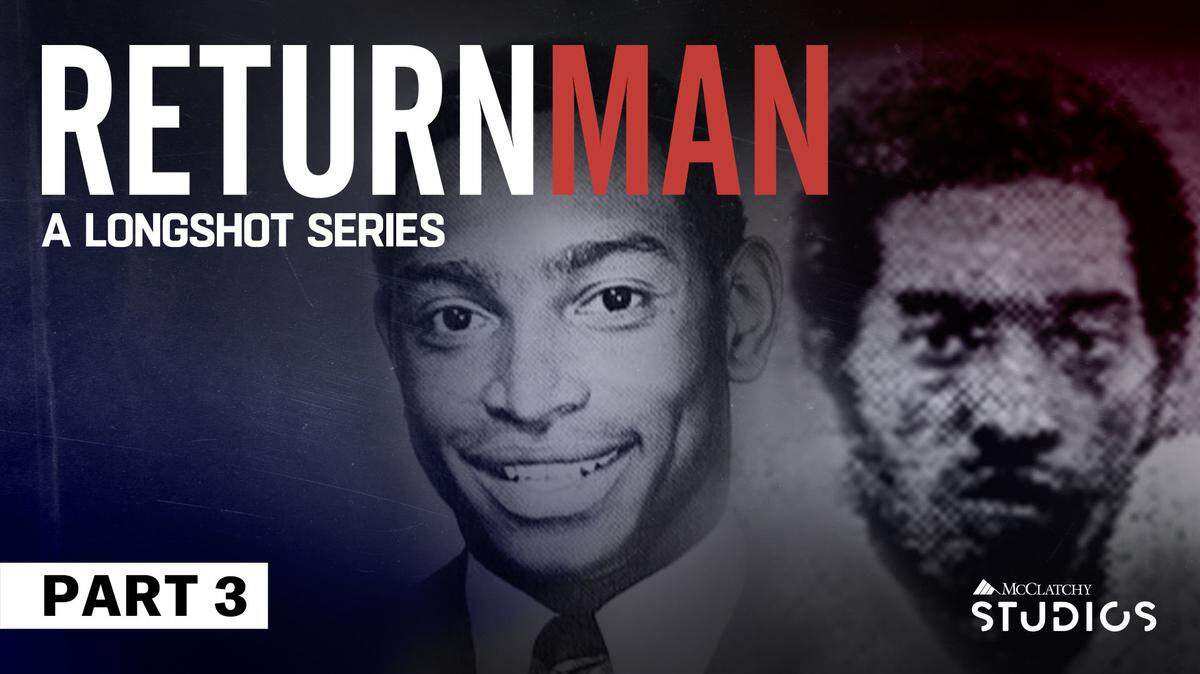
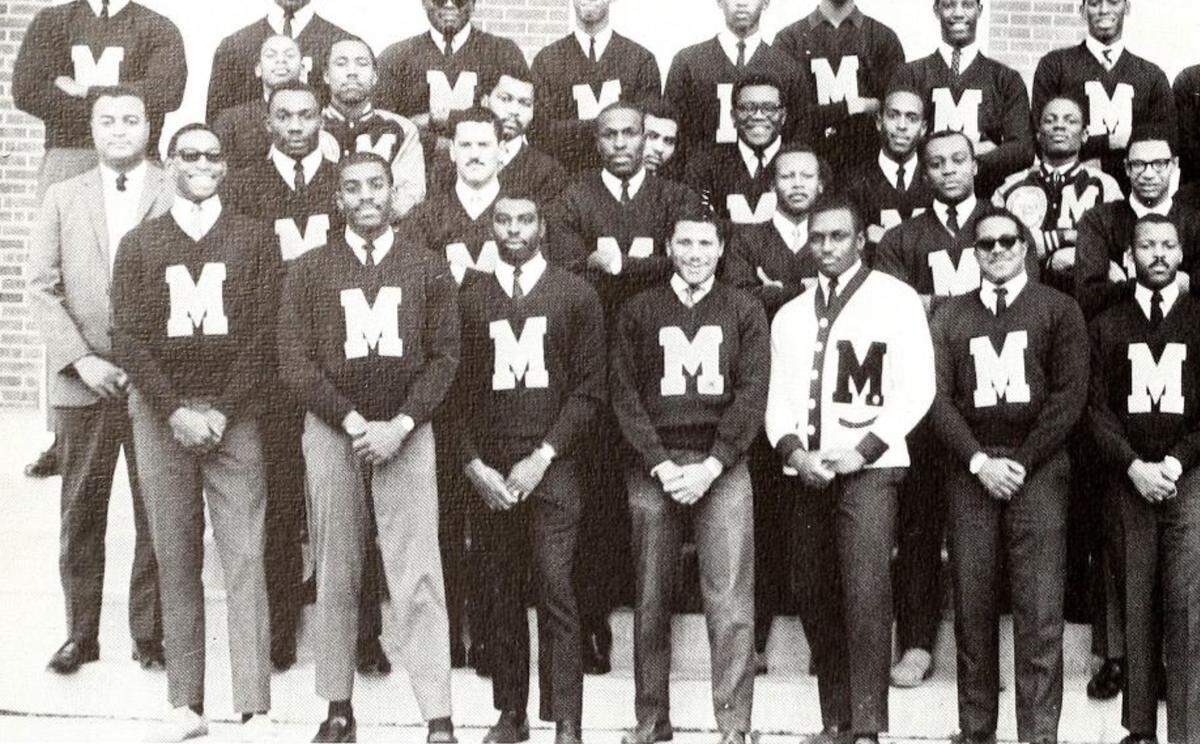
You can still find Maryland State College yearbooks online. In one, Duncan is pictured with other athletes that earned varsity letters in multiple sports. Standing directly in front of Gilliam, Duncan, tall and handsome, is wearing snazzy white dress shoes, dark sunglasses and an enormous grin.
NFL promise in South Carolina
Across the Chesapeake Bay in Baltimore, a young executive for the NFL’s Colts urged his head coach, Hall of Famer Don Shula, to drive out to Princess Anne in 1967 and check on Maryland State College’s impressive, but overlooked, collection of football players.
The Colts executive, Upton Bell, was enamored with Duncan’s speed, leaping ability and overall potential.
“Duncan was very, very quiet,” said Bell, the Colts’ director of player personnel from 1966 to 1971. “A really nice person, which you would say maybe you’re not gonna find particularly to play defense. His toughness belied his really sweet personality.”
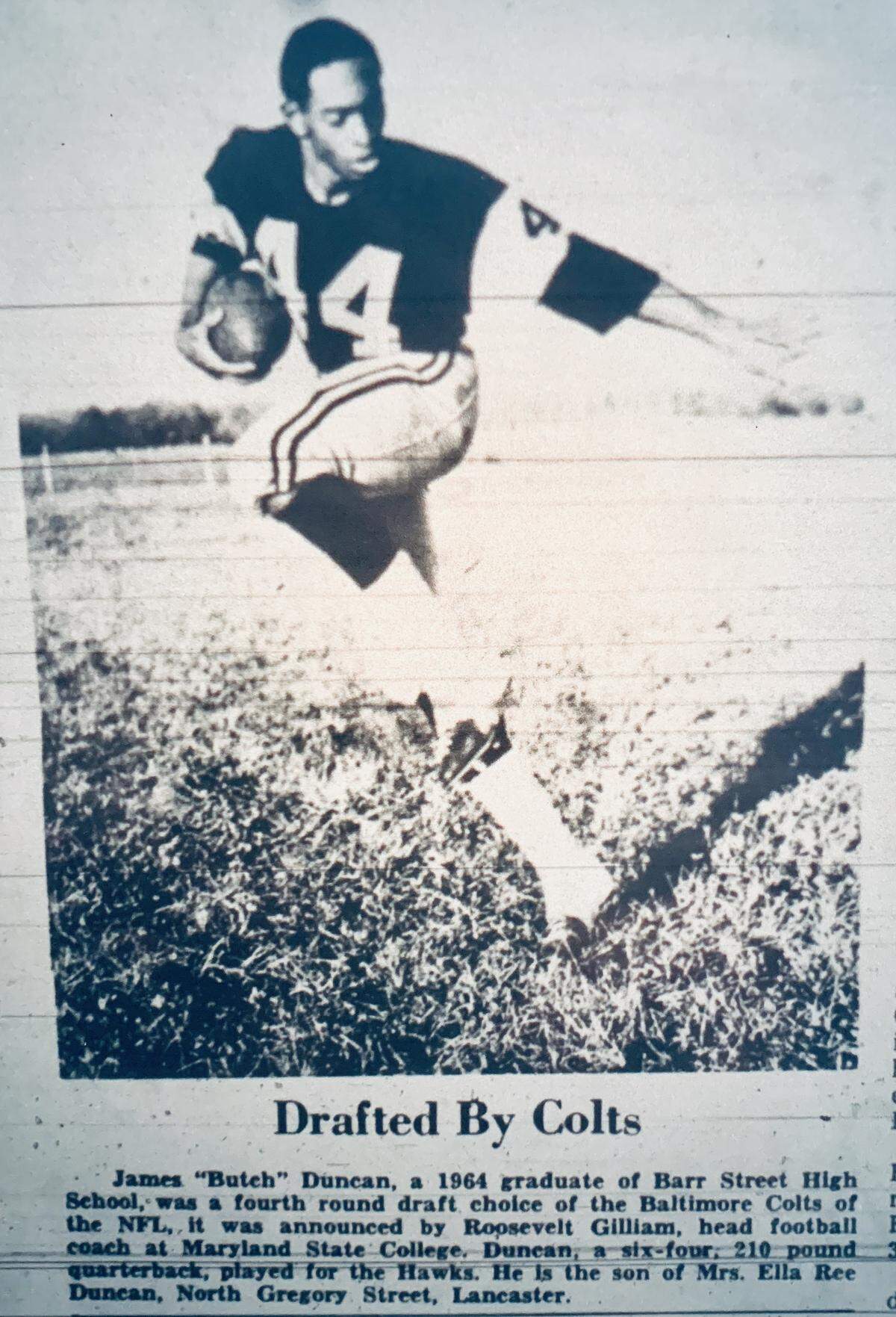
The Colts picked Duncan in the fourth round of the then-17-round 1968 NFL Draft, and he signed his first pro contract with Baltimore in April of that year. Six months later, he bought a plot of land on Isom Street in Lancaster for $1,700. A local contractor built a three-bedroom house for his mother and siblings on the wooded plot at the end of the street.
Floyd White remembers helping pour the house’s concrete foundation. Once it was finished, the house was valued at $25,000 in 1968, according to Lancaster County records, about $180,000 in modern dollars.
Duncan had provided his family with a new level of comfort in a more stable neighborhood after a childhood spent in relative poverty.
The newly-built house at 425 Isom Street seemed to represent the promise carried in Duncan’s 6-foot-2, 200-pound frame. It symbolized the years of hard work by Ella Ree Clyburn, who provided for the family despite her education ending at seventh grade, and it represented the future the family was trying to build.
“It was a change in their environment, and a change in the personality of those people,” said White. “We had school teachers and children down there (on Isom Street). So they had the chance to mix with them and see the brighter side of life instead of all the negative.”
The NFL future that Duncan was building would have to wait a year. The Colts’ defensive secondary was loaded with veterans, so Duncan spent his rookie season practicing with Baltimore during the week before heading to Harrisburg, Pa., on weekends to play for the Colts’ farm team, the Capitol Colts.
He was one of four Colts rookies on a Harrisburg team otherwise made up of part-time players, all of whom had day jobs, and Duncan stood out. A local reporter wrote that Duncan “looked like a record setting dash man” during a 65-yard interception return for touchdown in one game. Around 2,500 fans watching from the stands saw the promise in the lanky rookie from South Carolina.
Duncan wouldn’t toil in obscurity for long.
Have questions or comments about Return Man? Reach The Herald at 803-281-2840 or RHNews@gmail.com.
BEHIND THE STORY
MOREWhy did we report this story?
On multiple occasions I have been asked some version of “why are you digging this up all these years later?”
My main motivation was trying to fill in Jim Duncan’s story, one that 47 years later, still has so many unanswered questions.
This story is still relevant because it entails many of the issues American society continues to grapple with: drugs, escaping poverty, the financial issues of young adults, race relations, and community-law enforcement relations.
As Rosey Gilliam, whose father coached Jim Duncan in high school and college, said to me about Duncan’s story, “If you took away the date and time, could you imagine that happening today? And the answer is yes you can.”
Read more by clicking the arrow in the top right corner of this box.
Where did the idea come from?
I covered high school football for The Herald and have written often about how this area of South Carolina produced numerous NFL players, including seven active ones from Rock Hill.
I was looking up a list of NFL players from South Carolina, and near the end of the list I found the name “Jim Duncan.” I Googled his name, and one line from his Wikipedia page jumped out: “He was found to have committed suicide with a policeman’s revolver in 1972.”
That Internet search set me off on a journey to learn more about how Duncan went from the NFL’s most feared kickoff return man, to dead in a span of less than two years.
How did we report the story?
Over more than two years I made dozens of trips to Jim Duncan’s hometown, Lancaster. I interviewed more than 40 people, from family and friends, to high school, college and NFL teammates and coaches, as well as lawyers and doctors involved in the final days of his life and the confusing aftermath.
I submitted numerous Freedom of Information Act requests -- many of which came back empty -- and spent numerous hours at the Lancaster County Library, combing through microfilm of the Lancaster News and old phone books, and at libraries in Charlotte and New Orleans.
This story was originally published January 26, 2021 at 5:00 AM.