‘Just didn’t believe it.’ Suspicion rises of SC police account of Jim Duncan’s death
READ MORE
What really happened to Jim Duncan?
The Super Bowl hero from Lancaster, SC supposedly committed suicide in a police station.
Expand All
This was the plan: Alice Duncan, 21, would live with her parents in Greenville, South Carolina and work at the mall, while Jim Duncan, her husband of several months, attempted to salvage his NFL career with the New Orleans Saints. Once he made the team’s regular season roster, she would move to New Orleans and they would find a place to live.
Then, Duncan showed up in mid-September 1972 at Ivey’s department store in Greenville, where Alice worked. The plan had changed. Duncan’s attempt to revive his NFL career had failed.
Talking with a reporter almost 50 years later, Alice Duncan, who now is Alice Caston, said she knew her husband had been waived by the Saints. But the following week Duncan spent trying out with the Miami Dolphins and his old coach, Don Shula, was a surprise.
“I didn’t even know anything about the Dolphins at all,” she said.
Family and friends from Duncan’s hometown of Lancaster, South Carolina, called him Butch. Those who met him in Maryland, whether in college or through the Baltimore Colts, called him Speedy. Others called him Jimmy or Dunc. It was as though the separate identities contained separate lives, and no one was privy to all the happenings.
Communicating with someone living several states away was much harder 50 years ago. And it’s obvious that Duncan kept secrets, whether to preserve his brother’s adulation or to shield friends and loved ones from knowledge of personal failure.
“Jimmy, he was kind of reserved in some fashion, didn’t necessarily let on. Although I was his best friend, I didn’t really know where exactly his head was all the time,” said friend and college football teammate, Lawrence Acker.
It’s evident that no friend or family member completely grasped the severity of Duncan’s problems — financial, mental or otherwise — when he returned to Lancaster in September 1972. Not truly knowing Duncan’s mental state at the time makes it more difficult to understand what happened to him in the lobby of the Lancaster police station, where he died from a single gunshot wound to the head.
This is increasingly clear: Duncan’s hometown wasn’t the best place for him to address the issues he faced.
“With Butch, the best thing that could have happened would have been him not to be there in the first place,” said Rosey Gilliam, whose father, Sandy Gilliam, coached Duncan in high school and college football. “That’s sort of a bad way of looking at it, but I think that’s an honest, real answer.”
The move back to Lancaster
Duncan had returned to Lancaster and moved in the house with his mother and most of his seven siblings.
Duncan was still an ace billiards player, so it was no surprise that he spent a lot of time shooting pool at Walter’s Grill in downtown Lancaster. Buddy Cauthen was at Walter’s in October 1972 when a reporter from The Charlotte Observer walked in. Cauthen told the reporter that Duncan “loved to shoot pool, liked games. He’d come in, shoot pool, drink a few beers and talk. He spent a good bit of time here.”
Duncan seemed disconnected from his life of just a few months earlier. He was not living with his wife. Some news reports later said Duncan and Alice were in the midst of a divorce, though Alice said that wasn’t true.
It doesn’t seem like Duncan was training, staying in shape or waiting for an NFL team to call. It’s also not clear if he was employed. Buddy Cauthen told The Observer that Duncan had come to Walter’s Grill with a job application at one point and appeared to be lining up some work.
“The money he was making, he didn’t have to work,” said Duncan’s friend, Billy Ray Crawford.
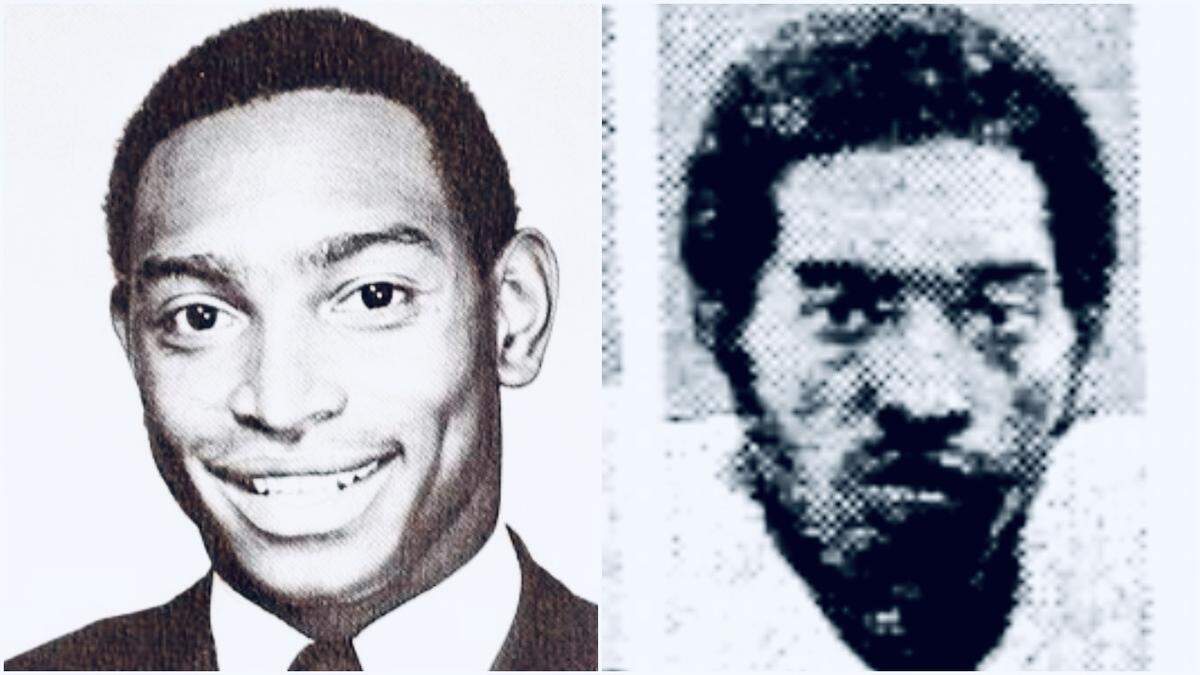
It’s now clear that Duncan hadn’t made the money people thought he had. Various news reports stated that he lost $22,000-$60,000 and that he had a $17,000 bill from the IRS for what appeared to be unpaid taxes. Duncan made $17,000 per season during his three years as a full-time Baltimore Colt.
Crawford, now 80, said Duncan seemed like the same person he’d known. Floyd White, who coached Duncan in high school and lived next door on Isom Street, disagreed.
White said Duncan had become an “inward person,” that he would leave his house from the back door and walk through backyards and overgrown areas to avoid interaction with neighbors.
“I do know he was on drugs at that particular time,” White said. “I saw him one day. My house was here, his house was here, and going toward the high school he had to go through the bushes. I attempted to talk to him to see where he was, and he didn’t know me. He was strung out. He was bad strung out.
“He always called me Coach or Coach White. He didn’t even know who I was.”
Bob Grant played alongside Duncan with the Colts and later, briefly, with the New Orleans Saints. He grew close to his teammate and friend, whom he called Speedy, and spoke with Duncan less than a week before his death. They discussed plans to get together over Thanksgiving, and Grant thought Duncan was getting himself ready for another run at the NFL.
Though they weren’t living together, Duncan saw Alice in Greenville on Oct. 13. He stayed the night, ate breakfast with Alice and her mother the next morning, then told Alice he had to go back to Lancaster to handle some business. That was the last time she saw him alive.
The alleged suicide in an SC police station
Glen Crawford and Jim Duncan were two of a tight group of African-American children who grew up together in the same section of Lancaster during the 1950s and early 60s. Kids from each street in the neighborhood formed football and baseball teams and played kids from other streets in sandlot games. Later, they attended Lancaster’s all-black school, Barr Street.
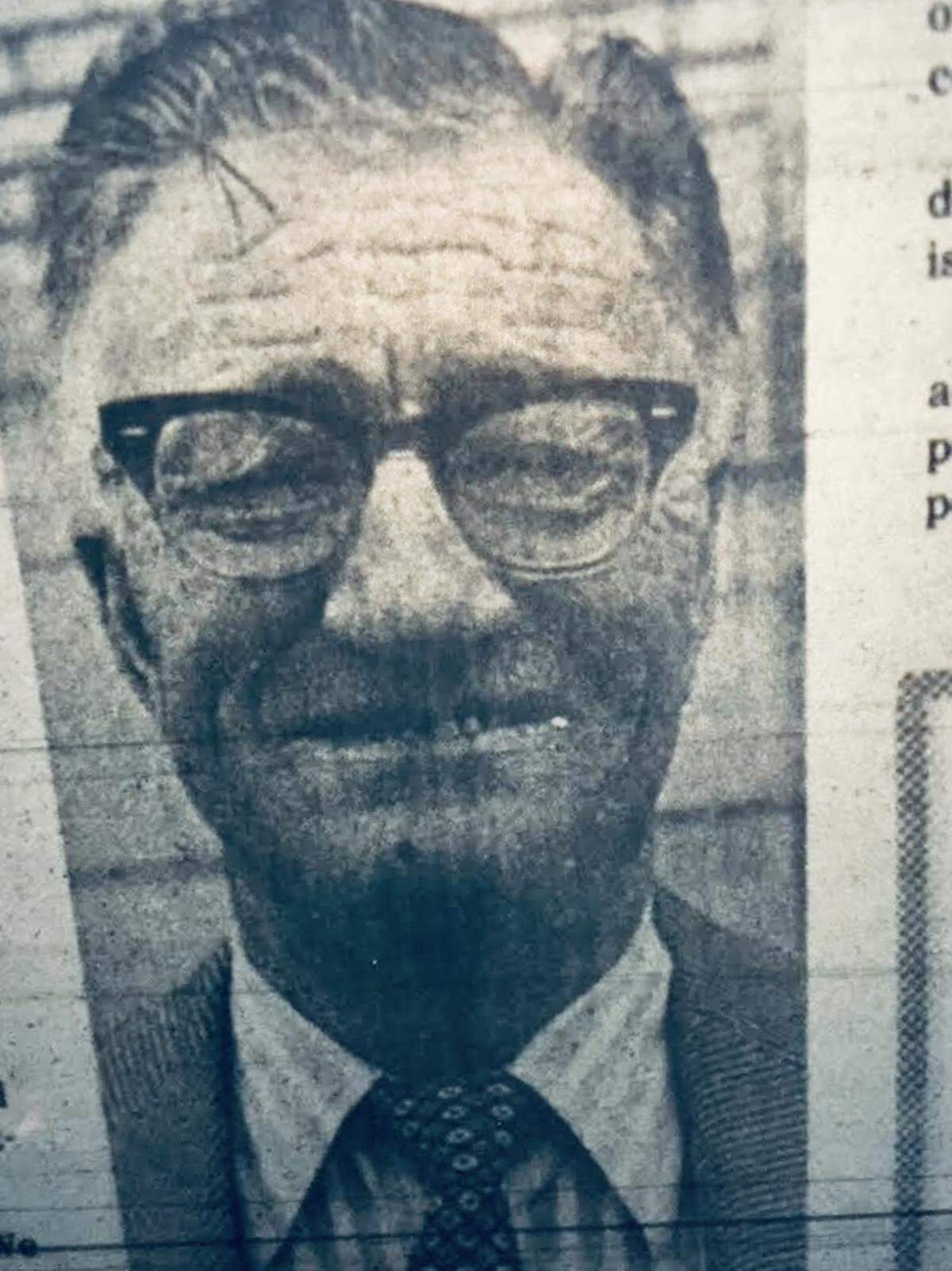
So, the memory of seeing Duncan drive by in his yellow Volkswagen Beetle on the final day of his life, Oct. 20, 1972, still sticks in Crawford’s mind. Normally, Duncan would have stopped for a brief chat or at least waved as he drove past.
“He looked just in a daze, driving, when he passed me,” Crawford said in 2018. “I hollered at him, and he kept going. We didn’t have a conversation.”
A precise accounting of Duncan’s movements on Oct. 20, 1972, doesn’t exist. But here’s an educated guess:
At some point, Duncan dropped his mother off at the ABC store where she worked.
“He didn’t act depressed or anything that morning,” Ella Ree Clyburn told The New York Times. “He told me he was heading for home then. And that’s the last time that I saw him. Alive.”
Duncan reportedly stopped by two service stations, asking for an ice scraper and later for some antifreeze for his car. He then went to Fish’s Pawn Shop on Gay Street in downtown Lancaster. According to the Philadelphia Inquirer, A.R. Rucker, a Black educator in Lancaster, was looking at a fishing rod in the pawn shop when Duncan walked in. Rucker greeted him, but Duncan just stared back for a moment before leaving the store.
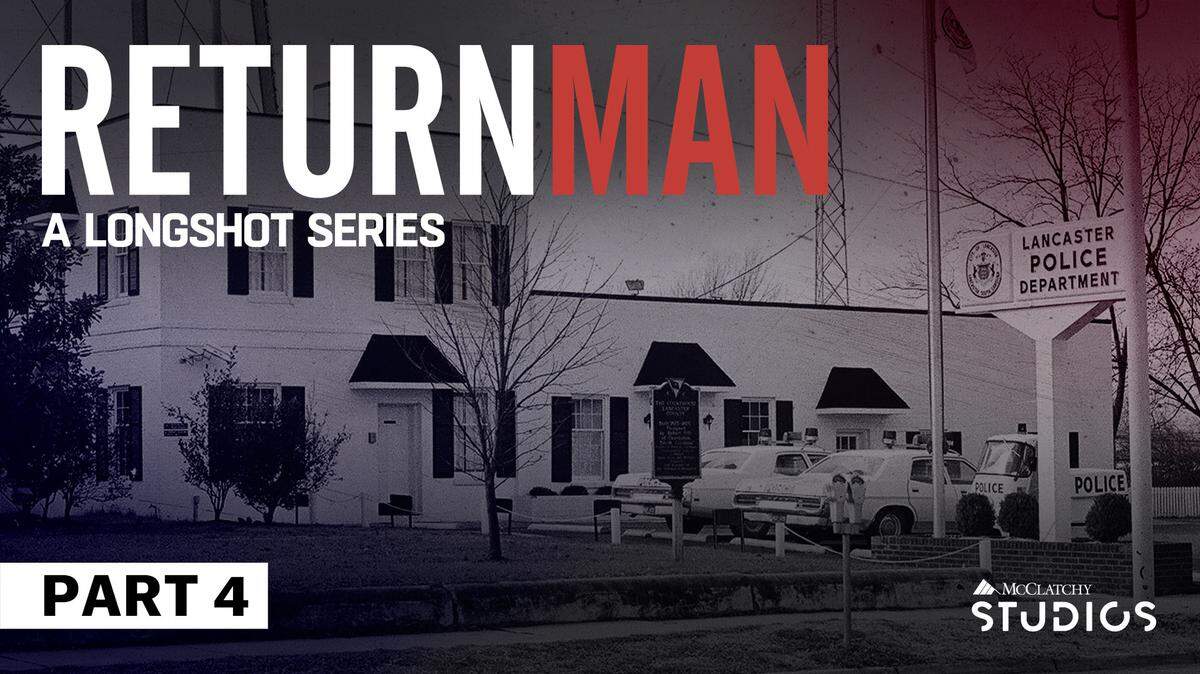
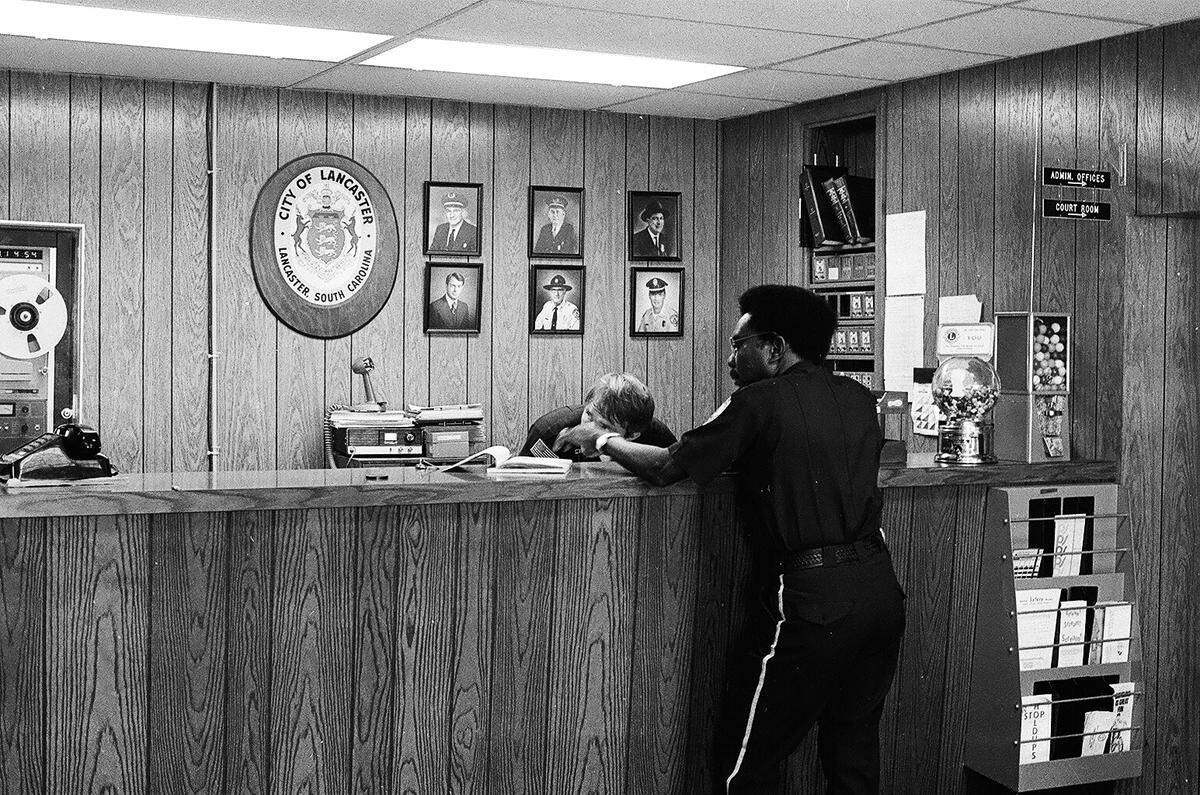
And then Duncan was at the Lancaster police station.
Why he was there, or how he got there, is not clear. The details are murky and secondhand. The few details come from one source: members of law enforcement.
This much is undisputed: Duncan died in the police station lobby around 11:20 a.m.
The official version of the story is that he entered the front door and walked up behind Lt. Russell Hinson, a detective standing in front of the reception counter sifting through the mail, with his back to Duncan.
Without saying a word, Duncan reportedly grabbed the Model 36 revolver out of Hinson’s holster. Duncan then shot himself in the right side of the head, behind the ear, before the 52-year old detective known as Red could spin around and stop him.
One news story said Duncan then staggered a few steps before tumbling into a corridor off the reception area. He was dead before an ambulance arrived.
What happened after death?
A dispute over the facts began shortly after Duncan’s death.
A Charlotte Observer story said Clyburn found out through a phone call from one of her sisters that Duncan had been shot.
Another story said Lancaster authorities sent for Rucker, one of the last people to see Duncan alive. Rucker had known Duncan since he was a child and was dispatched, along with Lancaster police Lt. William Driggers, to the liquor store to tell Clyburn that her son had been shot. Clyburn was told only that Duncan was shot, not that he was dead.
“We don’t like to upset the family,” Lancaster police chief Larry Lower told a reporter two months later.
The Observer story said Clyburn was escorted home by the coroner, Richard Chandler, who gave her $10 and the car keys that were in Duncan’s pocket.
Chandler asked Clyburn who she wanted to handle the funeral. One news story said she saw Duncan’s body the following day, and another said she didn’t see it until three days later at McMullen Funeral Home.
Chandler, who owned an auto body shop, asked his one Black employee to come with him to identify Duncan’s body. The employee, Billy Ray Crawford, had hung out with Duncan socially on a regular basis in the month that Duncan had been back in town. When they arrived at Springs Hospital, Chandler and Crawford found Duncan laid out on a table, still dressed in what Crawford called “jogging clothes.”
“He just looked like his self,” Crawford said. “But he was laying there like he was asleep.”
In Greenville, Duncan’s wife, Alice, was completely unsure of what to do. She didn’t go to Lancaster until a few days later because her family was concerned for her safety.
“She was just like every day in a daze trying to figure out what happened,” said Loretta Bigby, Alice’s sister. “‘They (the police) killed him!’ She was just all over the place with that.”
Family, NFL teammates question suicide
News of Duncan’s death was shocking. But the way it happened moved grieving friends and family from shock to disbelief.
Alice, “was devastated when she heard the news,” Bigby said. “She just could not understand what happened. He was going up (to Lancaster) to see about his mother, taking care of business up there and she just could not understand what happened. How could this happen?”
Bob Grant had spoken to his former NFL teammate and close friend only a week before. He was floored by the news.
“He was not in the mind of suicide at all,” Grant said in 2017. “Speedy loved himself some Speedy. He wouldn’t have killed himself. Never would have done it.”
In New Orleans, defensive coordinator Jim Champion, who seemed to sense something was seriously wrong with Duncan, reportedly wept. Dean Kleinschmidt, the Saints’ athletic trainer, who remembered Duncan almost 50 years later as “troubled,” said there was stunned silence in the Saints locker room when the news of Duncan’s death broke. And he also remembered the horrible feeling that his initial impression of Duncan was accurate.
It was 1972, not the interconnected, hyper-wired world of 2021. So the news gradually made its way around the country, from Lancaster to Charlotte to Princess Anne and Baltimore and to New Orleans and Greenville, places where Duncan had made impressions. The scattered factions of friends and associates all shared a similar thought.
“A few of us called around, angry about it but not having the slightest idea of what to do or if there was anything to do,” said Bill Curry, a Baltimore Colts offensive lineman who remembered Duncan fondly. “It ended up with us just being frustrated and angry for Jim.”
Remembering Duncan at funeral
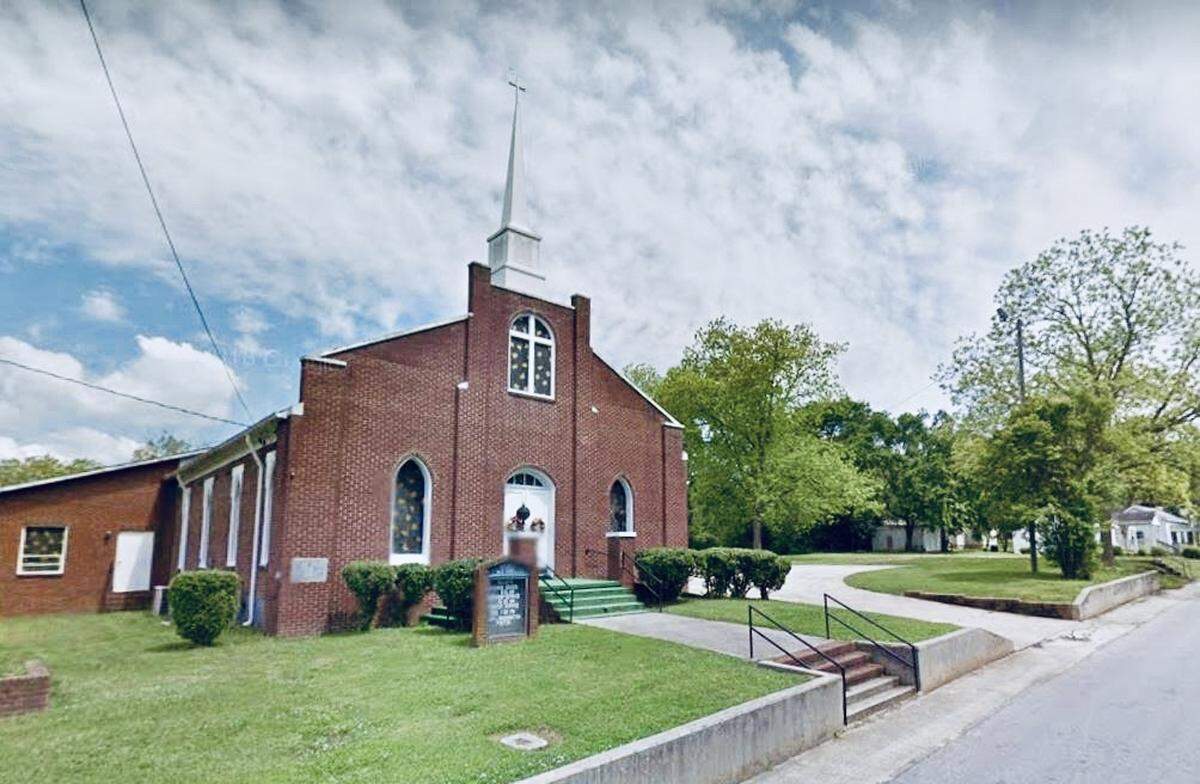
Duncan’s funeral was held at 4:30 p.m. on Oct. 23, 1972, at St. Paul AME Zion Church in Lancaster.
Alice arrived at the church early.
“I just couldn’t stand there,” she said. “So I walked away from my family and entered the church myself, because I had not seen him.”
Duncan always told Alice that he wanted to be buried in a traditional African dashiki he owned, though she’s not sure if he was joking. Alice found Duncan laying in a casket at the front of the church, wearing a dark suit and a tie. Lynda Duncan remembered that her brother-in-law was scrunched in the casket, which didn’t fit his 6-foot-2 frame.
A packed church paid final respects to “Butch,” and the overflow crowd spilled onto the sidewalks. Ella Ree Clyburn later told a reporter that she should have held the funeral in the Lancaster football stadium.
“They would have filled every seat in the stadium,” she said. “It would have been sort of right to have it there.”
The choir sang “What A Friend We Have In Jesus,” and a former football teammate of Duncan’s sang “Amazing Grace.”
The Rev. G. A. Ashford and Sandy Gilliam, Duncan’s high school and college football coach, gave eulogies. A Charlotte News story from the funeral said Duncan was remembered as “an admired citizen, loved and respected by all. He was a beautiful person with an open mind and friendliness to charm the world.”
Many of Duncan’s former teammates from Barr Street School, including Thomas Houze, served as pallbearers.
“This was eight years after we had graduated from high school,” said Houze. “He should have been at the heights of his profession.”
Following the service, a caravan of cars drove six miles down U.S. 521 to the Salem AME Zion Church cemetery in Heath Springs. There, Duncan was laid to rest.
The shock and disbelief soaked in, then suspicion invaded the hearts and minds of Duncan’s family and friends. After the funeral, Alice and her sister spoke with Lancaster police about the incident — in the building where Duncan died.
“They were talking to her about what had happened, what caused it, and she just didn’t believe it,” said Loretta Bigby. “Didn’t believe it.”
Have questions or comments about Return Man? Reach The Herald at 803-281-2840 or RHNews@gmail.com.
BEHIND THE STORY
MOREWhy did we report this story?
On multiple occasions I have been asked some version of “why are you digging this up all these years later?”
My main motivation was trying to fill in Jim Duncan’s story, one that 47 years later, still has so many unanswered questions.
This story is still relevant because it entails many of the issues American society continues to grapple with: drugs, escaping poverty, the financial issues of young adults, race relations, and community-law enforcement relations.
As Rosey Gilliam, whose father coached Jim Duncan in high school and college, said to me about Duncan’s story, “If you took away the date and time, could you imagine that happening today? And the answer is yes you can.”
Read more by clicking the arrow in the top right corner of this box.
Where did the idea come from?
I covered high school football for The Herald and have written often about how this area of South Carolina produced numerous NFL players, including seven active ones from Rock Hill.
I was looking up a list of NFL players from South Carolina, and near the end of the list I found the name “Jim Duncan.” I Googled his name, and one line from his Wikipedia page jumped out: “He was found to have committed suicide with a policeman’s revolver in 1972.”
That Internet search set me off on a journey to learn more about how Duncan went from the NFL’s most feared kickoff return man, to dead in a span of less than two years.
How did we report the story?
Over more than two years I made dozens of trips to Jim Duncan’s hometown, Lancaster. I interviewed more than 40 people, from family and friends, to high school, college and NFL teammates and coaches, as well as lawyers and doctors involved in the final days of his life and the confusing aftermath.
I submitted numerous Freedom of Information Act requests -- many of which came back empty -- and spent numerous hours at the Lancaster County Library, combing through microfilm of the Lancaster News and old phone books, and at libraries in Charlotte and New Orleans.
This story was originally published January 26, 2021 at 5:00 AM.