The blood. The gun. A muted outcry. How SC police investigated Jim Duncan’s death
READ MORE
What really happened to Jim Duncan?
The Super Bowl hero from Lancaster, SC supposedly committed suicide in a police station.
Expand All
There’s a black-framed sign on Karla Knight Deese’s desk intended for visitors, many of whom are seeing her on possibly the worst day of their lives.
“It is my duty to provide you with a fair and accurate investigation,” the sign reads. “It is my honor to do so with pride, honesty and integrity.”
Deese, the Lancaster County coroner elected in 2016, hopes that as she’s talking to people, they’ll notice the sign and take comfort.
Deese doesn’t care who the decedent is, where they come from or what their lifestyle was.
“The bottom line is somebody, somewhere, cares about you, and it is our job to provide those answers to your surviving family, and treat you equally and fairly,” she said.
It’s debatable whether Jim Duncan’s family was treated “equally and fairly” back in 1972.
Duncan, the Lancaster native who won a Super Bowl with the Baltimore Colts, was in a fragile mental state when he died of a single gunshot wound to the head in the lobby of the Lancaster police station in October 1972. The combination of financial — and career-induced — anxiety, possible traumatic brain injury and drug abuse could explain the 26-year-old NFL veteran’s death by suicide.
However, if the coroner and investigators had done basic things, actions taken in almost all police investigations, including many in the 1970s, the suicide explanation might have been accepted and the questions wouldn’t still exist.
Absence of evidence after death
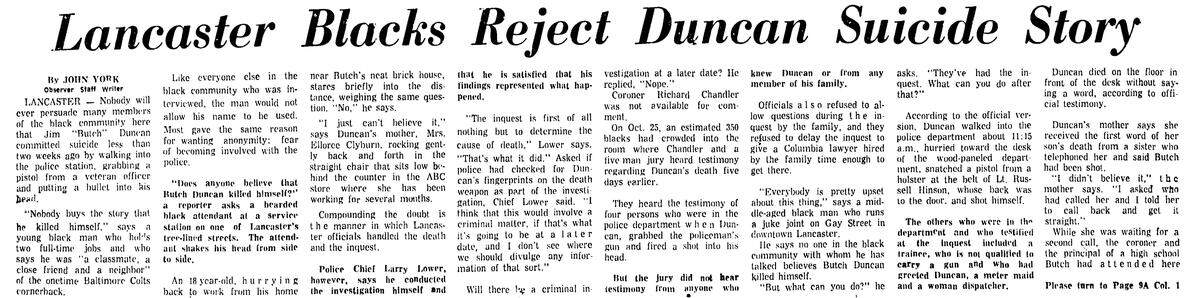
Lancaster Police Chief Larry Lower told The Charlotte Observer’s John York in 1972 that he handled the investigation into Duncan’s death.
When Lower was asked if investigators had checked the gun for Duncan’s fingerprints, he said, “I think that this would involve a criminal matter, if that’s what it’s going to be at a later date, and I don’t see where we should divulge any information of that sort.”
York asked Lower if there would be any criminal investigation at a later date.
“Nope,” Lower said.
While DNA evidence wasn’t used to solve a crime until 1986, fingerprint evidence has been used in criminal investigations since the early 20th century. A 1937 Charlotte Observer story indicated that the highway patrol investigators lifted fingerprints off a car connected to the fatal shooting of a Lancaster police officer.
Fingerprint evidence would have been available to the Lancaster Police Department and the State Law Enforcement Division, South Carolina’s top law enforcement agency, by 1972. When asked if SLED could process fingerprints at that time, former SLED firearms expert F. Dan Defreese said, “Yes.”
If Duncan’s fingerprints had been found on the gun, the likelihood that anything other than a suicide occurred would be greatly reduced.
Jet Magazine reported that no official autopsy was performed on Duncan’s body, although it mentions that a local doctor, Joseph Smith, “examined the body.” Duncan reportedly died from a single gunshot wound to the right side of the head, below and behind his ear. But there is no way to independently confirm that.
Lower told Jet, “If there’s one mistake I made, perhaps it’s that I didn’t call for an autopsy.” Coroner Richard Chandler told the Charlotte News on Oct. 23, 1972, that, “I could see no value in having an autopsy because there was no question as to the cause of death.”
Chandler never said he witnessed Duncan’s death. And because there is no autopsy report, anything said about the state of Duncan at the time of his death cannot be proven.
Glen Crawford, who grew up with Duncan and lived down the street from him in 1972, worked at McMullen Funeral Home, the funeral parlor that handled Duncan’s body. Asked if he worked on his friend’s corpse, Crawford demurred.
“I can’t discuss that. Ethics,” he said.
Asked again later, he again declined to answer.
“Aaaah ... I won’t say.”
What did crime lab test results say?
Immediately after Duncan’s death, Lancaster police sent several items to SLED’s crime lab for testing. A request by The Herald for the records returned grainy photocopied scans of lab results.
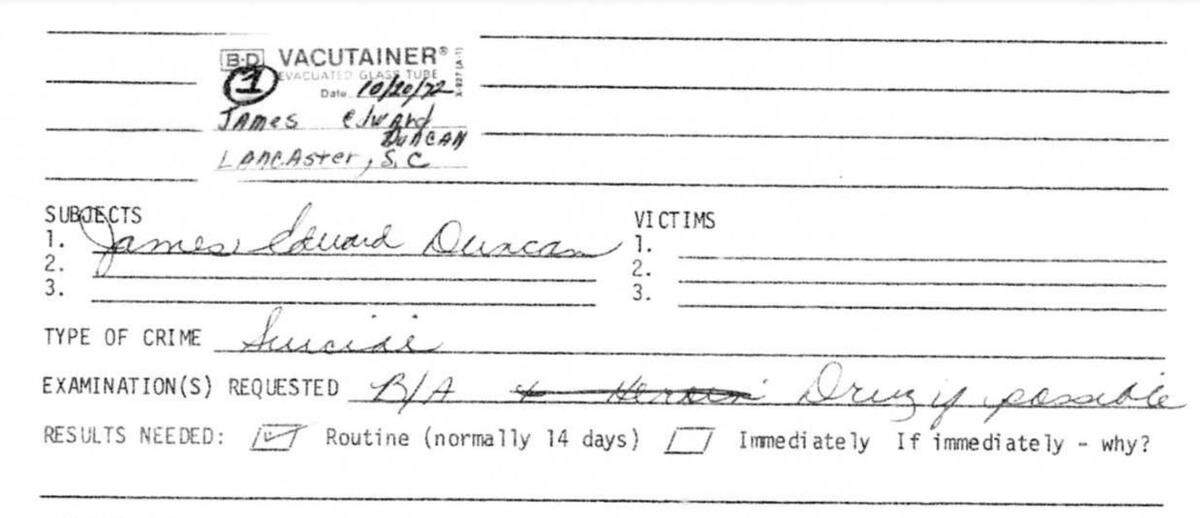
Three tests were requested by police, written in sloping cursive.
On the form for the first test, police wanted to know what Duncan’s “B/A” — blood alcohol level — was at the time of his death. Was he drunk when he entered the police station on Oct. 20? No, according to the test results.
It appears that, as part of the first test, Lancaster police also wanted Duncan’s blood checked for drugs. “+ Heroin” was written on the same form as the “B/A” request, but was crossed out. “Drug is possible” was written next to “+ Heroin.”
No drug tests were run on the Duncan blood sample. At the bottom of the report is the phrase, “Sample QNS for further analysis.” QNS means “quantity not sufficient.”
Deese said any of Duncan’s blood that was on the police station floor, or on his body, would have been contaminated and not suitable for testing, and she added that the “Sample QNS” designation did not seem unusual to her. Because Duncan’s blood sample was “QNS,” it was destroyed, eliminating any possibility of storage and further testing.
The second test was conducted on a water pipe found in Duncan’s Volkswagen, parked in downtown Lancaster at the time of his death. The pipe, which contained liquid, tested positive for marijuana and was returned to SLED investigator Harvey Coates.
The third SLED lab test was conducted on the gun and bullet apparently responsible for Duncan’s death.
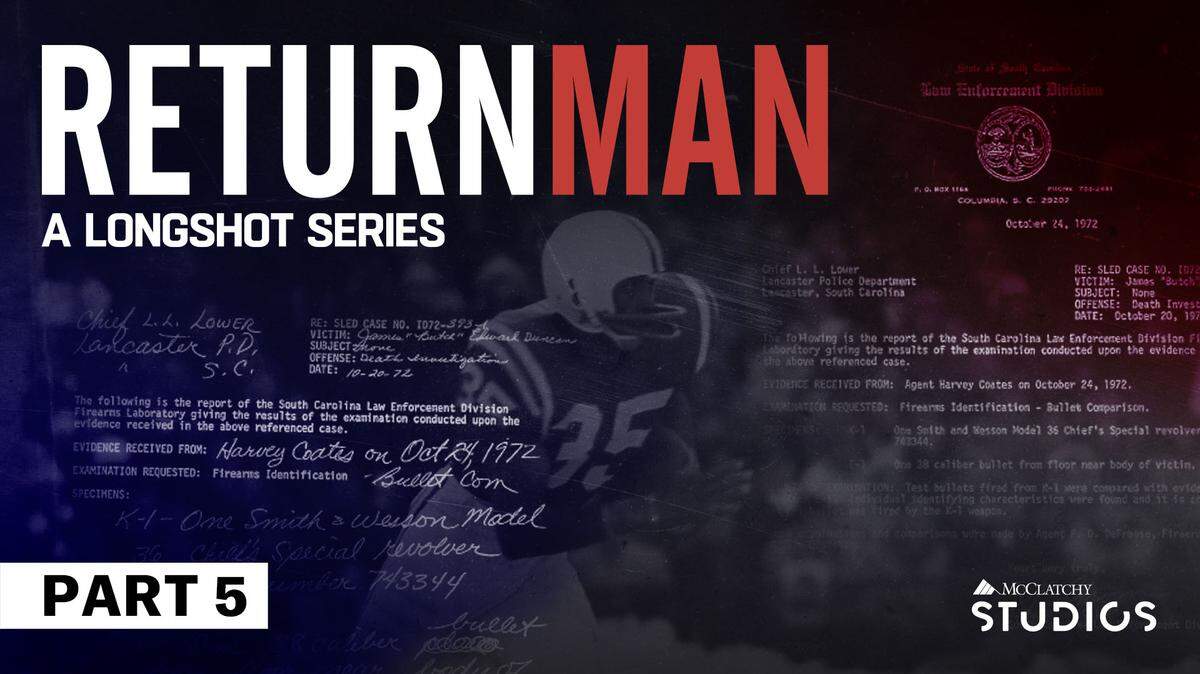
F. Dan Defreese of SLED tried to determine whether Lt. Russell Hinson’s Smith and Wesson Model 36 revolver fired a .38 caliber plain lead bullet recovered from the floor near Duncan’s body. The results confirmed that the bullet, though badly damaged, was fired by Hinson’s pistol.
“It just confirms that the gun involved fired the bullet that was recovered,” said the 72-year old DeFreese, who conducted thousands of similar tests in his lengthy career and didn’t specifically remember the Duncan case.
There is no existing evidence proving who fired Hinson’s revolver.
Speaking nearly 50 years after the incident, Thom Berry, SLED’s spokesman, said his agency did what it was asked to do after Duncan’s death. SLED, based in Columbia, couldn’t locate a case file for the Duncan investigation. Berry said there would have been some paperwork had Harvey Coates, then the Lancaster area’s SLED agent, been officially investigating Duncan’s death.
“We literally went back to the card catalog for those old cases going back that far,” Berry said. “And we could not find anything related to those names in any of the investigative files.”
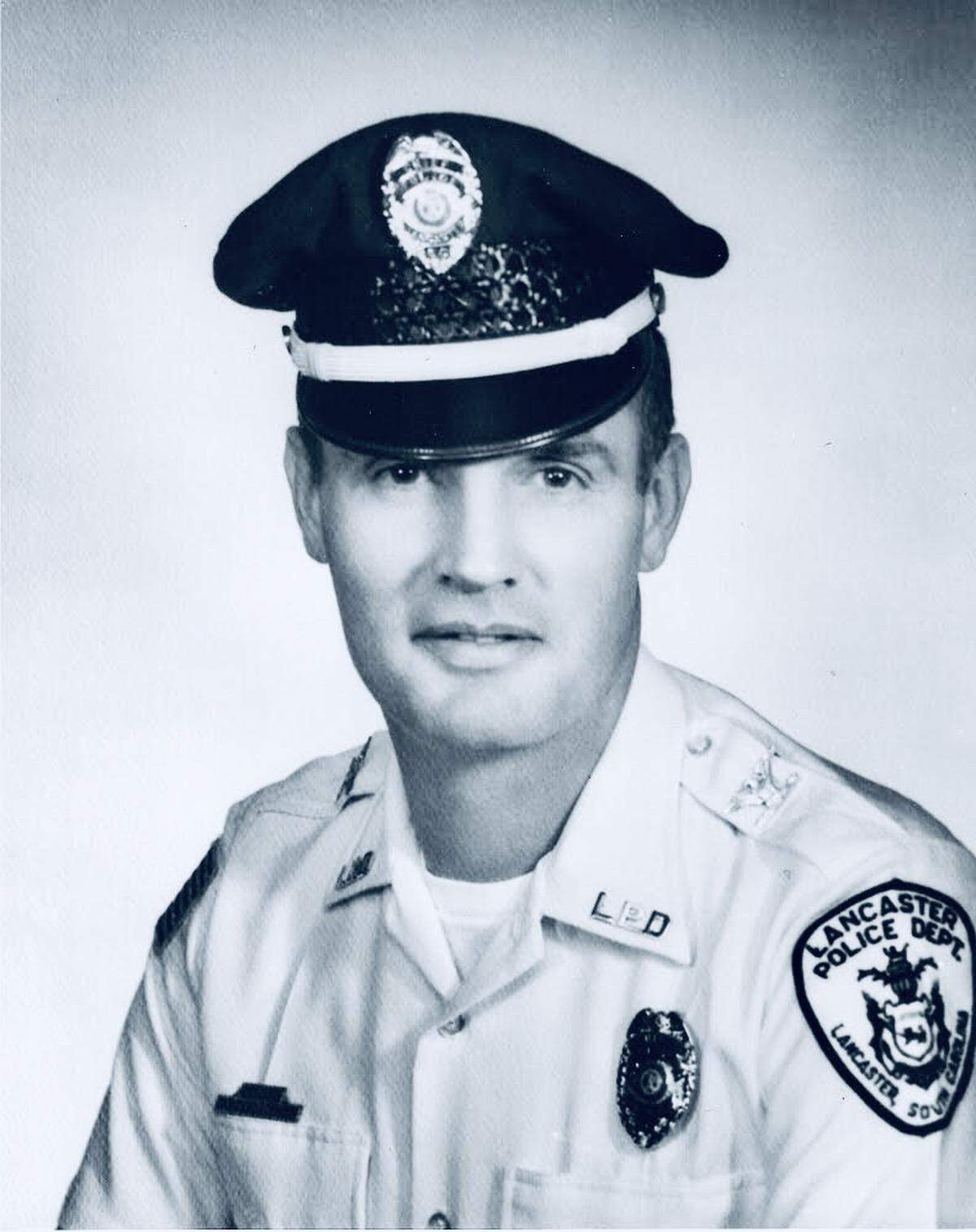
Lancaster Police Chief Scott Grant said in 2017 that his staff checked multiple records storage facilities but found nothing about Duncan. The Lancaster police department moved to its current Arch Street location in 1990, and it’s possible some older police records didn’t survive the move.
The Lancaster County coroner’s office couldn’t locate any records connected to Duncan either. Deese’s department is missing records from significant chunks of years, but she does have several old leatherbound coroner’s inquest books. The last entry is 1966.
Deese heard that many of the records were destroyed when a previous coroner’s house caught fire. She said it was common for small town coroners to work out of their homes in the 1970s.
Dr. Joseph Smith performed an examination of Duncan’s body in 1972, but he was murdered in 1979.
The coroner’s inquest
The coroner’s inquest to determine the manner of Duncan’s death was held Oct. 25, 1972, in the historic Lancaster County courthouse, just a few hundred feet from where Duncan died.
The courthouse was constructed in 1828 — 15 years after the last American witch trial was held at the same site. One-hundred-sixty-five slaves were sold at the courthouse in 1861 to settle a prominent local resident’s estate, and the building was burned to the ground by General William Sherman’s Union troops four years later, during the final months of the Civil War. Today, a 30-foot-tall Confederate monument stands in front of the courthouse.
The night of the inquest, 350 people packed the courtroom. Many more waited outside. Duncan’s high school coach and neighbor, Floyd White, remembered the courtroom crowd was mostly African Americans. Three walls were lined with standing white police officers.
“Butch was our hero. We were bitter,” said White, sitting in the same courtroom almost 50 years later. “That night they had the inquiry, we were out there and we were angry.”
Chandler, the coroner whose day job was running an auto body shop, later told Jet Magazine that he almost didn’t call an inquest, but figured he should because of the controversy.
“I decided to have the inquest to let everybody involved have their say,” he told a reporter.
One news story said Chandler hand-picked the six-person inquest panel, which consisted of five whites and one African American, Billy Ray Crawford, who worked at Chandler’s auto body shop. He was the only member of the panel who was named in the media, and was friends with Duncan.
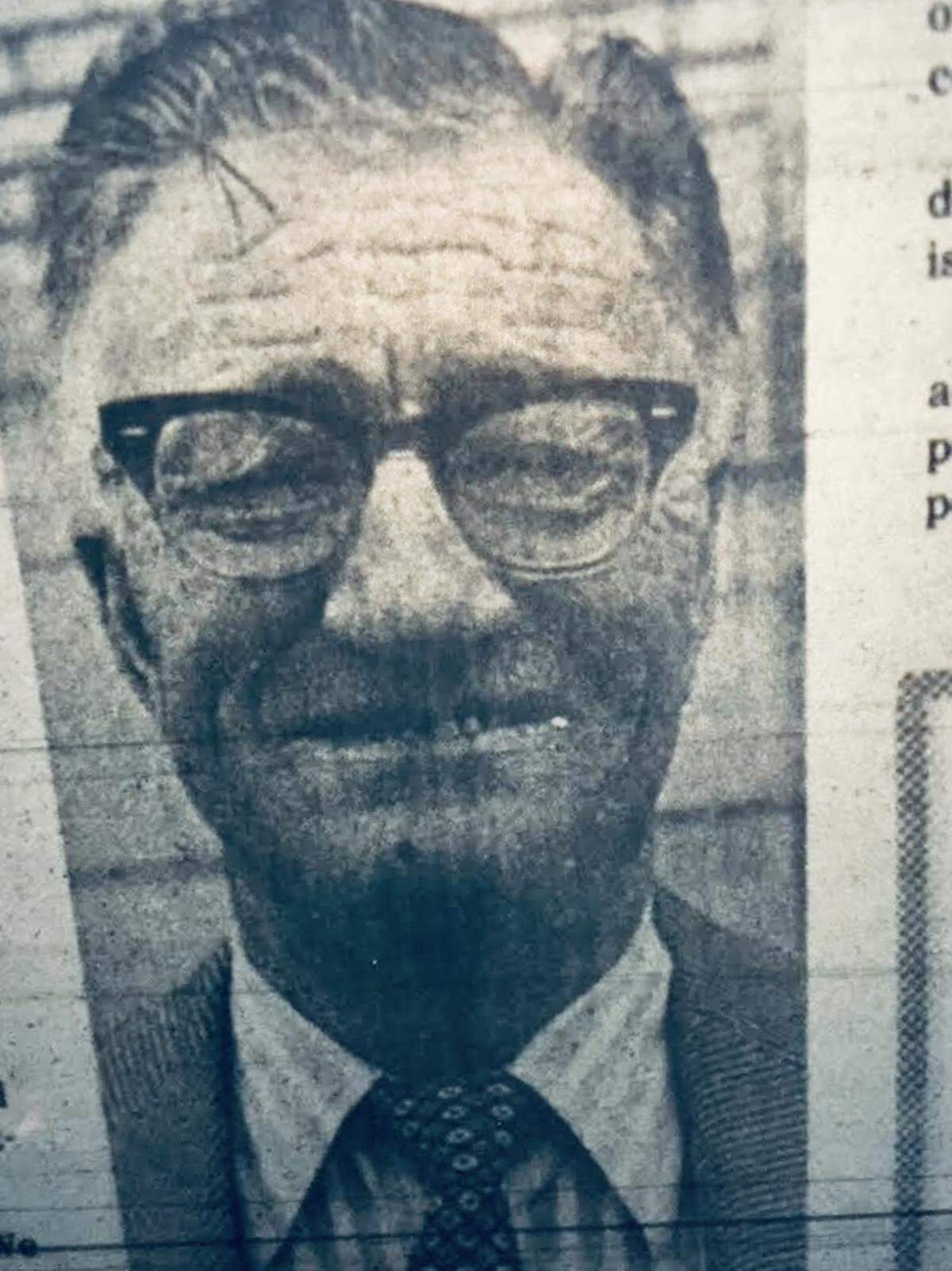
News outlets reported that the panel heard 41 minutes of testimony from seven witnesses. Five of the witnesses came from the Lancaster Police Department, including George Lloyd and Lt. Russell Hinson. The sixth was Harvey Coates from SLED and the seventh was Smith, the doctor who examined Duncan’s body.
Lloyd was a trainee in his second week with the Lancaster police department when Duncan walked into the station on Oct. 20. When contacted by The Herald, Lloyd rattled off the events of Duncan’s death as if it happened yesterday.
“The door to the police department is facing the desk, and the lieutenant, like he does every morning, walked up to the desk and was going through the mail,” Lloyd said. “And this guy walks in and when he walked in he got about halfway across the floor. I said, ‘Can I help you?’ and that’s when he reached and grabbed the lieutenant’s gun and stepped back and shot his self [sic]. The lieutenant turned and grabbed him to try and stop him but it was too late.”
SLED agent Harvey Coates testified that he found Hinson’s holster — which was Hinson’s personal holster, smaller than the department’s standard issue holster — still snapped after the gun had been drawn. Coates demonstrated to the inquest panel how Duncan could pull Hinson’s gun out of the holster while it was still snapped.
A November 1972 Philadelphia Inquirer article also demonstrated the possibility of Duncan pulling the gun out of Hinson’s snapped holster. Lower reenacted the scene in his office with a reporter’s help.
‘Never did believe’ Jim Duncan killed himself
Duncan’s brother, Elroy Duncan, said his family couldn’t get any Lancaster-based lawyers to take their case, so they hired the Broadwater law firm in Columbia. Newly minted attorney Christopher Coates, 27, was fresh out of law school and just hired by Thomas Broadwater weeks earlier when he was told to head to Lancaster for the Duncan inquest. Many of Lancaster’s Black residents thought Coates (no relation to Harvey Coates) would play some role in the inquest, that he would stand up for them.
That didn’t happen.
Coates showed up late, which he attributed to being given last-minute notice. Duncan’s family asked Chandler to delay the proceedings, but he denied that request. Chandler also didn’t allow anyone else to speak on behalf of the family. He later told a Jet Magazine reporter that he could have allowed it if he wanted to.
Coates knew the inquest was not a formal hearing, a fact that doesn’t seem to have been widely understood at the time. Coates said he never planned on speaking during the coroner’s inquest, because his intent was to gather facts for possible future legal actions.
”It was my understanding, and Mr. Broadwater’s too,” Coates told The Herald in February 2019, “that the family members who wanted the case investigated would be looking for somebody to file a lawsuit, probably in the federal district court at that time, in which there would be an allegation of a wrongful death and that the defendants would be members of the Lancaster police department.”
Besides, Coates said, he would have been unable to legally participate in any hearing on Oct. 25, 1972. He didn’t take the S.C. bar examination until the following summer.
After a 22-minute inquest panel deliberation, Chandler announced to the courthouse audience that Duncan “came to his death by a self-inflicted .38-caliber gunshot wound. The inquest is now complete.”
The Lancaster News reported that “Duncan’s family and friends expressed obvious dissatisfaction with the proceedings.” White said he could hear the crowd murmur and mumble, but not loudly enough to be clearly audible or disruptive.
“Nobody could be identified by what they were saying,” White said. “They weren’t afraid. They just didn’t know what to say.”
Despite serving on the panel, Crawford remembers clearly what he thought about the incident.
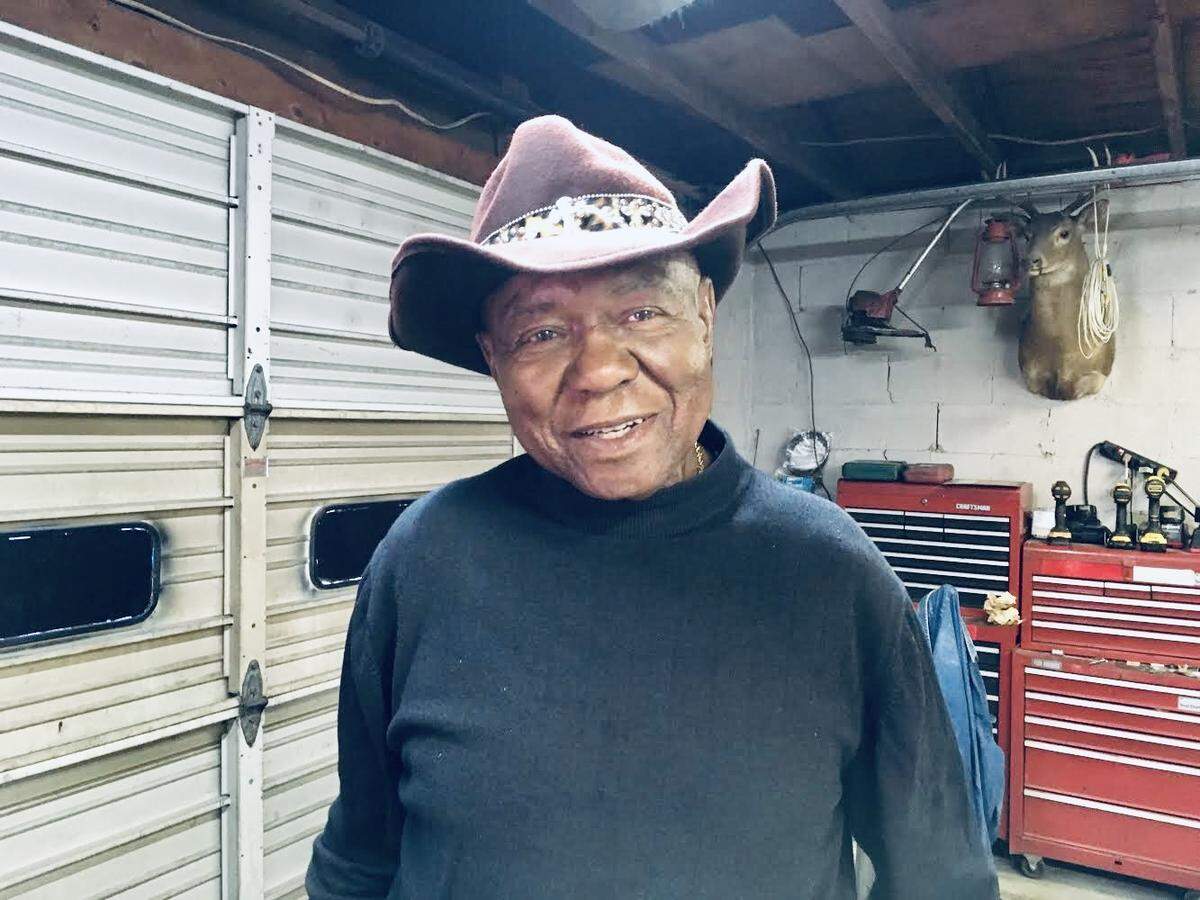
“I never did believe that he shot himself,” said the 80-year old truck driver. “Some people said the damn police shot him. But I wasn’t there, so I can’t say.”
It’s not clear how the panel reached its verdict or if the vote was unanimous. Crawford said he couldn’t remember. He also said he never felt pressured, either by his boss, Chandler, or by any other members of the community, white or Black.
The inquest ruling, which essentially prevented any further criminal investigation, left Duncan’s supporters, friends and family with little recourse. The family never filed a federal civil rights lawsuit.
“Every door you opened, the door was shut,” said Elroy Duncan. “We couldn’t get any help in the town of Lancaster.”
Coroner’s inquests were historically used to determine the manner of death, of which there are five categories, according to Karla Knight Deese: natural, homicide, suicide, accidental and undetermined. Inquests are rarely held anymore.
If it seemed Chandler dominated the proceedings, well, that’s because he could. Some countries have written codes of rules for inquest proceedings, but American inquests are largely conducted according to the coroner’s whim.
Chandler alone decided to hold the inquest and then ruled the death a suicide, even though SLED agent Harvey Coates reportedly said during his testimony that he had not completed the investigation he had been called in to do. SLED’s Thom Berry told The Herald in 2019 that there are no investigative files from Harvey Coates and that it seems unlikely he was officially investigating Duncan’s death.
How would case be handled today?
Consider what would happen if Duncan’s death occurred at the Lancaster police station in the modern era.
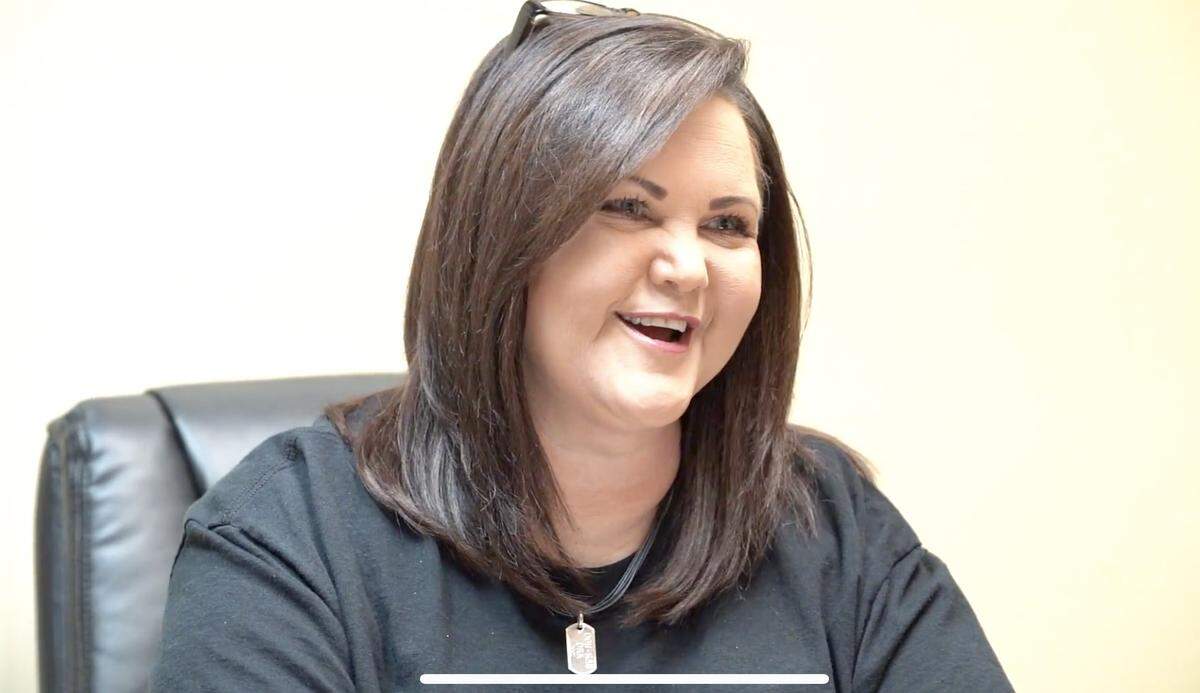
Deese said the Lancaster police department would step aside immediately while another agency took over, possibly SLED.
Investigators in most cases would have ample video of the incident. Lancaster Police Chief Scott Grant said three cameras record his station’s lobby from separate angles.
Deese then would call the forensic criminologist she keeps on retainer, and have her examine the scene before the body would be moved. Deese said the forensic criminologist would help her determine if the death tracked toward a suicide or whether it might have been staged.
Then an autopsy would be conducted. Deese would check for signs of suicide, like a contact wound, where the gun was clearly placed against a person’s head.
“Basically, it’s a lot of investigating who was around, who saw what, where was everybody, making sure nothing sinister was going on,” Deese said. “That takes a long time to do but it is well worth it.”
If Duncan’s death occurred today, University of South Carolina assistant law professor Seth Stoughton said he would expect a huge case file. Stoughton said even if there was no forensic evidence he would expect every officer who was an eyewitness to write a report, and would expect Lt. Russell Hinson — whose gun was grabbed by Duncan — to be placed on investigative suspension. Another officer would come in and conduct interviews with any witnesses, all of which would be recorded and transcribed.
“But that’s the modern approach,” said Stoughton, a former police officer.
A Philadelphia Inquirer story from shortly after Duncan’s death mentioned Police Chief Lower reading from a police report concerning the incident, while a Jet Magazine story said Lower showed photos of the scene to a reporter. The Herald filed a Freedom of Information Act request with the Lancaster police department in 2017, but that turned up nothing. No photos of the scene, no police report on Duncan’s death.
“They might not have seen the point, if the conclusion was obvious to them,” Stoughton said. “Police today don’t just write reports for themselves and for their own records. They write reports because they realize outside audiences will need that information, or will use that information at some point.”
The coroner’s job
Chandler retired from the coroner position in 1981 and he told the Charlotte Observer he had occasionally signed death certificates listing the cause of death, even though an autopsy hadn’t been performed. He said he made educated guesses, based on the victim’s health history and other related matters. In nearly all cases, Chandler said, he was sure he was right.
The retiring coroner admitted at least one whiff in The Observer, when he ruled, without an autopsy, a man’s death stemmed from natural causes. It was later proved the dead man’s wife had poisoned him.
In Deese’s office, increased education, certifications, partnerships with experts and the 2010 construction of a new facility, complete with its own morgue, all have raised the level of professionalism and quality of service. And the department also is more diligent about record-keeping, creating electronic and paper copies of every document.
Likewise for Lancaster’s police department. Lower told a Lancaster civic group in 1972 that the average age of his 22-man police force was just 26 years old, that his officers worked an average of 60 hours per week and that little more than a high school diploma was required to get and keep a badge and a gun.
To join Lancaster’s modern police force, cadets have to complete four weeks of in-house training with the Lancaster police department, before eight more weeks of training-in-residence at the S.C. Criminal Justice Academy.
“We have a standing policy that if it is not a natural death, that’s an automatic autopsy,” Deese said. “Every vehicle accident, every gunshot, every suicide. There may be some answers in there for the family. There may not. But I’m gonna try to provide that.”
Deese knows the worst thing that can be left behind when a loved one dies is an information vacuum. The void soon fills with conspiracy, rumor and, sometimes, mistrust in public authorities — especially in a small town.
“That’s our job, to fill every single gap before we close a case,” she said.
Have questions or comments about Return Man? Reach The Herald at 803-281-2840 or RHNews@gmail.com.
BEHIND THE STORY
MOREWhy did we report this story?
On multiple occasions I have been asked some version of “why are you digging this up all these years later?”
My main motivation was trying to fill in Jim Duncan’s story, one that 47 years later, still has so many unanswered questions.
This story is still relevant because it entails many of the issues American society continues to grapple with: drugs, escaping poverty, the financial issues of young adults, race relations, and community-law enforcement relations.
As Rosey Gilliam, whose father coached Jim Duncan in high school and college, said to me about Duncan’s story, “If you took away the date and time, could you imagine that happening today? And the answer is yes you can.”
Read more by clicking the arrow in the top right corner of this box.
Where did the idea come from?
I covered high school football for The Herald and have written often about how this area of South Carolina produced numerous NFL players, including seven active ones from Rock Hill.
I was looking up a list of NFL players from South Carolina, and near the end of the list I found the name “Jim Duncan.” I Googled his name, and one line from his Wikipedia page jumped out: “He was found to have committed suicide with a policeman’s revolver in 1972.”
That Internet search set me off on a journey to learn more about how Duncan went from the NFL’s most feared kickoff return man, to dead in a span of less than two years.
How did we report the story?
Over more than two years I made dozens of trips to Jim Duncan’s hometown, Lancaster. I interviewed more than 40 people, from family and friends, to high school, college and NFL teammates and coaches, as well as lawyers and doctors involved in the final days of his life and the confusing aftermath.
I submitted numerous Freedom of Information Act requests -- many of which came back empty -- and spent numerous hours at the Lancaster County Library, combing through microfilm of the Lancaster News and old phone books, and at libraries in Charlotte and New Orleans.
This story was originally published January 26, 2021 at 5:00 AM.