In the South Carolina town where Jim Duncan was a hero, his legacy is all but erased
READ MORE
What really happened to Jim Duncan?
The Super Bowl hero from Lancaster, SC supposedly committed suicide in a police station.
Expand All
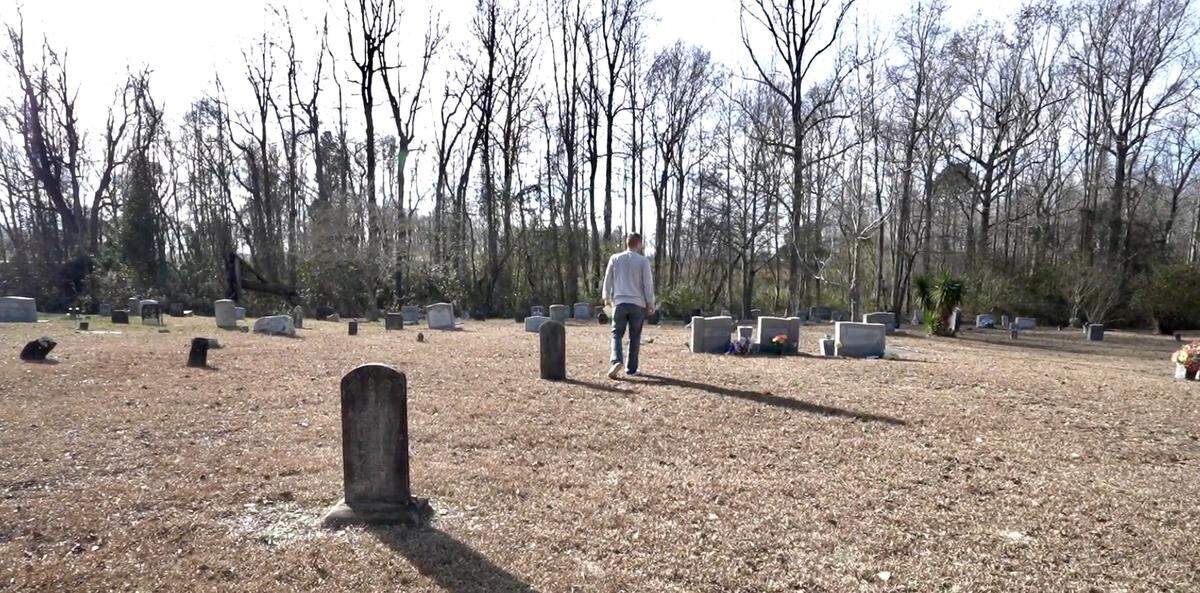
It’s a bright January day when I pull into the Salem AME Zion church cemetery in Heath Springs, South Carolina.
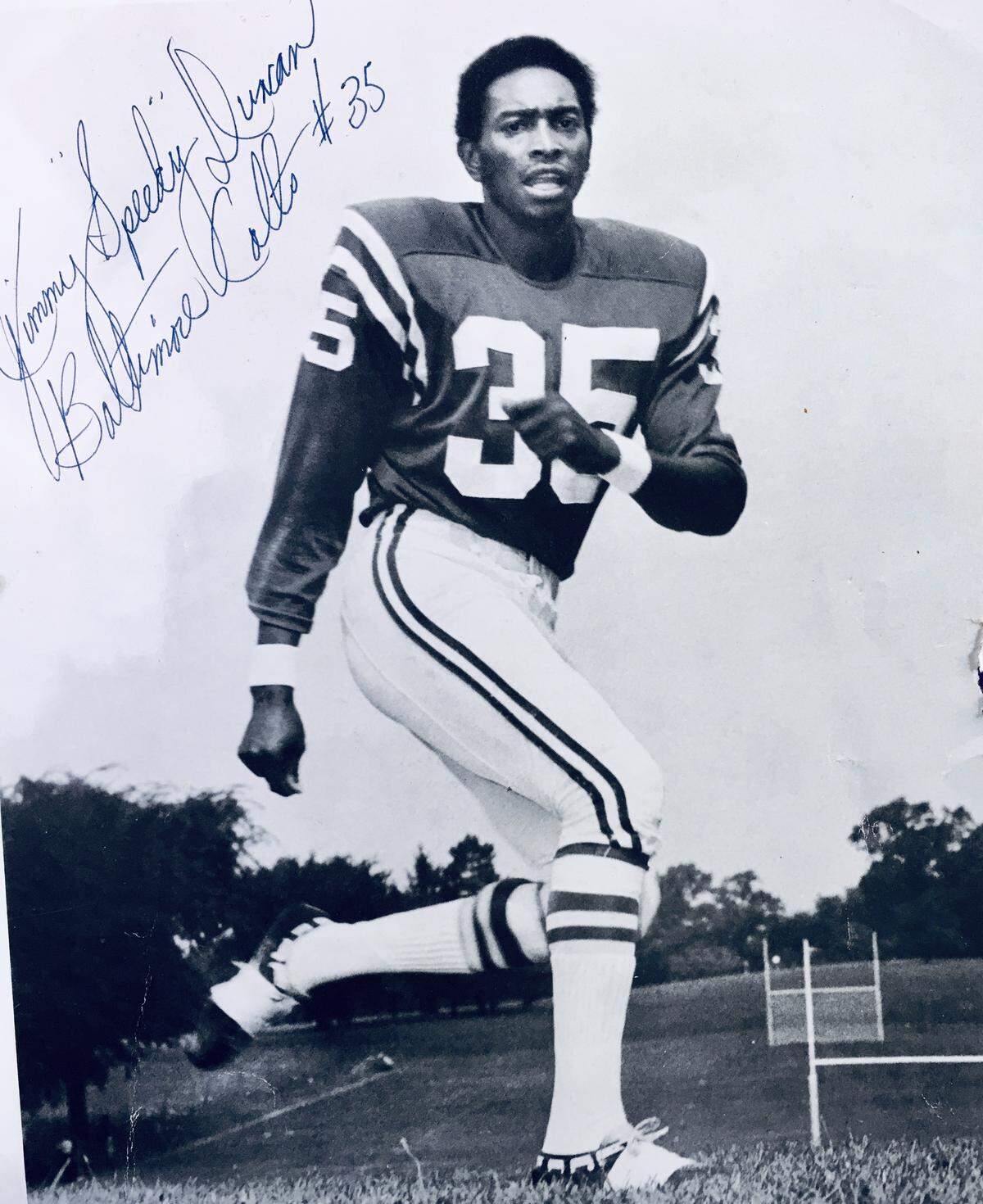
I had been chasing the story of Jim Duncan for almost two years. The Lancaster native was the NFL’s best kickoff return man in 1970 and started for the Baltimore Colts’ Super Bowl V championship team.
But Duncan’s pro career quickly spiraled out of control. He landed back in his hometown in September 1972 and within a month was dead from a single gunshot wound to the head. The shooting happened in the Lancaster police station. Authorities said the wound was self-inflicted but, to this day, many in the town’s African American community don’t believe that. Investigators released very little information about Duncan’s death. They didn’t perform an autopsy. It was never proved who fired the gun.
Almost 50 years later, Duncan has largely been forgotten, outside of a group of elderly Lancaster residents, mostly Black, who remember his smile and his football moves.
After two years of reporting, it seemed like time to pay him a visit.
Newspaper coverage of Duncan’s funeral stated he was buried in a Lancaster graveyard across the street from Salem AME Zion church where his mother, Ella Ree Clyburn had attended. That was as much information as Matt Walsh, a Charlotte Observer photographer, and I had.
Elroy Duncan hadn’t visited his brother’s grave, about 10 miles south of Lancaster, in decades. Duncan’s widow, Alice Caston, hadn’t been to the cemetery since he was buried there.
A few cars pass as we milled around the cemetery and studied the plots. There are McIlwains and Blackmons and Thompsons. A few Duncans, but no “James Edward ‘Butch’ Duncan.”
‘I try to forget’
Lancaster has almost no public evidence of Duncan’s existence.
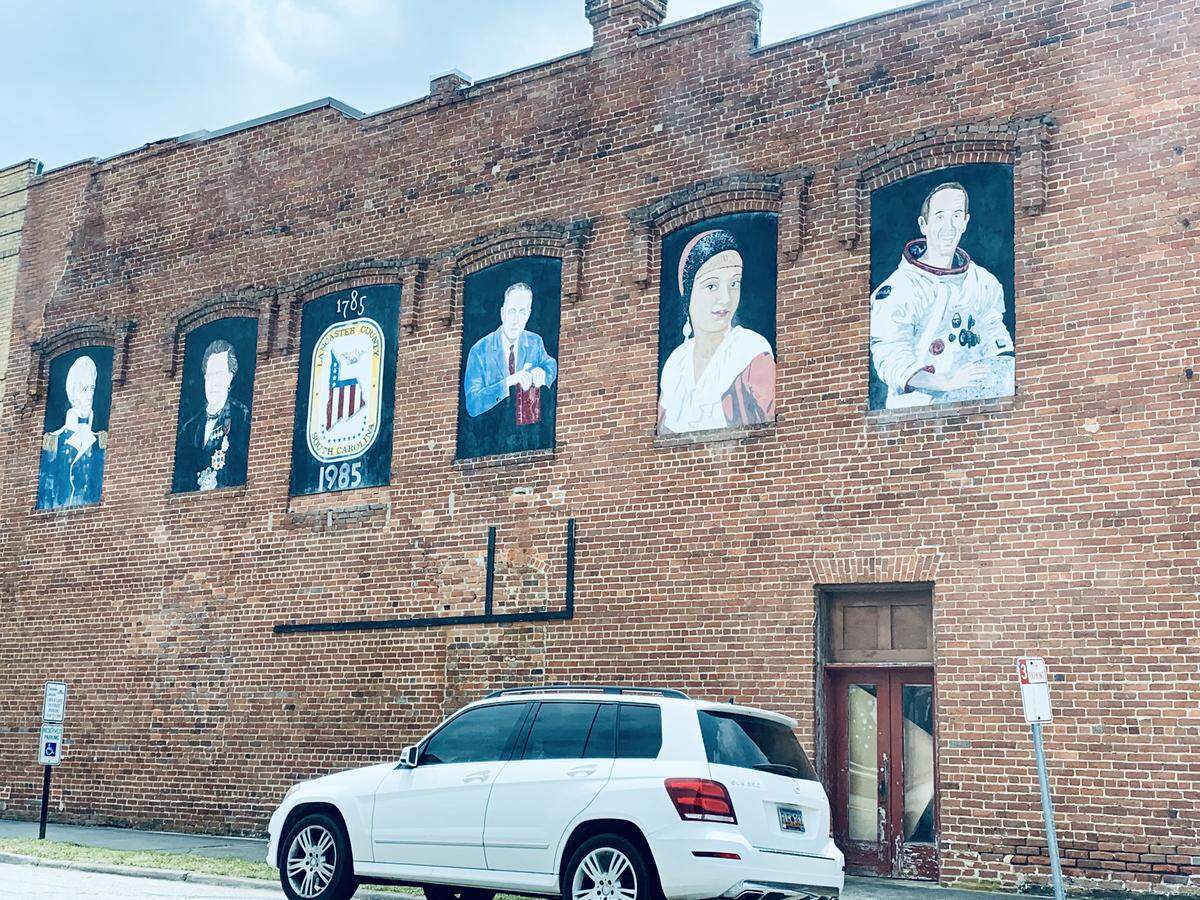
There is a large mural on the side of a downtown building, featuring five prominent county natives, but not Duncan.
The town’s history museum sits in the basement of the old courthouse and includes exhibits about the Civil War, plaques honoring local Vietnam War veterans and even a photo of Cedric “Mean Man” Mingo, a former boxing world champ. There is nothing about Duncan.
Floyd White, who was Duncan’s assistant football coach in high school and a neighbor, remembered a corner store on Gay Street in the historically African American section of Lancaster that had a mural honoring Duncan. The store was demolished.
“It’s just old-timers that know him,” White said.
For some involved with Duncan’s life and death, it’s easier to forget.
“I try to keep moving. I try not to bring it back,” said 80-year-old Billy Ray Crawford, a friend of Duncan’s who was the lone Black person to serve on the coroner’s inquest panel that ruled Duncan’s death a suicide. “The way times was back then is a whole lot different than now. I try to forget about stuff happening years ago.”
That wasn’t the only time I heard something like that. Some people close to Duncan, including a younger sister, weren’t interested in talking about him or his traumatic death.
Bill Belk would have had an interesting and valuable perspective. He played alongside Duncan at Barr Street School and Maryland State College. Belk was drafted in 1968, the same year as Duncan, and played seven years in the NFL as a defensive lineman. He would uniquely understand what it was like for Duncan to ascend from Lancaster to the highest level of football, to be the town’s first Black NFL players.
Belk finally answered one of my many phone calls in 2018, but he was off the line within a minute. Asked if he would be willing to talk about Duncan for the story, Belk replied, “No.”
“Any reason why?”
“No.”
“Just put it behind you?”
“Yes.”
Twenty-six
Those who did speak to me for this story were initially suspicious. Was it worthwhile to revisit those memories and feelings?
In the years since 1972, Duncan’s immediate family had plenty of other heartache. Two of the five brothers died before reaching old age, and Ella Ree Clyburn, who never believed her oldest son killed himself, passed away in 2001.
The family has few physical reminders of Jim Duncan.
At his home in Fort Mill, overlooking a pool table, Duncan’s youngest sibling, Morrall Unitas Clyburn, has some newspaper clippings and a painting of his brother. Morrall is named after the two quarterbacks on Duncan’s 1970 Super Bowl-winning Colts team.
No one knows where Duncan’s Super Bowl V championship ring is. Elroy Duncan, Jim Duncan’s next oldest brother, and Elroy’s wife, Lynda, have almost no memorabilia or photos. Their collection burned in a house fire.
“It took me awhile, because I never would have said OK to you,” Elroy told me in 2018.
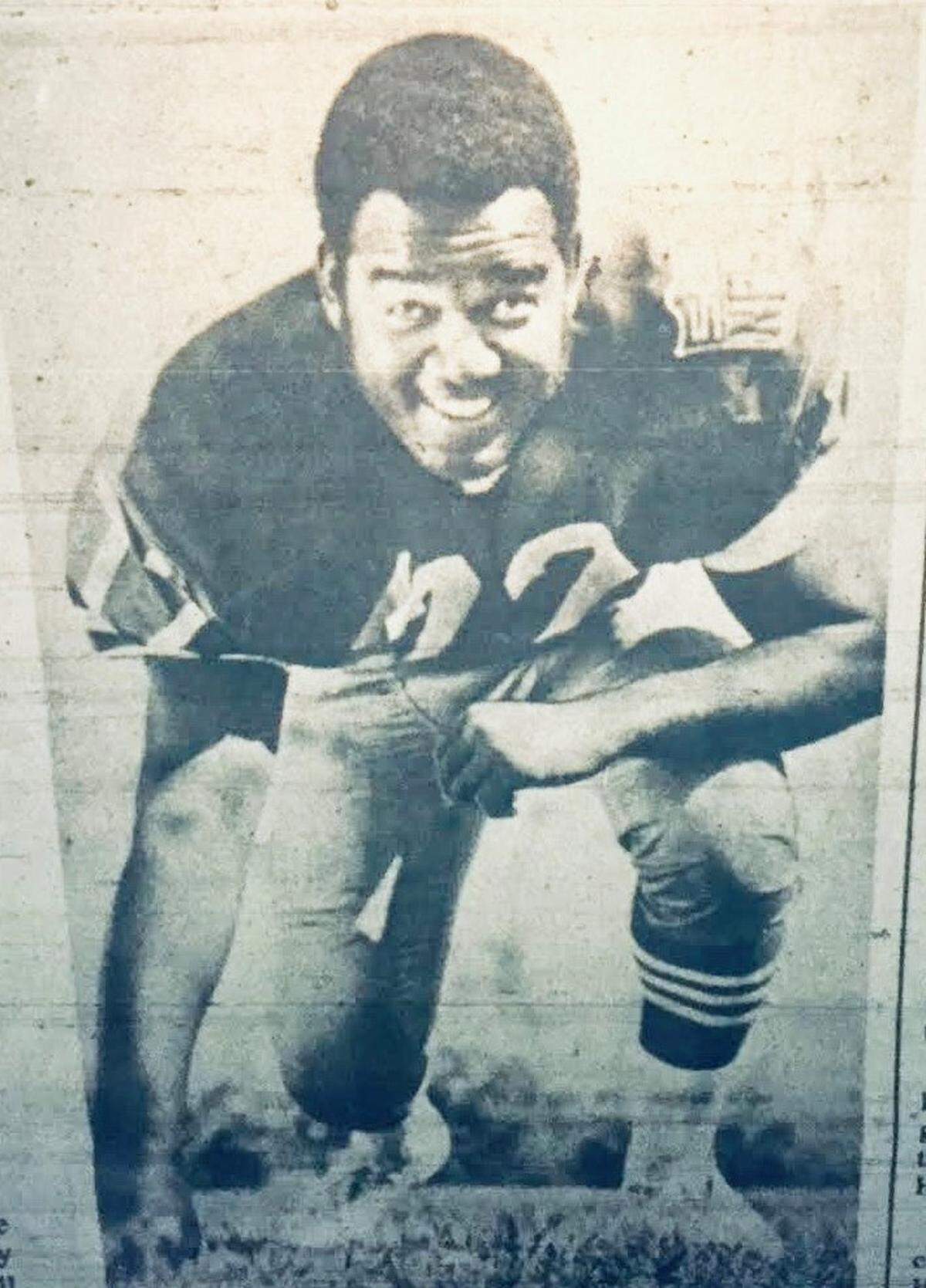
I’ve sat and talked for hours with Elroy and Lynda Duncan on several occasions. Elroy was a pretty great athlete too, starring in football and baseball at Barr Street School, before breaking all kinds of football passing records at Johnson C. Smith University. He took some head shots during his gridiron days, and Lynda jokingly calls him “CTE” when his mind drifts and he loses grip on a thought. She gently steers him back to the conversation.
The first time I spoke to Elroy, his emotions remained in-check.
The second time we talked, for more than an hour, he cried from the first question to the last. Seated next to him at the kitchen table, Lynda asked him why he was so emotional. He wasn’t sure.
I was talking on the phone to Lynda several weeks later when she brought up that interview. They had figured out why Elroy had been so emotional. He had just celebrated a birthday a few days before.
“He was only 26. Twenty-six,” Elroy said of his late brother. “And here I am, just turned 70 years old.”
Forgotten situation
After Duncan’s death was ruled a suicide, the story went silent. In the early 1990s, the NAACP contacted Elroy about reopening the case.
“I told them I didn’t think we needed to put my momma through that again,” he said.
The NAACP hadn’t been much help in 1972. And the Duncans couldn’t get lawyers from Lancaster to take the case, which led to them briefly employing the Broadwater firm in Columbia.
Thomas Broadwater and his cub legal associate, Christopher Coates, gathered information for a potential federal civil rights lawsuit.
“We did some investigation into the matter and I do remember the family came up to Columbia and met with Mr. Broadwater and I about the case and we gathered more information from them,” Coates said in February of 2019. “Mr. Broadwater, who was my employer at the time, made the determination, as I recall, that we were not going to file a wrongful death action in this case.”
Coates remembered that Duncan’s recent history of psychiatric issues could have been a hindrance in pursuing a lawsuit against the Lancaster police department. Duncan, and others, had been quoted several times in the previous year speaking about his fragile mental state.
Right around the same time as Duncan’s death, Broadwater and Coates sued the Columbia police department for police brutality and settled the case.
“It wasn’t like we were disinclined to sue the police,” Coates said. “It’s just, I think the reason that the decision was made not to file the (Duncan) lawsuit is because of the case itself.”
Coates said by law, Duncan’s family would have had two years from the time of Duncan’s death to pursue such a case. There was never a lawsuit.
That surprised Dave Anderson, the Pulitzer Prize-winning New York Times reporter who traveled to Lancaster in 1972 and wrote about Duncan’s death.
“I never saw anything after that,” Anderson told The Herald. “It just became kind of a forgotten situation, or ignored situation.”
Anderson passed away in October 2018 at age 89.
Whether it was forgotten or ignored depends on the person. Some people connected to the story, like George Lloyd, who witnessed Duncan’s death in the police station, hadn’t thought about the incident in decades.
But for family and friends, Duncan’s death still is an emotional sore, thinly scabbed and never fully healed.
“I always thought that we would learn something more about it,” said Rosey Gilliam, whose father, Sandy Gilliam, coached Duncan in high school and college. “But as the years have gone by, quite honestly, I’ve personally just accepted that was something we would never know.”
Puddin’
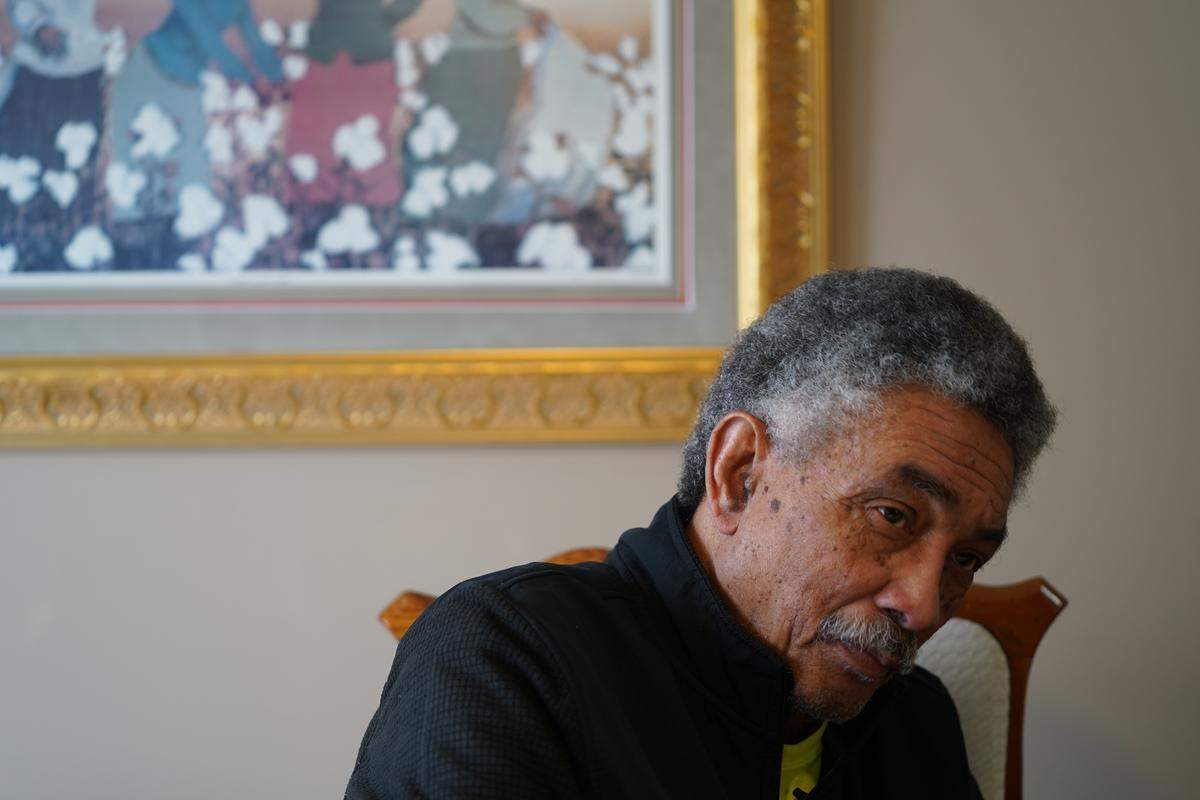
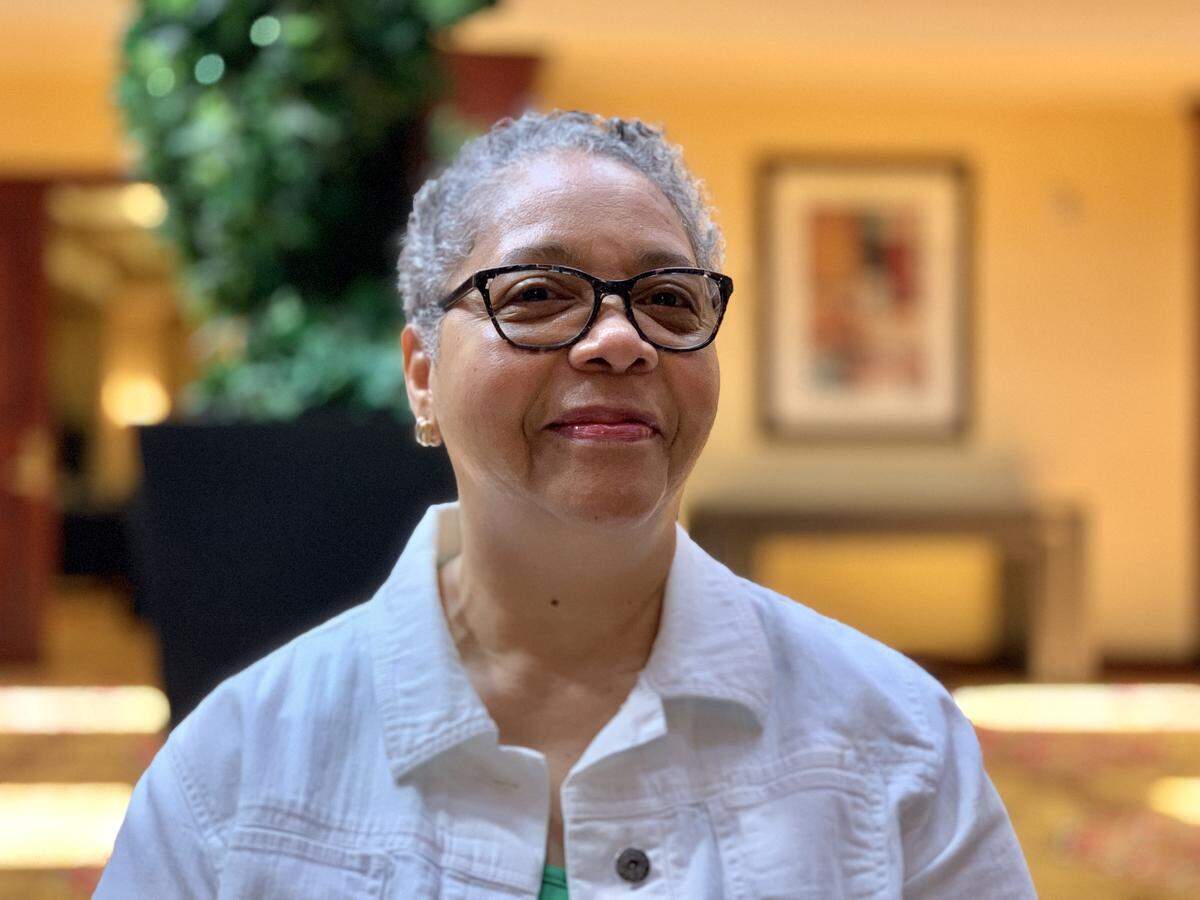
Soon after Alice Duncan Caston sat down in the lobby of a Greenville hotel in 2017, pain emanating from the topic of conversation was visible on her face.
“Forty-five years ago,” she said wistfully. “There are deep feelings there, deep feelings.”
Caston, who was married to Duncan at the time of his death, still lives in Greenville where her second husband of 16 years, Bobby Caston, runs a health and beauty supply store. Like many others, Alice was initially apprehensive to talk about Duncan. The couple had been married just seven months when he died.
“It’s like a diamond in the rough,” she said. “All the wind and everything flows right over it. But it’s there. It’s there.”
She said she learned of her husband’s death when his mother, Ella Ree Clyburn, called and shouted into the phone, “You did this to him!”
Duncan loved to sing and play the organ. He proposed to Alice while singing, “You Are My Sunshine.” He nicknamed her Puddin’. How could she have been responsible for his death?
A 21-year-old widow, Alice had to take anxiety medicine after Duncan’s death. She said her mother eventually told her, “You’ve got to get out of this rocking chair and get on with life.”
Multiple newspaper and magazine stories wrote that Duncan and Alice were divorcing before he died. She strongly rejects that, but it’s clear there were issues with her husband’s changing behavior and mental state. Alice’s sister, Loretta Bigby, thinks the couple would have been OK in the long run, as long as Duncan acknowledged that something was wrong and sought help.
“(Alice) just couldn’t understand it,” said Bigby. “She was afraid but then she wanted to take care of him.”
A blessing?
Alice hasn’t talked to any of Duncan’s family since October 1972. That silence left her with even more questions.
“The shock was initial, and then the hurt and the pain,” she said. “The worst thing of all, other than his death, was being disrespected by the family. I didn’t do anything to them, and I would love to know why did she say that I did it? Why? It’s just so many unanswered questions. Did they ever think of me and how I was feeling?”
Elroy and Lynda Duncan say they didn’t — and don’t — hold any hard feelings toward Alice, and didn’t have a full understanding of her relationship with Duncan until after he died.
Alice said a big point of contention between she and Duncan’s family was whether he would play football again. The family wanted him to continue playing. Alice thought Duncan should quit, and she seemed to think her husband felt the same way. Some of his comments to the media in New Orleans earlier in 1972 show that he was grappling with the question.
Many think Ella Ree Clyburn’s children got their athleticism from her. No question she loved her kids and was protective, even as a single mother with limited education and employment prospects. The family was tight-knit, something Lynda Duncan saw when she started dating Elroy.
“(Duncan) was very protective of Roy,” said Lynda, shortening her husband’s first name. “When he met me, he didn’t like me at all. Not at all. Maybe he thought I was stuck-up or something, I don’t know. I never did ask him.”
Over time, Lynda broke down the barriers between she and Duncan. Alice never got the time to do the same with Ella Ree Clyburn.
“If only we could have come together at that time,” Alice said.
The memory is still there, the diamond in the rough. Seated in the cafe of a Greenville hotel, as a fountain gurgled nearby, Alice sighed deeply.
“I think about it every day,” she said. “It’s sad to see all the things that have transpired until this.”
Asked if she thinks an investigation into Duncan’s death could be reopened, Alice said no. Too many years have passed and too many figures important to the story have died. But it lifts Alice’s spirit to know Jim Duncan hasn’t been completely forgotten.
“It says to me that he’s speaking from the grave,” she said. “And you came in our lives, and there is gonna be a blessing from this … the people that can come forward to tell their truth, and bring closure. And that’s what I want.”
Elusive
Back at the Salem AME Zion Church cemetery, the search is approaching 30 minutes.
Eventually, a Chevy Malibu pulls up and a man yells, “Whose grave are you looking for?”
We tell him Jim Duncan. The man says he’ll go up the road and ask his mother and be back in a bit. Everyone in the cemetery was related to some degree, he says.
He returns about 15 minutes later, his mom in the front seat. She points through the open window toward an area at the back of the cemetery.
“Look for Liza Duncan,” she says.
We don’t know who Liza Duncan is, but we find her grave. Not Jim Duncan’s.
There’s no conformity in the headstones. Some are pressure-washed with clearly etched names and lifespans, some decorated with flowers or ornaments, others indicate the deceased’s military service.
Some grave sites are marked only by a nub of stone or concrete poking out of the ground.
But no headstone that reads, “James Edward ‘Butch’ Duncan.”
A phone call to Lynda Duncan provides some answers. Butch is the only member of the immediate family buried there. His mother and brothers were cremated after they died.
So why didn’t we see Duncan’s grave?
”He was buried without a headstone,” Lynda said.
About a week later, Elroy explains why.
”Couldn’t afford it,” he says.
After searching the entire cemetery for about an hour, we think we’ve narrowed Duncan’s possible grave to an area with six or seven unidentified burials. We walk around the cemetery in straight lines, turning 90 degrees one way or another out of respect for those buried beneath us. It’s possible we stood on, or next to, Duncan’s grave that day. He had to be right there. We couldn’t be sure.
Duncan was elusive in life, whether as a kickoff return ace on the football field or as a brother, lover or friend. Nearly 50 years after his death, which shocked and mystified those who knew him, a complete answer about what happened in the lobby of the Lancaster police station has ultimately been beyond fully grasping.
And here, in this quiet Lancaster County graveyard in the shadow of his mother’s church, the Return Man proves elusive once again.
Have questions or comments about Return Man? Reach The Herald at 803-281-2840 or RHNews@gmail.com.
BEHIND THE STORY
MOREWhy did we report this story?
On multiple occasions I have been asked some version of “why are you digging this up all these years later?”
My main motivation was trying to fill in Jim Duncan’s story, one that 47 years later, still has so many unanswered questions.
This story is still relevant because it entails many of the issues American society continues to grapple with: drugs, escaping poverty, the financial issues of young adults, race relations, and community-law enforcement relations.
As Rosey Gilliam, whose father coached Jim Duncan in high school and college, said to me about Duncan’s story, “If you took away the date and time, could you imagine that happening today? And the answer is yes you can.”
Read more by clicking the arrow in the top right corner of this box.
Where did the idea come from?
I covered high school football for The Herald and have written often about how this area of South Carolina produced numerous NFL players, including seven active ones from Rock Hill.
I was looking up a list of NFL players from South Carolina, and near the end of the list I found the name “Jim Duncan.” I Googled his name, and one line from his Wikipedia page jumped out: “He was found to have committed suicide with a policeman’s revolver in 1972.”
That Internet search set me off on a journey to learn more about how Duncan went from the NFL’s most feared kickoff return man, to dead in a span of less than two years.
How did we report the story?
Over more than two years I made dozens of trips to Jim Duncan’s hometown, Lancaster. I interviewed more than 40 people, from family and friends, to high school, college and NFL teammates and coaches, as well as lawyers and doctors involved in the final days of his life and the confusing aftermath.
I submitted numerous Freedom of Information Act requests -- many of which came back empty -- and spent numerous hours at the Lancaster County Library, combing through microfilm of the Lancaster News and old phone books, and at libraries in Charlotte and New Orleans.
This story was originally published January 26, 2021 at 5:00 AM.