NC lawmakers have steadily changed rules, added protections that help poultry industry
READ MORE
Big Poultry
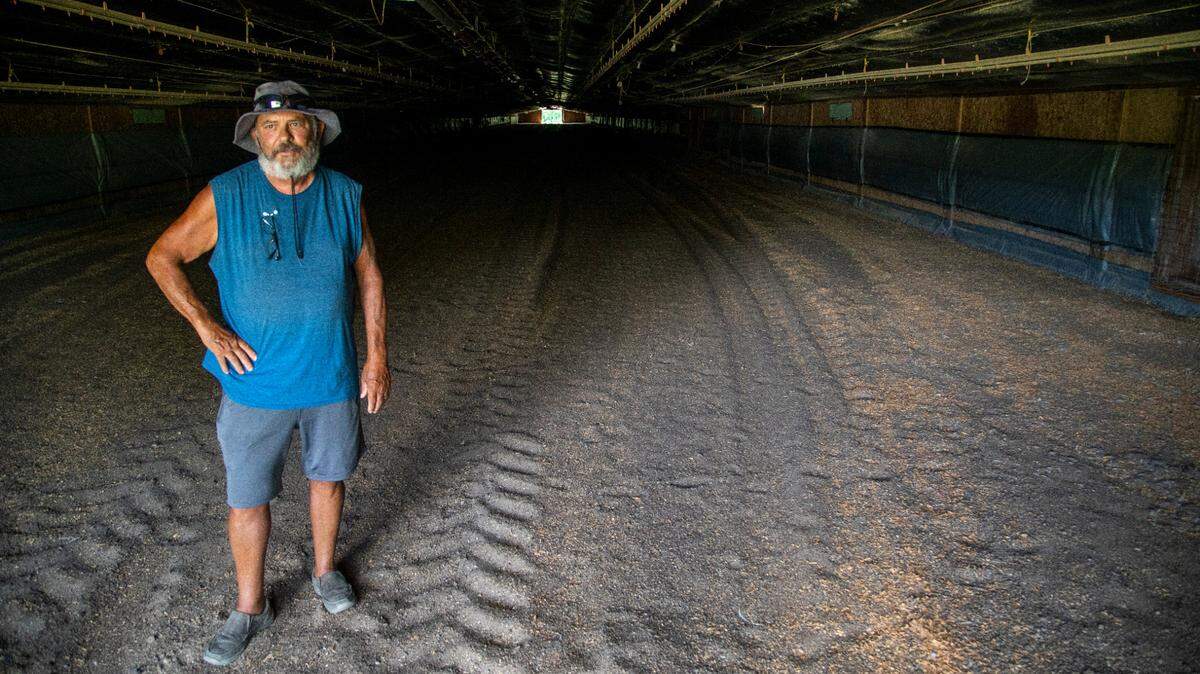
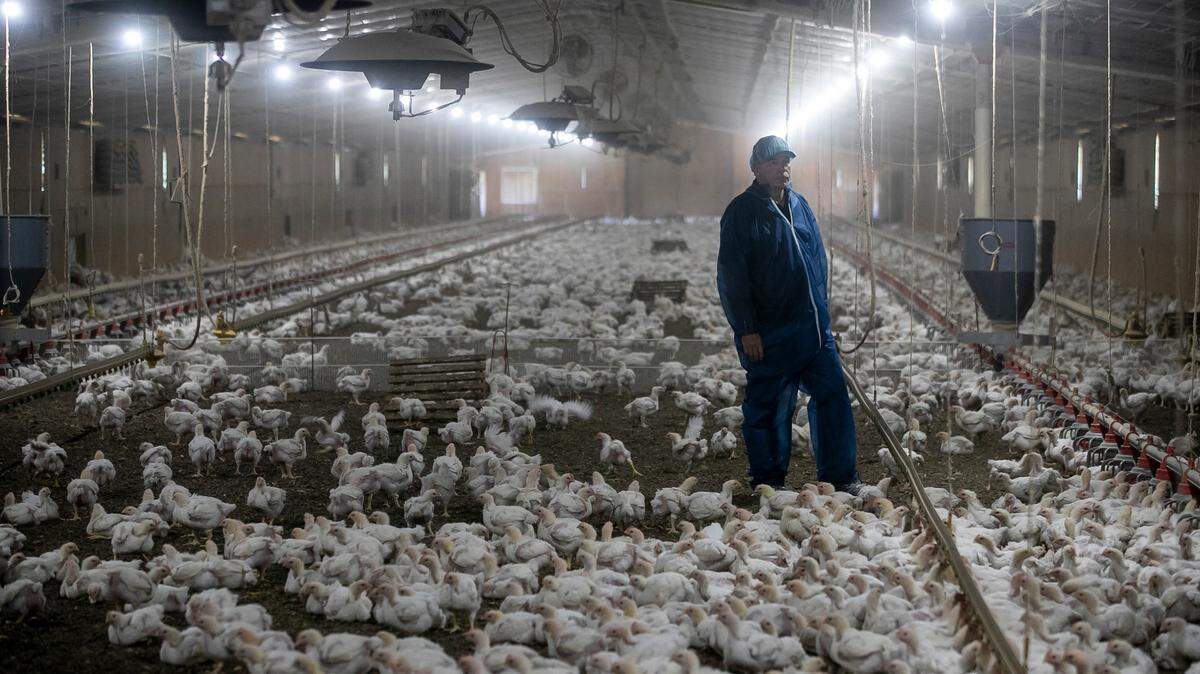
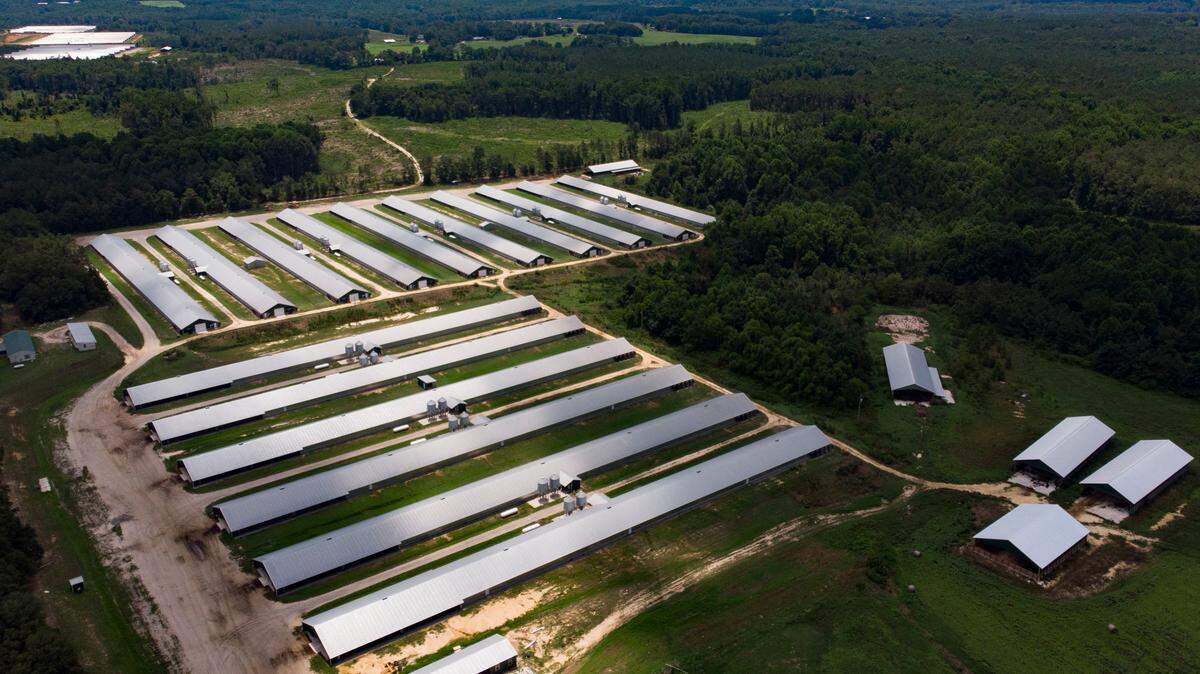
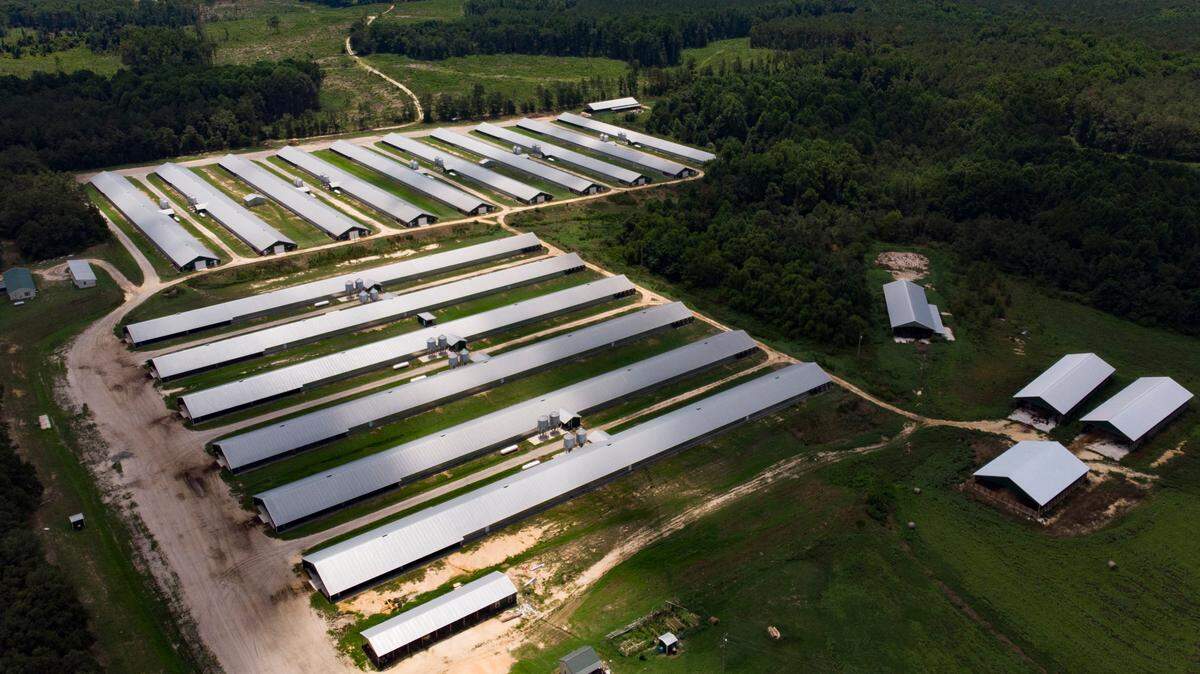
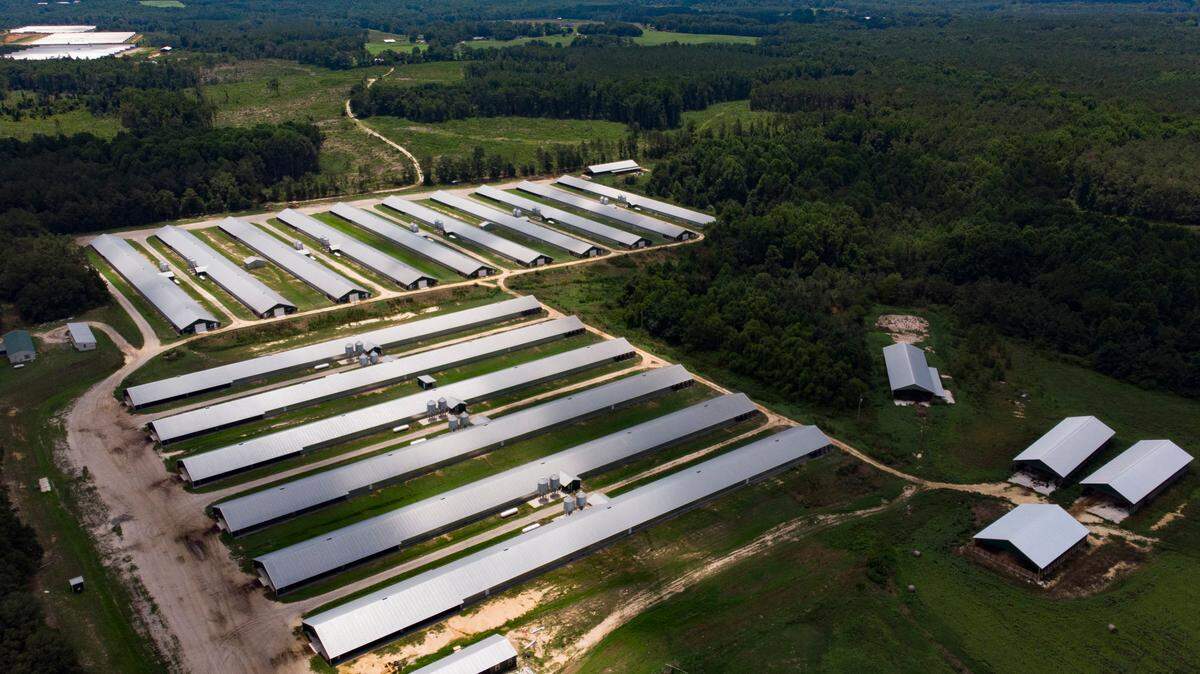
North Carolina’s poultry farms are everywhere. The state cloaks big poultry in secrecy to the point regulators don’t even know where most of the farms are located. Neighbors complain about the stench and other nuisances. But state laws leave courts and local governments nearly powerless to help.
Expand All
Agriculture has always been an economic and political force in North Carolina.
Tobacco was once this state’s largest cash crop. But poultry is now tops, generating about $4.7 billion in annual cash receipts and creating nearly 150,000 jobs, according to the state agriculture department.
Legislators from both parties have long championed laws supportive of agriculture, with Republican majority members leading the charge of late.
“Many of them have a soft spot in their hearts for what agriculture does,” said Bob Ford, executive director of the N.C. Poultry Federation.
The poultry industry isn’t always visible at the General Assembly, according to lobbyists.
“It’s not a lobby we see active in the legislature the way we do the Pork Council and Smithfield and Murphy-Brown,” said Brooks Rainey Pearson, an attorney and lobbyist for the Southern Environmental Law Center.
A News & Observer and Charlotte Observer analysis found that the industry isn’t a top player in campaign donations either. But it does give money. Legislative and statewide candidates, along with political parties, received $3.2 million from poultry companies, owners of farms with at least 10 barns and employees of both between 2001 and 2022.
Those poultry interests gave the most – $557,977 – in a single year in 2020, when legislators debated workplace protections in meat processing plants.
Lawmakers that year rejected an amendment to require companies to give two weeks pay to plant workers who tested positive for COVID-19. They also said no to another that would have required plants to notify workers of potential exposures and provide personal protective equipment.
Other years with higher giving included $512,093 in 2016 and $413,599 in 2018. In 2018, the General Assembly passed a bill restricting neighbors’ ability to sue farms they considered nuisances.
The NC Poultry Federation political action committee has donated about $149,000 to candidates since 2001. But the NC Pork Council has contributed about $1.24 million to candidates in that time period and the NC Farm Bureau handed over about $2.4 million.
Legislative support for the pork industry often benefits the poultry industry. One example: the multiple ways legislators, with support from the state agriculture secretary, have made it more difficult for neighbors to sue when they consider a farm a nuisance.
“To put the word nuisance and agriculture in the same sentence is just ridiculous and, quite frankly, makes me madder than hell,” Agriculture Secretary Steve Troxler said in 2018 at a meeting at the North Carolina State Fairgrounds criticizing nuisance suits.
Here are some of the most significant bills supportive of the poultry industry that have passed, along with bills that would have restricted the industry that were never voted on.
1979: When urban and suburban development started creeping toward rural communities, the North Carolina General Assembly passed a law shielding farms from some nuisance lawsuits.
No agricultural operation shall be considered a nuisance if it’s been in operation for more than one year if it was not a nuisance when it began. The protection does not apply to negligent or improper operations of farms.
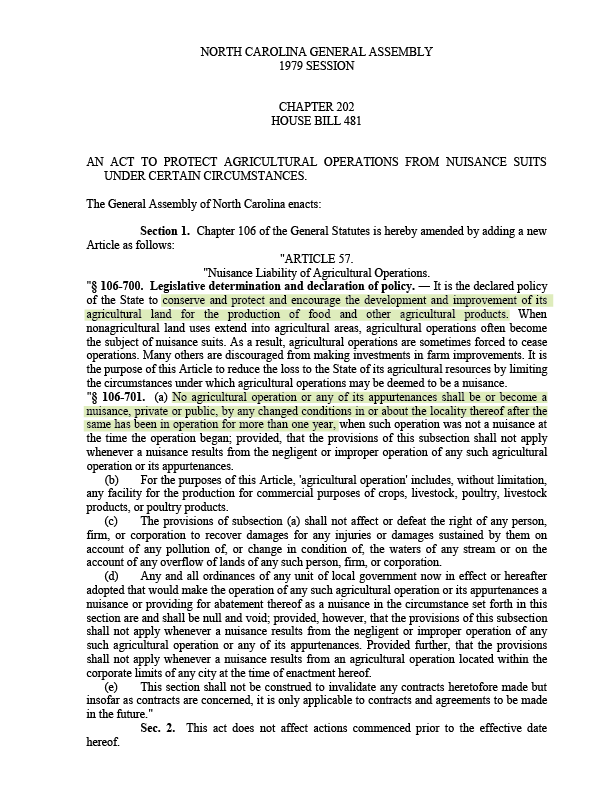
House Bill 481 (Feb. 22, 1979) Thomas Ellis, Jr., D-Vance; Toffie Auman, D-Moore; John Brown, R-Wilkes; Harold Brubaker, R-Randolph; and 32 others. States that changes in communities around farms could not be used as grounds for filing nuisance lawsuits against the farms. Farms operating improperly or with negligent owners could be sued.
House Bill 714 (March 9, 1979) Vernon James, D-Pasquotank, and Charles D. Evans, D-Dare. Established that the N.C. Department of Agriculture would keep confidential any information collected from farmers.
Senate Bill 3 (January 24, 2007) Charlie Albertson, D-Duplin. Required North Carolina utilities to purchase power produced with renewable sources. It includes the nation’s only requirement that utilities try to purchase power generated from hog and poultry waste.
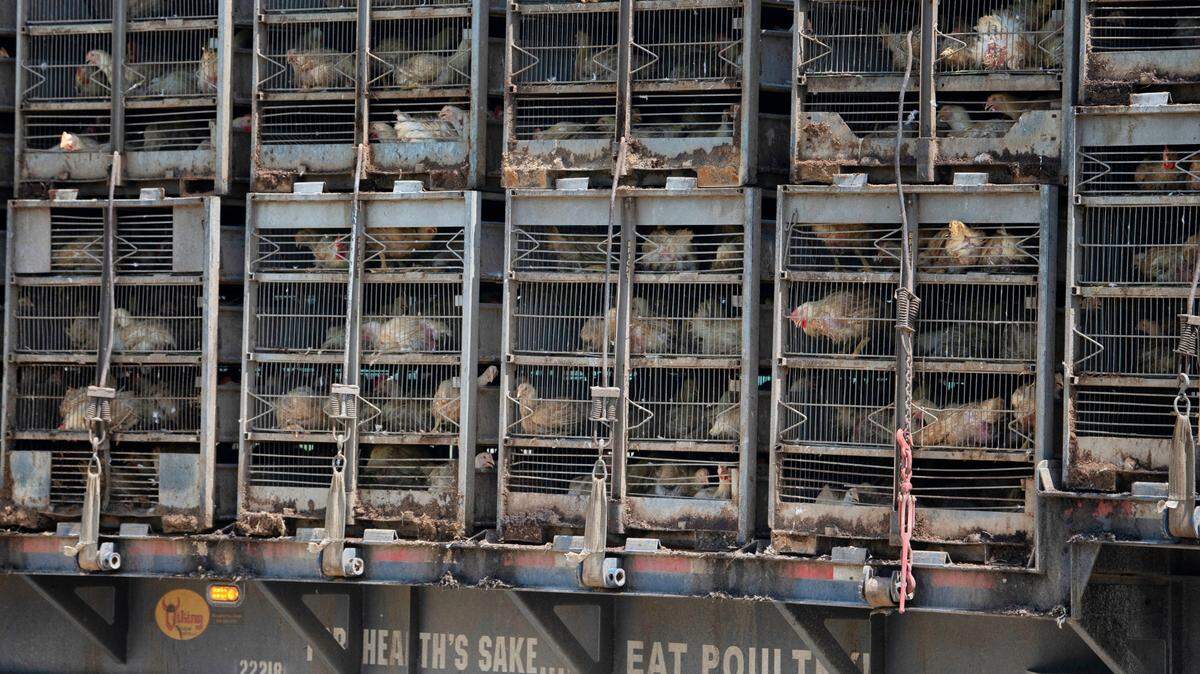
House Bill 468 (March 24, 2011) Craig Horn, R-Union; Efton Sager, R-Wayne; Dewey Hill, D-Columbus; and Joe Hackney, D-Orange. Exempted trucks hauling live poultry less than 150 miles from weight limits.
Senate Bill 205 (March 6, 2013) Michael Walters, D-Robeson. Allowed farmers to test soil on fields where they spread hog and poultry waste every three years, instead of annually.
House Bill 366 (March 20, 2013) James Langdon, R-Johnston; Jimmy Dixon, R-Duplin; William Brisson, R-Bladen; and Susan Martin, R-Wilson. Required environmental regulators to keep confidential the details of complaints alleging that an agricultural operation broke the rules unless department staff deem that a violation has, in fact, occurred.
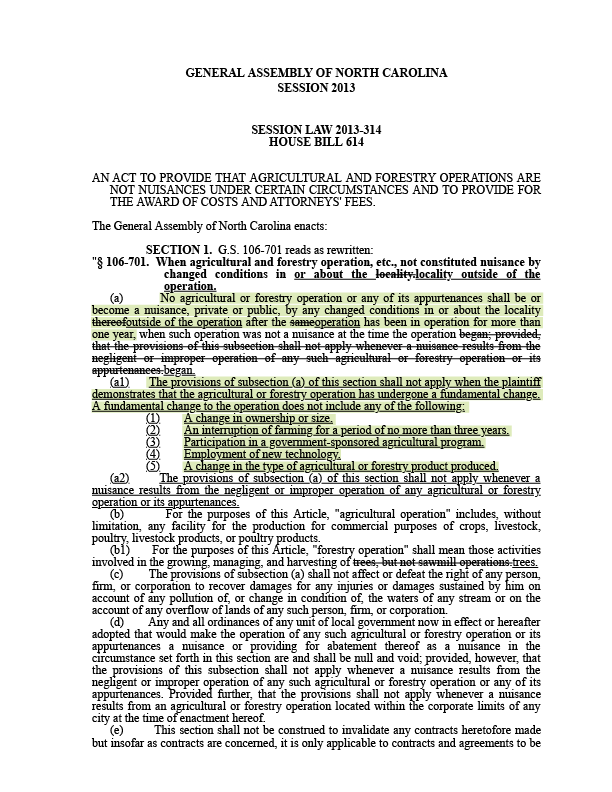
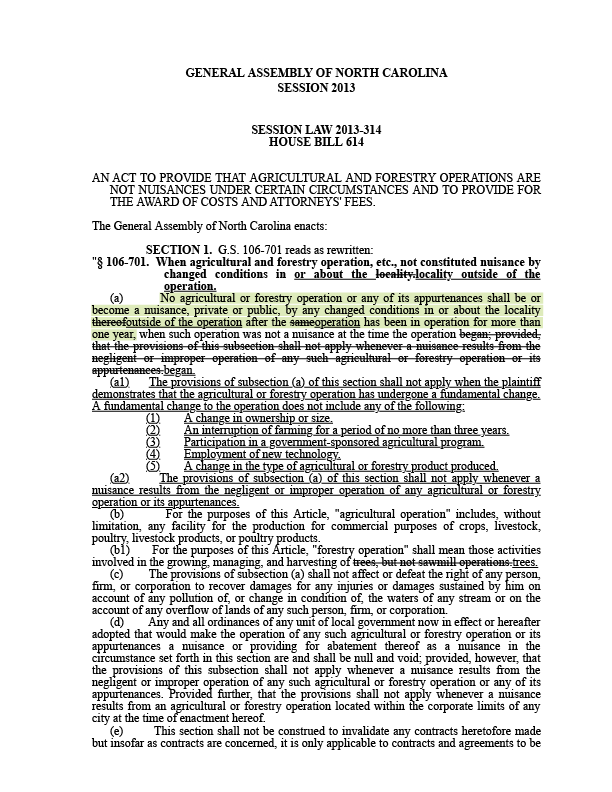
2013: After people living near industrial-scale hog farms in eastern North Carolina filed lawsuits against pork-producer Murphy-Brown, members of the General Assembly expanded protections for all farms in this state.
Beginning then, plaintiffs had to own property affected by a farm and the property must be no more than a half-mile away from the source of the nuisance. And lawsuits had to be filed within one year of a farm or forestry operation starting or within one year of it undergoing a fundamental change.
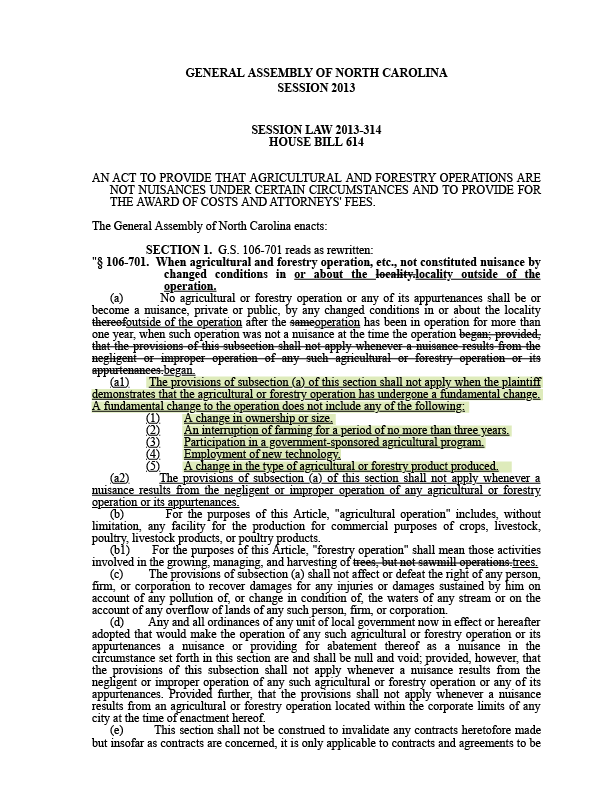
At the same time, lawmakers shrunk what could be considered a “fundamental” change on a North Carolina farm. Among the things exempt from that label: a change in the type of agricultural or forestry product produced, ceasing farming for up to three years, employing new technology.
Senate Bill 638 (April 2, 2013) Brent Jackson, R-Sampson; and Andrew Brock, R-Davie. Clarified public records law to say that the state veterinarian must keep confidential inspection certificates, animal medical records, lab reports or other records that could identify a farmer or a farm’s location. Except for cases where disclosure would protect public health.
House Bill 614 (April 9, 2013) Nathan Ramsey, R-Buncombe; Michele Presnell, R-Yancey; and Kenneth Waddell, D-Columbus. After neighbors to hog farms in Eastern North Carolina filed lawsuits against large pork companies, this bill named changes that cannot be cited as a basis for nuisance lawsuits. Those include changes to what farms produce, their ownership, their size and the technology they use.
House Bill 899 (April 11, 2013) Hugh Blackwell, R-Burke; and Andy Wells, R-Catawba. Would have granted local governments some zoning authority over poultry farms that raised more than 150,000 birds. The bill would not have allowed counties to ban the farms from certain areas. It was refiled in 2017 with the same outcome. NOT VOTED ON.
House Bill 405 (March 31, 2015) John Szoka, R-Cumberland; Chris Whitmire, R-Transylvania; Jonathan Jordan, R-Ashe; and Rodney Moore, D-Mecklenburg. Known as an “ag-gag” law, it allowed employers to sue staff members or people posing as staff who photograph or film a workplace or collect data or documents without permission. Animal rights groups have used such materials to accuse farmers of cruelty.
2017: Neighbors to hog farms started winning lawsuits in federal court alleging that sites raising Murphy-Brown hogs produced intolerable smells, floating fecal particles, disruptive truck traffic, buzzards and more. They won millions in damages.
This time legislators imposed limits on how much money courts could award in these cases.
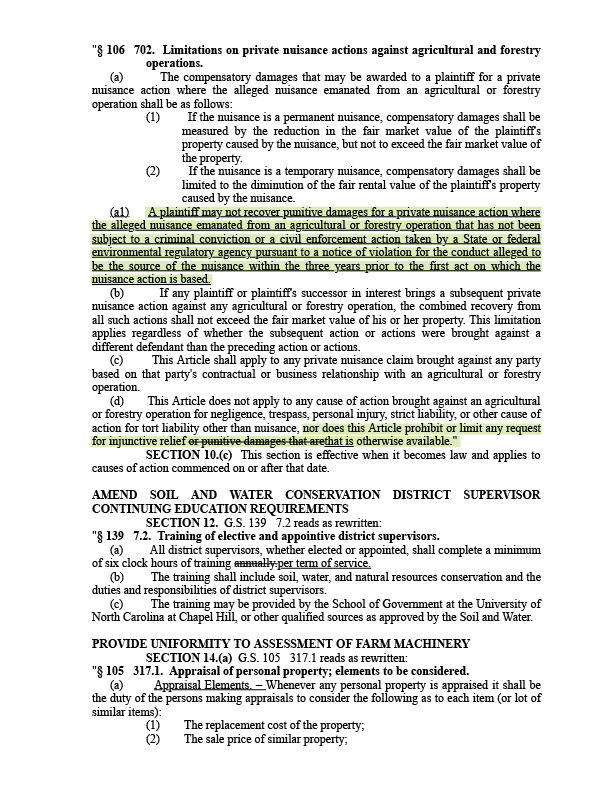
Compensatory damages shall be measured by the reduction in the fair market value of the plaintiff's property caused by the nuisance, but not to exceed the fair market value of the property.
2018: Legislators imposed more limits on when nuisance lawsuits can be filed. This time the bill language addressed courts and neighbors directly.
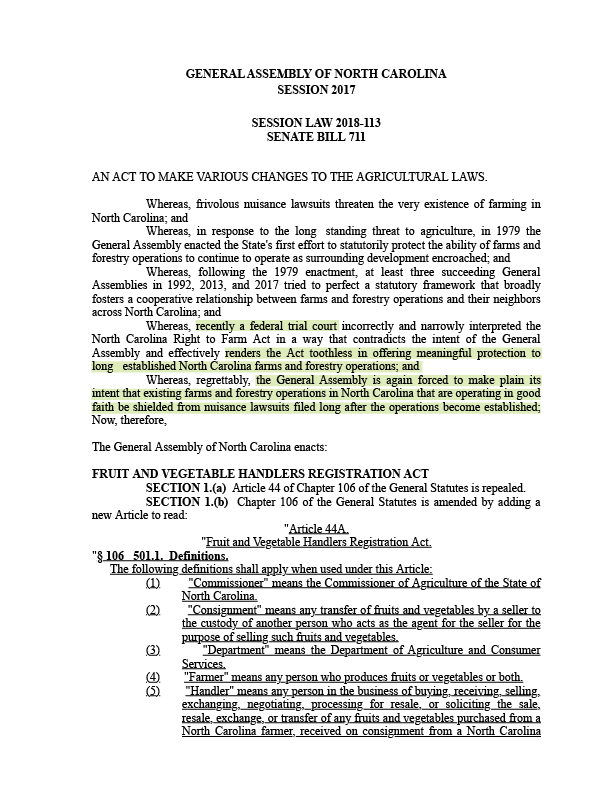
"Whereas, regrettably, the General Assembly is again forced to make plain its intent that existing farms and forestry operations in North Carolina that are operating in good faith be shielded from nuisance lawsuits filed long after the operations become established."
That year the right to farm law was amended to forbid neighbors from receiving punitive damages with successful nuisance lawsuits unless operators of the farms they complained about had run afoul of the law or civil statutes. They must have been convicted of a criminal charge or been subjected to state or federal environmental enforcement actions in the previous three years.
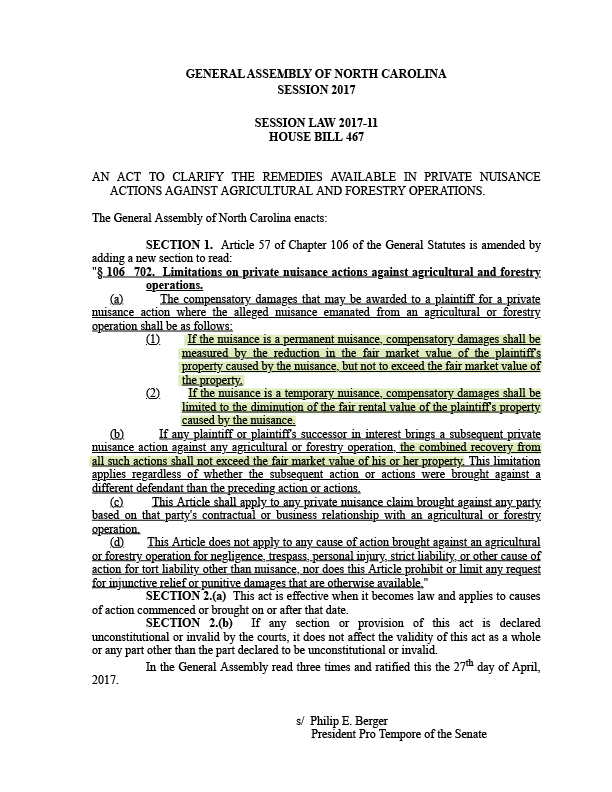
House Bill 467 (March 23, 2017) Jimmy Dixon, R-Duplin; Ted Davis, R-New Hanover; David Lewis, R-Harnett; and John Bell, R-Wayne. Capped compensatory damages awarded in farm nuisance lawsuits to losses in property values.
House Bill 589 (April 5, 2017) John Szoka, R-Cumberland; Dean Arp, R-Union; and Sam Watford, R-Davidson. Established an “expedited review process” for small projects that turn poultry or swine waste into energy
Senate Bill 711 (May 16, 2018) Brent Jackson, R-Sampson; Bill Cook, R-Beaufort; and Norm Sanderson, R-Pamlico. After neighbors started winning lawsuits against Smithfield Foods, this narrowed who is eligible to sue with nuisance claims. A plaintiff must live within a half-mile of a farm and file the complaint within a year of the farm’s opening.
Senate Bill 516 (April 2, 2019) Harper Peterson, D-New Hanover. Would have tasked the state with studying health impacts of poultry waste, including drinking water contamination by drugs or diseases linked to poultry waste. How poultry litter is disposed of, risks from having farms in floodplains and how other states regulate the industry would also have been studied. NOT VOTED ON.
House Bill 913 (May 10, 2021) Ricky Hurtado, D-Alamance; Raymond Smith, D-Wayne; Pricey Harrison, D-Guilford; and Linda Cooper-Suggs, D-Wilson. Would have required poultry farmers to annually submit their waste management plans electronically to the N.C. Department of Environmental Quality’s Division of Water Resources. NOT VOTED ON.
This story was produced with financial support from 1Earth Fund, in partnership with Journalism Funding Partners, as part of an independent journalism fellowship program. The N&O maintains full editorial control of the work.
Read more stories from the “Big Poultry” project at newsobserver.com, charlotteobserver.com or heraldsun.com.
This story was originally published December 1, 2022 at 6:00 AM with the headline "NC lawmakers have steadily changed rules, added protections that help poultry industry."